· space brief · 7 min read
Atlas 5 Retires After Final 551 Flight to Amazon Kuiper | KeepTrack Space Brief
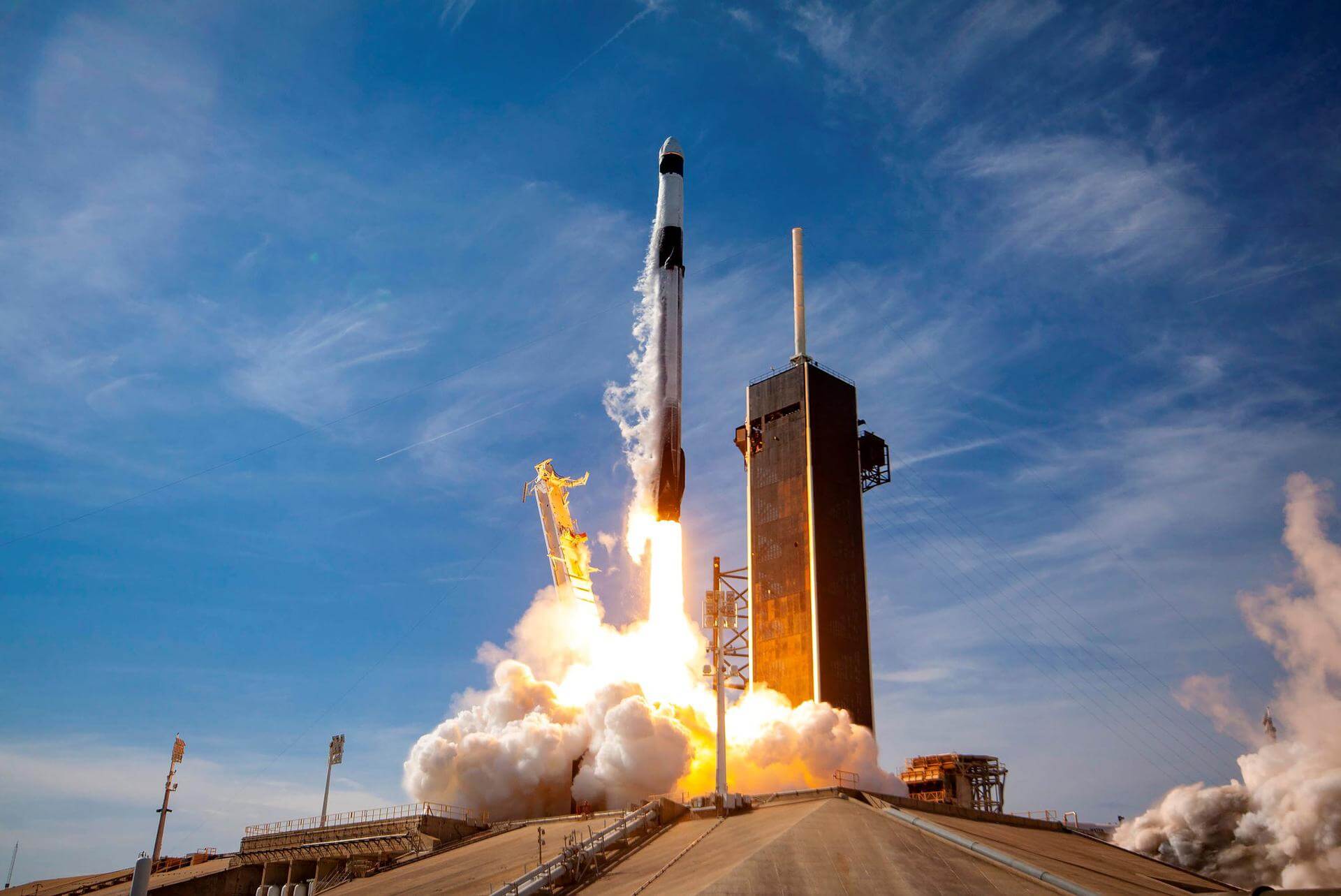
ULA launches the final Atlas 5 551 configuration—its heaviest variant with 5 solid boosters—carrying Amazon's Project Kuiper satellite to low Earth orbit from Cape Canaveral.

Top Stories
ULA Flies Final Atlas 5 551 Configuration on Amazon Leo Mission
The Leo Atlas 8 mission lifted off from Space Launch Complex 41 at Cape Canaveral Space Force Station at 12:30:15 a.m. EDT (0430:15 UTC) on July 1. It was the last flight of the Atlas 5 551 variant — the heaviest configuration in the Atlas 5 family, with five solid rocket boosters and a 5-meter fairing.
The payload was part of Amazon’s Project Kuiper broadband constellation, which is building toward competing directly with Starlink in low Earth orbit. With Atlas 5 now retired, Amazon’s remaining Kuiper launches will depend on Vulcan Centaur, New Glenn, and Ariane 6.
Read the full story: Spaceflight Now
Isar Aerospace Wins Planet Launch Contract for German-Built Imaging Satellite
Isar Aerospace has secured a contract from Planet’s German subsidiary to launch an imaging satellite on its Spectrum rocket. The deal pairs a German-built satellite with a German launch provider — a first for the country’s end-to-end commercial space sector.
Spectrum is a two-stage orbital rocket under development in Bavaria. The contract adds customer pressure to Isar’s launch schedule, which has yet to complete a full orbital mission. Once launched, the Planet imaging satellite will join a constellation trackable via KeepTrack.
Read the full story: SpaceNews
Pentagon Burning $152 Billion Before Deadline, Guidance Already Issued
The Department of Defense has issued guidance to program offices directing how to obligate a large tranche of funding before a statutory spending deadline. The $152 billion figure reflects money that must be committed or risk lapsing under appropriations rules.
The pressure to spend quickly can push contracts toward lower-risk, near-term programs rather than longer-horizon priorities. For space programs specifically — many of which run on multi-year development cycles — deadline-driven spending can distort acquisition strategy.
Read the full story: Breaking Defense
GAO: Pentagon Still Missing Weapons Development Timelines
The Government Accountability Office’s annual weapons systems assessment found continued schedule and cost problems across major DoD programs. The review covers programs ranging from Air Force One to Army missile systems.
Chronic timeline slippage in defense programs directly affects space-adjacent systems — including satellite ground infrastructure, space-based sensors, and missile warning architecture. GAO has flagged similar issues in prior years without resolution.
Read the full story: Breaking Defense
Sybilla Technologies Raises $10M to Expand Into U.S. Market
Polish space tech firm Sybilla Technologies received approximately 35 million zloty (~$10 million) from state-owned bank BGK and European VC firm 3TS Capital Partners. The funding is earmarked for U.S. market entry.
Sybilla operates in the space data and analytics sector. The investment reflects continued European capital flows into dual-use space technology companies with transatlantic ambitions.
Read the full story: SpaceNews
U.S. Airpower in Iran: Effective Strikes, No Plan for Disruption Warfare
A Breaking Defense analysis argues the U.S. entered its conflict with Iran prepared to execute precision strikes but without a strategy to counter Iran’s distributed disruption campaign. The gap between destruction planning and disruption response shaped the conflict’s trajectory.
The piece has direct relevance for space operators: Iran’s disruption playbook almost certainly included GPS jamming, satellite communications interference, and ISR degradation — tactics that don’t require kinetic parity to be effective.
Read the full story: Breaking Defense
Satellite of the Day
SITRO Traffic Monitoring Satellite
SITRO is a Russian traffic monitoring satellite operated by SITRO, launched on June 27, 2023, aboard a Soyuz-2-1B rocket from the Vostochny Cosmodrome. Equipped with an AIS (Automatic Identification System) receiver, this compact 3 kg satellite tracks maritime vessel movements and traffic patterns from orbit. The satellite operates in a near-polar sun-synchronous orbit, giving it excellent global coverage for maritime domain awareness applications.
This small-form-factor satellite represents Russia’s continued investment in remote sensing and maritime surveillance capabilities. By monitoring AIS signals from ships worldwide, SITRO contributes to traffic optimization, maritime safety, and domain awareness. The use of a sun-synchronous orbit ensures consistent lighting conditions for operations and allows the satellite to pass over the same geographic areas at the same local solar time, making it ideal for persistent monitoring of shipping lanes and coastal regions.
| Detail | Value |
|---|---|
| NORAD ID | 57176 |
| Operator | SITRO (Russia) |
| Launch Date | June 27, 2023 |
| Orbit | Sun-synchronous, 97.505° inclination |
| Purpose | Traffic monitoring (AIS receiver) |
| Status | Active |
Track this satellite in real-time: Track SITRO Traffic Monitoring Satellite
Upcoming Space Launches
July 3
- Northrop Grumman Space Systems Pegasus XL:
- Swift Boost Mission from Kwajalein Atoll, Air Launch to Orbit (08:35 UTC) Northrop Grumman’s Stargazer aircraft will carry the Pegasus XL rocket to approximately 40,000 feet before releasing it. The mission will deliver the Link spacecraft — built by Katalyst Space Systems — to rendezvous with the Neil Gehrels Swift Observatory and boost it to a safe operating orbit. This is a mission extension flight in partnership with NASA. Launch Preview
July 4
- China Aerospace Science and Technology Corporation Long March 6A:
- Unknown Payload from Taiyuan Satellite Launch Center, People’s Republic of China (09:21 UTC) Details for this mission have not yet been disclosed. The Long March 6A is China’s first rocket to feature solid rocket boosters, augmenting its two YF-100 kerosene/liquid oxygen first-stage engines with four strap-on solids. Launch Preview
July 5
-
China Aerospace Science and Technology Corporation Long March 8A:
- SpaceSail Polar Group TBD from Wenchang Space Launch Site, People’s Republic of China (time TBD) A Long March 8A rocket will launch a batch of SpaceSail polar orbit communications satellites. The Long March 8A features an enhanced liquid hydrogen/liquid oxygen second stage and is capable of delivering up to 7 tonnes to a 700 km sun-synchronous orbit, with an optional 5.2-metre diameter payload fairing. Launch Preview
-
SpaceX Falcon 9 Block 5:
- Starlink Group 10-50 from Space Launch Complex 40, Cape Canaveral Space Force Station, FL, USA (10:36 UTC) A batch of 29 Starlink V2 Mini Optimized satellites to low Earth orbit. Booster B1090 will fly for the 13th time, landing on the drone ship A Shortfall of Gravitas in the Atlantic Ocean. Watch Live Launch Preview
July 7
- SpaceX Falcon 9 Block 5:
- Transporter 17 (Dedicated SSO Rideshare) from Space Launch Complex 4E, Vandenberg Space Force Base, CA, USA (07:10 UTC) A dedicated rideshare mission carrying 81 payloads to sun-synchronous orbit. Booster B1097 will fly for the 11th time, landing on the drone ship Of Course I Still Love You in the Pacific Ocean. Watch Live
July 9
- SpaceX Falcon 9 Block 5:
- Starlink Group 10-42 from Space Launch Complex 40, Cape Canaveral Space Force Station, FL, USA (09:05 UTC) A batch of 29 Starlink V2 Mini Optimized satellites to low Earth orbit. Booster B1090 will fly for the 13th time, landing on the drone ship A Shortfall of Gravitas in the Atlantic Ocean. Watch Live
July 10
- China Aerospace Science and Technology Corporation Long March 10B:
- Demo Flight from Wenchang Space Launch Site, People’s Republic of China (05:00 UTC) The inaugural demonstration flight of the Long March 10B, a reusable launch vehicle derived from the Long March 10A first stage core. The rocket features seven YF-100 series kerosene/liquid oxygen engines on its first stage — designed for downrange recovery via arrestor net — and a methane/liquid oxygen YF-219 engine on the second stage, with a payload capacity of up to 16,000 kg to low Earth orbit.
July 11
- SpaceX Falcon 9 Block 5:
- Starlink Group 17-48 from Space Launch Complex 4E, Vandenberg Space Force Base, CA, USA (02:00 UTC) A batch of 29 Starlink V2 Mini Optimized satellites to low Earth orbit. Booster B1090 will fly for the 13th time, landing on the drone ship A Shortfall of Gravitas in the Atlantic Ocean. Watch Live Launch Preview
July 13
- SpaceX Falcon 9 Block 5:
- Starlink Group 15-14 from Space Launch Complex 4E, Vandenberg Space Force Base, CA, USA (08:00 UTC) A batch of 24 Starlink satellites to low Earth orbit as part of SpaceX’s space-based internet communications constellation. Watch Live
July 14
- Russian Federal Space Agency (ROSCOSMOS) Soyuz 2.1a:
- Soyuz MS-29 from Baikonur Cosmodrome, Republic of Kazakhstan (14:47 UTC) Soyuz MS-29 will carry a crew of three to the International Space Station aboard the venerable Soyuz spacecraft. The crew includes Roscosmos cosmonauts Pyotr Dubrov and Anna Kikina, along with NASA astronaut Anil Menon. The Soyuz 2.1a features a fully digital flight control system and is the current standard vehicle for crewed ISS rotation missions.
Schedule Changes
- Falcon 9 Block 5 | Starlink Group 15-14 has been newly added to the manifest, scheduled for July 13, 2026 at 08:00 UTC from Vandenberg Space Force Base. Status: Go for Launch.
- Soyuz 2.1a | Soyuz MS-29 has been newly added to the manifest, scheduled for July 14, 2026 at 14:47 UTC from Baikonur Cosmodrome. Status: Go for Launch.
Note: Launch dates and times are subject to change due to technical or weather considerations.

Maurice Stellarski