· space brief · 8 min read
Atlas 5 551 Flies Last Mission for Amazon Kuiper | KeepTrack Space Brief
ULA launched Atlas 5 551 configuration for final time on July 1, deploying Amazon Kuiper broadband satellites. New Glenn pad rebuild underway at LC-36 after May explosion.
Top Stories
Blue Origin’s LC-36 Still Down One Month After New Glenn Explosion
The May 28 New Glenn explosion at Launch Complex 36, Cape Canaveral, caused severe pad damage that remains under active investigation. Blue Origin is now targeting end of 2026 for return to flight and has announced a hybrid horizontal-vertical integration approach to replace the previous all-vertical pad flow.
The hybrid plan is an operational change, not just a rebuild. It shifts how rockets are assembled and rolled out, which could affect turnaround cadence once operations resume. The investigation into the explosion itself has not publicly concluded.
Read the full story: NASASpaceFlight
Atlas 5 551 Config Flies for the Last Time on Amazon Kuiper Mission
ULA launched the Leo Atlas 8 mission from Pad 41 at Cape Canaveral Space Force Station at 12:30:15 a.m. EDT on July 1. This was the final flight of the Atlas 5 in the 551 configuration — five solid rocket boosters, a five-meter fairing, and a single-engine Centaur upper stage.
The mission carried satellites for Amazon’s Kuiper broadband constellation. With Atlas 5 wind-down underway, ULA is shifting its manifest to Vulcan Centaur.
Read the full story: Spaceflight Now
Blue Origin Targets End-of-Year New Glenn Return, Commits to Rebuilt Pad
One month after the pad explosion, Blue Origin has publicly reiterated its plan to return New Glenn to flight before the end of 2026. The rebuilt LC-36 will incorporate the hybrid integration approach announced this week.
No timeline has been given for completion of the explosion investigation. The company has not confirmed whether the root cause has been identified.
Read the full story: SpaceNews
Pentagon Creates Autonomy Czar Role to Consolidate Drone Programs
Secretary of Defense Pete Hegseth signed an internal memo creating a new “autonomy czar” position that consolidates oversight of nearly all DoD drone and autonomous vehicle programs. The role covers all ground vehicles, all small air vehicles, and most sea vehicles, and reports directly to Deputy Defense Secretary Stephen Feinberg.
The consolidation pulls autonomous systems management out of the individual services and centralizes it under OSD. Given how heavily space-based ISR and communications underpin drone operations, this role will have direct equities in satellite-dependent targeting and command networks.
Read the full story: Breaking Defense
Vantor’s International Defense Business Now 70% of Revenue
Space services firm Vantor reports its international portfolio is now roughly 70 percent defense and 30 percent commercial, per CEO Dan Smoot speaking to Breaking Defense. Smoot cited a geopolitical shift driving allied nations toward U.S.-aligned space service providers.
Vantor has not disclosed specific contract values or customer countries, but the revenue split reflects a broader reorientation toward government and military customers that several smaller space firms have made since 2022.
Read the full story: Breaking Defense
Ukraine Signs $2.5B Contract with Sweden for Gripen E Jets
Ukraine and Sweden finalized a $2.5 billion contract for Gripen E fighter deliveries by 2029. Swedish Defense Minister Pål Jonson confirmed the deal publicly. Ukraine’s stated goal is to eventually acquire up to 150 Gripen E aircraft.
While not a space story, the Gripen E’s integration with satellite-based navigation, datalinks, and reconnaissance systems makes this relevant to the broader ISR and space-enabled air warfare picture in the European theater.
Read the full story: Breaking Defense
New Glenn Return-to-Flight Details: Horizontal Integration Replaces Vertical-Only Flow
Blue Origin’s technical briefing confirms that the post-explosion rebuild of LC-36 will shift to a hybrid horizontal-vertical integration model. Previously, New Glenn was processed vertically at the pad. The new approach borrows from practices used by other heavy-lift programs and is intended to reduce pad exposure time for the vehicle.
No specific launch date has been set. The explosion on May 28 destroyed significant pad infrastructure, and the investigation remains open.
Read the full story: Spaceflight Now
Satellite of the Day
ION SCV-006 (Thrilling Thomas)
The ION SCV-006, affectionately nicknamed “Thrilling Thomas,” is a specialized deployment platform built by DORBIT to serve as an orbital dispenser for CubeSats. Launched on May 25, 2022, aboard a SpaceX Falcon 9 from Cape Canaveral Space Force Station, this 150 kg satellite represents the growing trend of using dedicated platforms to release standardized small satellites into their operational orbits. The ION mk02 platform—a compact 0.4-meter cube equipped with multiple CubeSat deployers—has proven valuable for missions requiring precise, staged deployment of multiple payloads without relying on a dedicated launch.
What makes Thrilling Thomas particularly interesting to satellite trackers is its role in the emerging “launch-on-demand” ecosystem. Rather than waiting for a dedicated ride-share mission, operators can book deployment slots on ION platforms, which act as reliable orbital taxis. Operating in a near-polar sun-synchronous orbit, the satellite relies on solar panels and onboard batteries to power its deployment systems. For those monitoring space domain awareness, tracking ION platforms like this one provides insights into how commercial smallsat constellations continue to proliferate through efficient multi-payload deployment strategies.
| Detail | Value |
|---|---|
| NORAD ID | 52761 |
| Operator | DORBIT |
| Launch Date | May 25, 2022 |
| Orbit | Sun-synchronous, 97.61° inclination |
| Purpose | CubeSat deployment |
| Status | Active |
Track this satellite in real-time: Track ION SCV-006
Upcoming Space Launches
July 2
- Northrop Grumman Space Systems Pegasus XL:
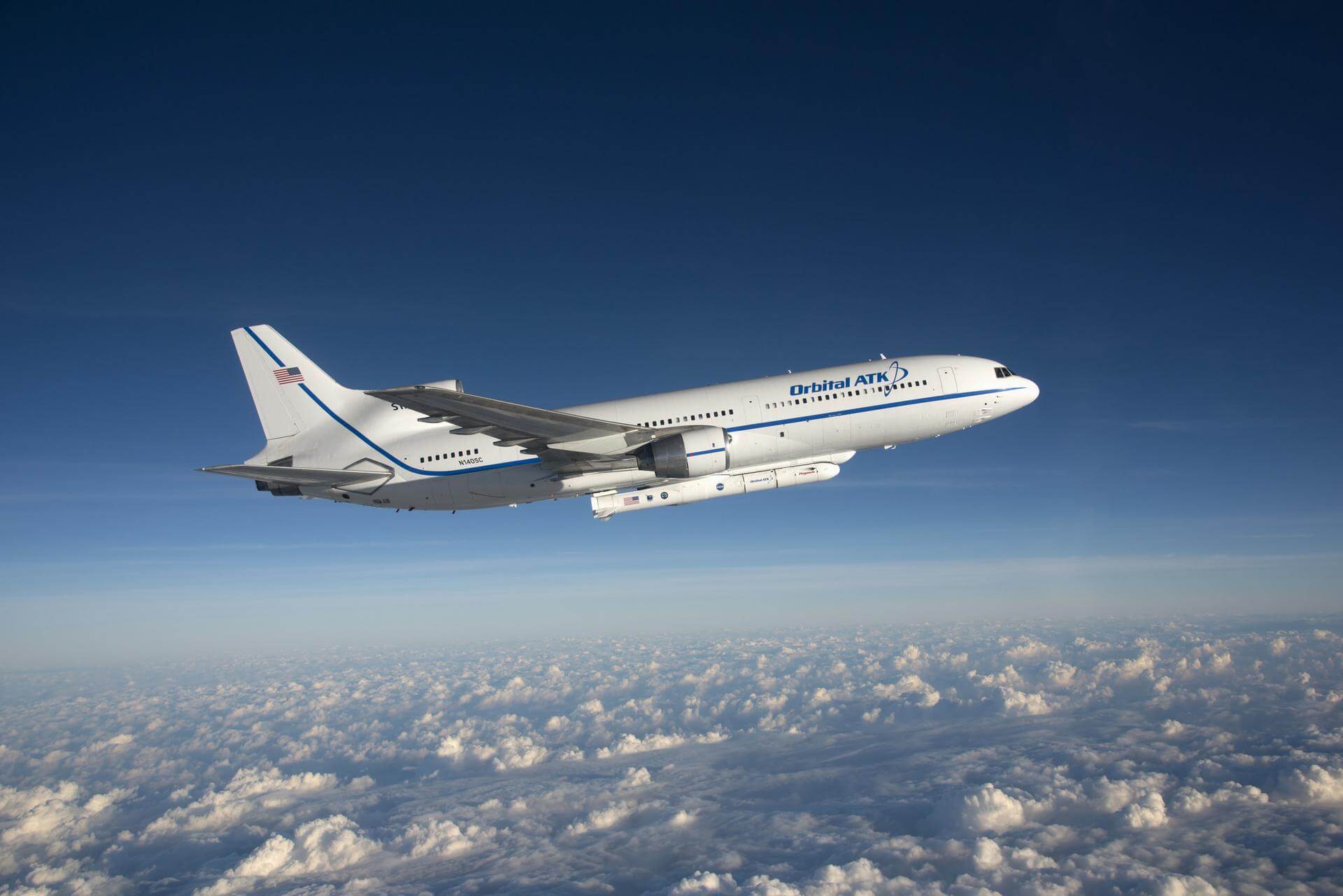
- Swift Boost Mission from Air Launch to Orbit, Kwajalein Atoll (07:30–13:28 UTC) Northrop Grumman’s Stargazer aircraft will carry the Pegasus XL rocket to approximately 40,000 feet before releasing it, deploying the Link spacecraft built by Katalyst Space Systems. The Link spacecraft will rendezvous with the aging Neil Gehrels Swift Observatory and boost it to a safe operating orbit, extending the mission’s scientific life. The Pegasus XL is a compact, air-launched solid-fueled rocket capable of delivering up to 443 kg to low Earth orbit. Launch Preview
July 4
- China Aerospace Science and Technology Corporation Long March 6A:
- Unknown Payload from Taiyuan Satellite Launch Center, People’s Republic of China (09:21 UTC) Details for this mission have not yet been publicly disclosed. The Long March 6A is a medium-lift launch vehicle featuring two YF-100 engines on its first stage, augmented by four solid rocket boosters — China’s first rocket to use solid strap-on boosters — and launches from the purpose-built Launch Complex 9A at Taiyuan. Launch Preview
July 5
-
China Aerospace Science and Technology Corporation Long March 8A:
- SpaceSail Polar Group TBD from Wenchang Space Launch Site, People’s Republic of China (Time To Be Determined) This mission will deploy communications satellites carrying Ku, Q, and V band payloads for the G60 constellation, operated by Shanghai Spacesail Technologies and backed by the Shanghai municipal government. The constellation aims to reach 1,296 satellites by 2027, with long-term plans for 12,000 satellites. The Long March 8A features an upgraded liquid hydrogen/liquid oxygen second stage and can deliver up to 9,800 kg to low Earth orbit. Launch Preview
-
SpaceX Falcon 9 Block 5:
- Starlink Group 10-50 from Space Launch Complex 40, Cape Canaveral Space Force Station, FL, USA (10:36 UTC) A batch of 24 Starlink V2 Mini Optimized satellites to low Earth orbit. Booster B1100 will land on the drone ship Of Course I Still Love You in the Pacific Ocean after its seventh flight. Watch Live Launch Preview
July 6
- SpaceX Falcon 9 Block 5:
- Starlink Group 17-48 from Space Launch Complex 4E, Vandenberg Space Force Base, CA, USA (14:00 UTC) A batch of 24 Starlink V2 Mini Optimized satellites to low Earth orbit. Booster B1100 will attempt a landing on the drone ship Of Course I Still Love You after its seventh flight. Watch Live
July 7
- SpaceX Falcon 9 Block 5:
- Transporter 17 (Dedicated SSO Rideshare) from Space Launch Complex 4E, Vandenberg Space Force Base, CA, USA (07:10 UTC) Dedicated rideshare mission to sun-synchronous orbit carrying dozens of small microsatellites and nanosatellites for commercial and government customers. Watch Live
July 9
- SpaceX Falcon 9 Block 5:
- Starlink Group 10-42 from Space Launch Complex 40, Cape Canaveral Space Force Station, FL, USA (09:05 UTC) A batch of 24 Starlink V2 Mini Optimized satellites to low Earth orbit. Booster B1100 will attempt a landing on the drone ship Of Course I Still Love You after its seventh flight. Watch Live
July 10
- China Aerospace Science and Technology Corporation Long March 10B:
- Demo Flight from Wenchang Space Launch Site, People’s Republic of China (05:00 UTC) Demonstration flight of the Long March 10B, a reusable launch vehicle derived from the Long March 10A first stage core. Powered by seven YF-100 series kerosene/liquid oxygen engines on its first stage and a methane/liquid oxygen YF-219 engine on its second stage, the vehicle is capable of delivering up to 16,000 kg to low Earth orbit. The first stage is designed to be recovered downrange via an arrestor net on a recovery barge using grid fins.
Schedule Changes
- SpaceX Falcon 9 Block 5 | Starlink Group 17-46: Status changed from Go for Launch to Launch Successful.
- United Launch Alliance Atlas V 551 | Amazon LEO (LA-08): Status changed from Go for Launch to Launch Successful.
- China Aerospace Science and Technology Corporation Long March 4B | Haiyang 2E: Status changed from Go for Launch to Launch Successful.
- China Aerospace Science and Technology Corporation Long March 8A | SpaceSail Polar Group TBD: Status changed from Go for Launch to To Be Determined — launch date and time are no longer confirmed.
Note: Launch dates and times are subject to change due to technical or weather considerations.

Maurice Stellarski