· space brief · 7 min read
China Launches VLEO Alliance With Sats Below 300km | KeepTrack Space Brief
China formalized a national VLEO industry alliance with multiple satellites sustaining operations below 300 kilometers altitude. Propulsion startups attracting investment.
Top Stories
China Formalizes National VLEO Alliance With Satellites Already Operating Below 300km
China has established a national very low Earth orbit industry alliance, with multiple satellites already demonstrating sustained operations below 300 kilometers. Propulsion startups supporting the effort are attracting investment. This is a coordinated industrial push, not just a research program.
VLEO is operationally demanding — atmospheric drag at those altitudes requires continuous propulsion to maintain orbit. Sustained operations below 300km suggest Chinese propulsion technology has cleared that threshold. Objects in this regime have short natural lifetimes and can be harder to track due to rapid orbital decay. Use KeepTrack’s decay prediction tools to monitor objects in this altitude band.
Read the full story: SpaceNews
SpaceX Launches 7.5-Ton SXM-11 SiriusXM Satellite From Cape Canaveral
SXM-11, built by Intuitive Machines, lifted off aboard a Falcon 9 from pad 40 at Cape Canaveral Space Force Station at 10:25 p.m. EDT on June 28 (0225 UTC). The satellite stands over 230 feet tall and weighs approximately 7.5 tons — roughly 15,000 pounds — making it one of the heavier commercial GEO payloads launched this year.
SXM-11 is part of a SiriusXM constellation refresh. At this mass, it almost certainly targeted a geostationary transfer orbit. Watch for it in the GTO catalog as it apogee-kicks toward GEO over the coming weeks.
Read the full story: Spaceflight Now
Hayabusa2 Attempts Close Asteroid Flyby on July 5
JAXA’s Hayabusa2 probe — which already returned samples from asteroid Ryugu in 2020 — will attempt one of the closest asteroid flybys in spaceflight history on July 5. The target has not been publicly identified in detail yet, but mission scientists describe it as potentially unlike previously catalogued bodies.
This is an extended mission using a spacecraft that was not originally designed for another encounter. The flyby geometry will be tight, and any anomaly leaves little margin for correction. Results will feed into planetary defense datasets and asteroid classification models.
Read the full story: Space.com
Starlink 17-40: 24 Satellites Launched From Vandenberg
A Falcon 9 carrying 24 Starlink satellites lifted off from pad 4E at Vandenberg Space Force Base on June 28 at 9:09 a.m. PDT (1609 UTC). The mission, designated Starlink 17-40, adds to the Group 17 shell serving higher-inclination coverage.
Booster B1088 flew this mission. The 24 payloads will appear in the catalog over the next several days as Space Force publishes TLEs. You can track the Starlink constellation directly in KeepTrack.
Read the full story: Spaceflight Now
ESA’s Euclid Telescope Images Milky Way Galactic Bulge
ESA released new imagery of the Milky Way’s galactic center captured by the Euclid space telescope. The observations are also being used to prepare targeting strategies for NASA’s Nancy Grace Roman Space Telescope, which is expected to conduct its own galactic bulge survey.
Euclid was designed for cosmology — mapping dark matter and dark energy across billions of light-years — but its wide-field infrared capability makes it useful for dense stellar field imaging as well. The galactic bulge dataset will serve as a calibration and coordination reference for Roman.
Read the full story: NASASpaceFlight
Amateur Footage Captures Tiangong Transiting the Moon
An amateur astrophotographer captured China’s Tiangong space station crossing the lunar disk, with the station passing near Tycho Crater. The footage was published by Space.com on June 28.
Tiangong orbits at roughly 390–400 km altitude at about 41.5-degree inclination. Lunar transits are rare and geometry-dependent — they require the observer, station, and moon to align within a very narrow window. You can plan your own observation passes using KeepTrack’s pass predictor.
Read the full story: Space.com
Satellite of the Day
Oneweb-0248
Oneweb-0248 is part of the OneWeb constellation, an ambitious low-Earth orbit (LEO) mega-constellation designed to provide global broadband connectivity. Launched on May 28, 2021, from Russia’s Vostochny Cosmodrome aboard a Soyuz-2-1B rocket, this satellite is one of hundreds being deployed to bridge the digital divide across remote and underserved regions. Manufactured by OneWeb US and operated by the UK-based OneWeb company, the satellite carries a Ku-Band payload and is equipped with Hall effect thrusters (SPT-50 or BHT-350) for precise orbital maneuvering and station-keeping throughout its seven-year operational life.
The satellite’s compact design—featuring a distinctive Trapezoid+2 panel configuration with dimensions of 1.3 meters in length and a 5-meter solar array span—demonstrates the efficient engineering required for mass production in mega-constellation programs. With a launch mass of 148 kg, Oneweb-0248 represents the new generation of small, capable communication satellites that are transforming space-based internet delivery. The constellation’s high inclination orbit of 87.9° provides excellent coverage of polar and high-latitude regions, making it particularly valuable for connecting areas traditionally underserved by terrestrial infrastructure.
| Detail | Value |
|---|---|
| NORAD ID | 48798 |
| Operator | OneWeb (UK) |
| Launch Date | May 28, 2021 |
| Orbit | LEO, 87.9° inclination |
| Purpose | Communication |
| Status | Active |
Track this satellite in real-time: Track Oneweb-0248
Upcoming Space Launches
June 30
-
Agency for Defense Development South Korean ADD Solid-Fuel SLV:
- Demo Flight from Sea Launch (05:00–09:00 UTC) South Korean solid-fuel small launch vehicle test flight to low Earth orbit. Launch Preview
-
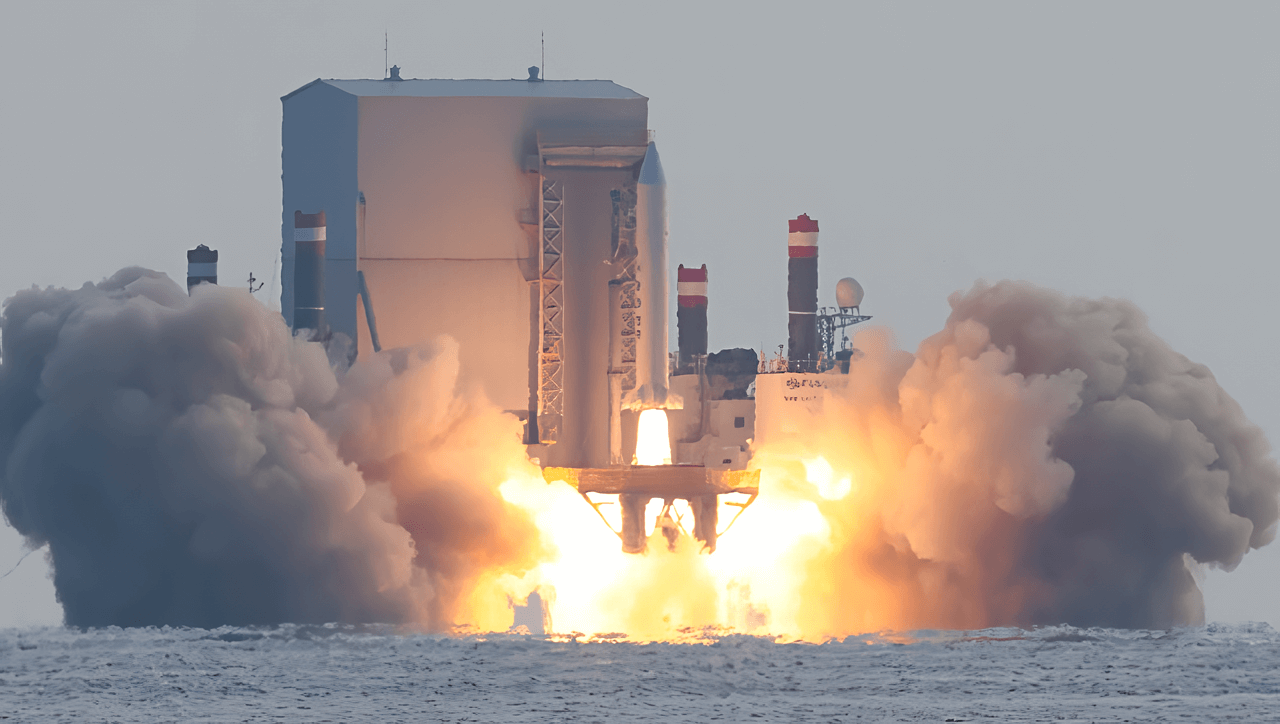
China Rocket Co. Ltd. Smart Dragon 3:
- Unknown Payload from Haiyang Oriental Spaceport (TBD) Details to be determined.
-
European Space Agency Themis Demonstrator:
- T1H-1 from Esrange Space Center (TBD) First low-altitude hop test of the Themis reusable rocket demonstrator, targeting an altitude of up to 100 metres. Themis is powered by the methane-fuelled Prometheus engine and is designed to launch, land vertically, and be reused.
-
SpaceX Falcon 9 Block 5:
- Globalstar 2-R Mission 1 (x 9) from Cape Canaveral SFS, FL, USA (TBD) A SpaceX Falcon 9 will launch nine Globalstar HIBLEO-4 satellites into low Earth orbit, constituting the first of two replenishment launches for the fleet. Booster B1090, flying for its 12th time, will target a landing on the drone ship A Shortfall of Gravitas in the Atlantic Ocean. Watch Live Launch Preview
-
Deep Blue Aerospace Nebula-1:
- Demo Flight from Haiyang Oriental Spaceport (TBD) First test launch of Deep Blue Aerospace’s Nebula-1 reusable rocket on a suborbital flight profile. Launch Preview
-
Northrop Grumman Space Systems Pegasus XL:
- Swift Boost Mission from Air Launch to Orbit, Kwajalein Atoll (07:30–13:28 UTC) Northrop Grumman’s Stargazer carrier aircraft will release the Pegasus XL at approximately 40,000 feet, carrying the Link spacecraft built by Katalyst Space Systems. Link will rendezvous with NASA’s Neil Gehrels Swift Observatory and boost it to a safe operating orbit, extending the mission’s operational life. Launch Preview
July 1
- Rocket Lab Electron:
- The Grain Goddess Provides (iQPS Launch 7) from Rocket Lab Launch Complex 1, Mahia Peninsula, New Zealand (13:00 UTC) Synthetic aperture radar Earth observation satellite for Japanese Earth imaging company iQPS, launched aboard Rocket Lab’s small-lift Electron vehicle.
July 1–2
- China Aerospace Science and Technology Corporation Long March 4C:
- Unknown Payload from Jiuquan Satellite Launch Center, People’s Republic of China (23:38–00:07 UTC) Details to be determined.
July 2
-
SpaceX Falcon 9 Block 5:
- Starlink Group 17-46 from Vandenberg SFB, CA, USA (02:00–06:00 UTC) Batch of 24 Starlink V2 Mini Optimized satellites to low Earth orbit. Booster B1088, flying for its 17th time, will land on the drone ship Of Course I Still Love You in the Pacific Ocean. Watch Live
-
United Launch Alliance Atlas V 551:
- Amazon Leo (LA-08) from Cape Canaveral SFS, FL, USA (04:24–04:53 UTC) The ninth and final Atlas V rocket booked by Amazon will launch a batch of 29 Project Kuiper broadband internet satellites into low Earth orbit. Amazon’s constellation aims to deliver high-speed, low-latency internet connectivity to underserved and remote areas globally. Watch Live
-
China Aerospace Science and Technology Corporation Long March 8A:
- Unknown Payload from Wenchang Space Launch Site, People’s Republic of China (13:46–14:12 UTC) Details to be determined. The Long March 8A is an enhanced variant of the Long March 8 capable of delivering up to 7 tonnes to a 700 km sun-synchronous orbit.
July 3
- SpaceX Falcon 9 Block 5:
- Starlink Group 10-50 from Cape Canaveral SFS, FL, USA (11:20–15:20 UTC) Batch of 24 Starlink V2 Mini Optimized satellites to low Earth orbit. Watch Live
July 6
- SpaceX Falcon 9 Block 5:
- Starlink Group 17-48 from Vandenberg SFB, CA, USA (14:00–18:00 UTC) Batch of 24 Starlink V2 Mini Optimized satellites to low Earth orbit. Booster B1088, flying for its 17th time, will land on the drone ship Of Course I Still Love You in the Pacific Ocean. Watch Live
Schedule Changes
- Rocket Lab Electron | The Grain Goddess Provides (iQPS Launch 7): Status updated from To Be Determined to Go for Launch.
- SpaceX Falcon 9 Block 5 | Starlink Group 17-40: Status updated from Go for Launch to Launch Successful — mission has been completed and is excluded from the calendar above.
- SpaceX Falcon 9 Block 5 | Sirius SXM-11: Status updated from Go for Launch to Launch in Flight — mission is currently underway.
Note: Launch dates and times are subject to change due to technical or weather considerations.

Maurice Stellarski