Top Stories
Chinese Spaceplane Releases Object in Orbit During Fourth Mission
Commercial space surveillance firm LeoLabs has detected an object released by China’s secretive spaceplane during its ongoing fourth mission. This is consistent with behavior observed in earlier missions, where the vehicle deployed sub-satellites or conducted proximity operations. The nature and purpose of the released object have not been disclosed.
From a tracking standpoint, any new object in orbit from an uncharacterized mission warrants close attention. LeoLabs’ detection highlights the growing role of commercial SSA in monitoring activity that government sensors may not immediately catalog publicly. Watch for new NORAD catalog entries associated with this event.
Read the full story: SpaceNews
Rocket Lab Launches for USSF Victus Haze Responsive Space Exercise
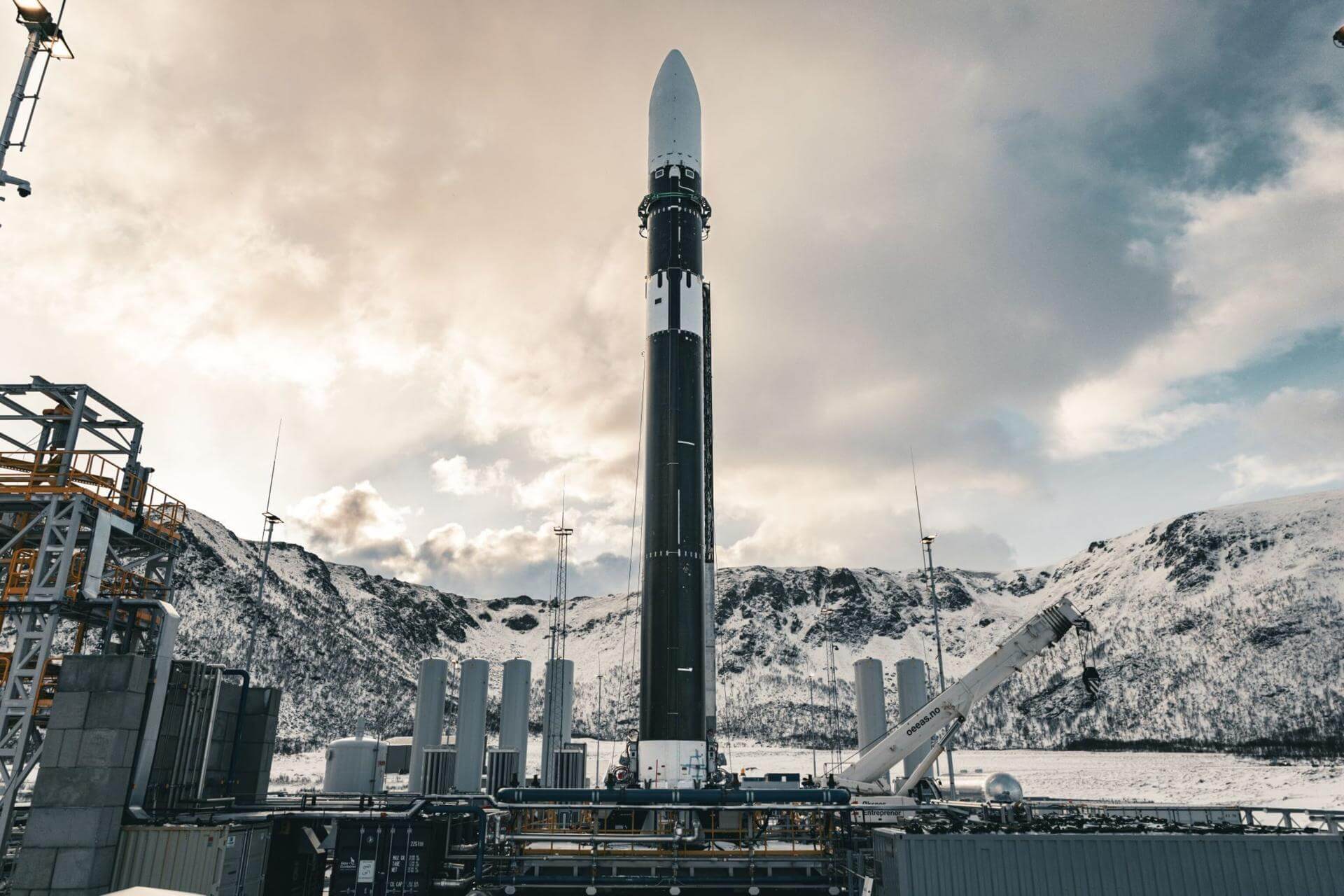
Rocket Lab launched a spacecraft for the U.S. Space Force’s Victus Haze exercise, which pairs the Rocket Lab vehicle with a True Anomaly spacecraft already on orbit. The exercise is focused on rapid threat characterization and rendezvous and proximity operations (RPO).
This is one of the most operationally realistic RPO demonstrations the Space Force has run publicly. Two purpose-built spacecraft maneuvering toward each other to practice threat characterization reflects current doctrine for space domain awareness. Track both vehicles once NORAD IDs are assigned to follow the exercise in real time using KeepTrack’s satellite tracking.
Read the full story: SpaceNews
SpaceX Launches ‘Starfall’ Reentry Capsule Demo from Cape Canaveral
SpaceX launched its first Starfall reentry capsule demonstration from pad 40 at Cape Canaveral Space Force Station at 6:53 a.m. EDT (1053 UTC). The capsule weighs approximately 2,100 kg (4,600 lbs) and represents SpaceX’s first public entry into dedicated reentry vehicle hardware beyond Dragon.
No customer or payload manifest has been disclosed for this demo. A 2,100 kg reentry capsule puts it in a class competitive with established cargo return vehicles. Whether this targets DoD reentry services, commercial cargo return, or another market is not yet confirmed.
Read the full story: Spaceflight Now
Boeing Starliner Return-to-Flight Could Be a Year Away, NASA Advisers Warn
NASA’s safety advisory panel says CST-100 Starliner may not fly again for up to a year. NASA and Boeing are still working through unresolved technical problems, and no return-to-flight date has been set. The advisers characterized progress as ongoing but incomplete.
Starliner has now been grounded since its crewed flight test in mid-2024, which ended with astronauts Butch Wilmore and Suni Williams returning aboard a SpaceX Crew Dragon instead. A year-out timeline would push the next Starliner flight to mid-2027 at the earliest.
Read the full story: SpaceNews
Pentagon Ordered to Field Three Quantum Sensor Types by 2028
Two executive orders signed today direct the Defense Department to develop and field three new categories of quantum sensors by 2028. The DoD is also tasked with supporting the Energy Department’s quantum supercomputer build and advising other federal agencies on quantum cybersecurity threats.
Quantum sensors have direct applications in navigation without GPS, underground detection, and submarine tracking — all areas of active military competition with China. The 2028 fielding deadline is aggressive given where most quantum sensing programs currently stand.
Read the full story: Breaking Defense
Air Force T-7 Red Hawk Faces Undisclosed Airworthiness Risk and Weather Restrictions
A Breaking Defense investigation found the Air Force’s T-7 Red Hawk trainer jet carries a “serious” airworthiness risk and operates under weather restrictions that have not been publicly disclosed. The problems go beyond what the Air Force has previously acknowledged.
The T-7 is the intended replacement for the T-38 Talon, which has been in service since 1961. Grounding or sustained operational limits on the Red Hawk would put direct pressure on the Air Force’s pilot training pipeline.
Read the full story: Breaking Defense
Army Selects Anduril to Lead Next-Gen Command and Control Data Layer
The Army has chosen Anduril to lead the common data layer baseline for its Next Generation Command and Control architecture. Anduril had been prototyping the full software stack with the 4th Infantry Division over the past year before this selection.
The common data layer is the connective tissue that allows sensors, shooters, and commanders to share a recognized operational picture. Winning this baseline positions Anduril at the center of Army C2 modernization going forward.
Read the full story: Breaking Defense
Satellite of the Day
ARCTURUS
ARCTURUS is a communications satellite built and operated by ASTRAN, launched on May 1, 2023, aboard a SpaceX Falcon Heavy rocket from Cape Canaveral. This compact spacecraft—just 1.5 meters in body length but spanning 10 meters with its solar panels deployed—carries a Ku-band high-throughput payload (HTP) designed to deliver flexible communications services. With a launch mass of 400 kg, ARCTURUS represents the “MicroGEO” class of satellites, a growing category of smaller, more agile alternatives to traditional heavy-lift geostationary platforms.
Operating from a geostationary orbit with minimal inclination (2.79°), ARCTURUS is positioned to serve fixed coverage areas with high-capacity data links. The satellite is powered by solar cells and onboard batteries, with an electric propulsion motor handling orbital adjustments and station-keeping. With an expected operational lifetime of 7 years, ARCTURUS exemplifies modern trends in satellite communications: smaller form factors, faster deployment cycles, and efficient Ku-band payloads that can compete with legacy systems while reducing launch costs and complexity.
| Detail | Value |
|---|---|
| NORAD ID | 56371 |
| Operator | ASTRAN (US) |
| Launch Date | May 1, 2023 |
| Orbit | Geostationary, 2.79° inclination |
| Purpose | Communications (Ku-band) |
| Status | Active |
Track this satellite in real-time: Track ARCTURUS
Upcoming Space Launches
June 23
- SpaceX Falcon 9 Block 5:
- Project Starfall Demonstration Mission from Space Launch Complex 40, Cape Canaveral Space Force Station, FL, USA (10:43 UTC) SpaceX will launch a demonstration of its new Starfall re-entry vehicle — a cylindrical capsule roughly 3.1 meters in diameter and capable of carrying 1,000 kilograms of payload. SpaceX has requested approval for up to two Starfall re-entries in the Pacific Ocean, though it remains unclear whether two spacecraft will fly on this mission. Watch Live Launch Preview
June 25
- SpaceX Falcon 9 Block 5:
- Starlink Group 17-45 from Space Launch Complex 4E, Vandenberg Space Force Base, CA, USA (02:48 UTC) A batch of 24 Starlink V2 Mini Optimized satellites into low Earth orbit. Booster B1081 will fly for its 25th time, targeting a landing on drone ship Of Course I Still Love You in the Pacific Ocean. Watch Live
June 27
- Northrop Grumman Space Systems Pegasus XL:
- Swift Boost Mission from Kwajalein Atoll, Air Launch to Orbit (09:00 UTC) Contracted by NASA under its Small Business Innovation Research Phase 3 program, Katalyst Space Technologies’ LINK servicing spacecraft will rendezvous with and attach to NASA’s Neil Gehrels Swift Observatory to re-boost its decaying orbit. The mission aims to demonstrate on-orbit servicing capabilities and extend the Swift telescope’s operational lifetime in gamma-ray astronomy.
June 28
- SpaceX Falcon 9 Block 5:
- Starlink Group 17-40 from Space Launch Complex 4E, Vandenberg Space Force Base, CA, USA (14:00 UTC) A batch of 24 Starlink V2 Mini Optimized satellites into low Earth orbit. Booster B1081 will target a landing on drone ship Of Course I Still Love You in the Pacific Ocean. Watch Live
June 29
- SpaceX Falcon 9 Block 5:
- Sirius SXM-11 from Space Launch Complex 40, Cape Canaveral Space Force Station, FL, USA (02:25 UTC) SXM-11 is the 12th high-powered digital audio radio satellite built by Lanteris Space (formerly Maxar/Space Systems/Loral) for SiriusXM, based on the IM-1300-class platform. The satellite features a large unfurlable mesh reflector nearly 10 meters in diameter, enabling SiriusXM programming to reach receivers across North America, including moving vehicles. Watch Live
June 30
-
Rocket Lab Electron:
- Ten Owl Of Ten (StriX Launch 10) from Rocket Lab Launch Complex 1, Mahia Peninsula, New Zealand (Time To Be Determined) Earth observation mission for Japanese remote sensing company Synspective, carrying a StriX-series synthetic aperture radar satellite to sun-synchronous orbit. Launch Preview
-
Rocket Lab Electron:
- The Grain Goddess Provides (iQPS Launch 7) from Rocket Lab Launch Complex 1, Mahia Peninsula, New Zealand (Time To Be Determined) A synthetic aperture radar Earth observation satellite for Japanese Earth imaging company iQPS, to be deployed to low Earth orbit.
-
China Rocket Co. Ltd. Smart Dragon 3:
- Unknown Payload from Haiyang Offshore Launch Location, Haiyang Oriental Spaceport (Time To Be Determined) Details for this commercial launch aboard the solid-fuel Smart Dragon-3 rocket are to be determined.
-
Agency for Defense Development South Korean ADD Solid-Fuel SLV:
- Demo Flight from ADD Offshore Launch Platform, Sea Launch (Time To Be Determined) A demonstration test flight of South Korea’s Agency for Defense Development solid-fuel small launch vehicle, launching to low Earth orbit. Launch Preview
-
SpaceX Falcon 9 Block 5:
- Globalstar 2-R Mission 1 (×9) from Space Launch Complex 40, Cape Canaveral Space Force Station, FL, USA (Time To Be Determined) SpaceX will launch nine HIBLEO-4 replenishment satellites for Globalstar, representing the first of two planned launches to refresh the HIBLEO-4 constellation. Booster B1090 will fly for its 12th time, targeting a landing on drone ship A Shortfall of Gravitas in the Atlantic Ocean. Watch Live Launch Preview
Schedule Changes
- New Launch Added: SpaceX Falcon 9 Block 5 | Sirius SXM-11 has been added to the manifest, scheduled for June 29, 2026 at 02:25 UTC from Cape Canaveral Space Force Station.
- Launch Successful (removed from calendar): Long March 7A | TJSW-26A has been removed from the upcoming launches list following a successful launch.
- Status Change: South Korean Agency for Defense Development Solid-Fuel SLV | Demo Flight has slipped from “Go for Launch” to “To Be Determined,” indicating a schedule uncertainty.
Note: Launch dates and times are subject to change due to technical or weather considerations.