· space brief · 8 min read
SpaceX Hits 1,500th Starlink of 2026 on Nasdaq Debut | KeepTrack Space Brief
SpaceX launches 1,500th Starlink satellite of 2026 as shares surge 19% on Nasdaq debut. Starlink 17-54 deploys 29 V2 Mini satellites; Musk projects $1 trillion revenue by 2030.
Top Stories
SpaceX Launches 1,500th Starlink Satellite of 2026 on Nasdaq Debut Day
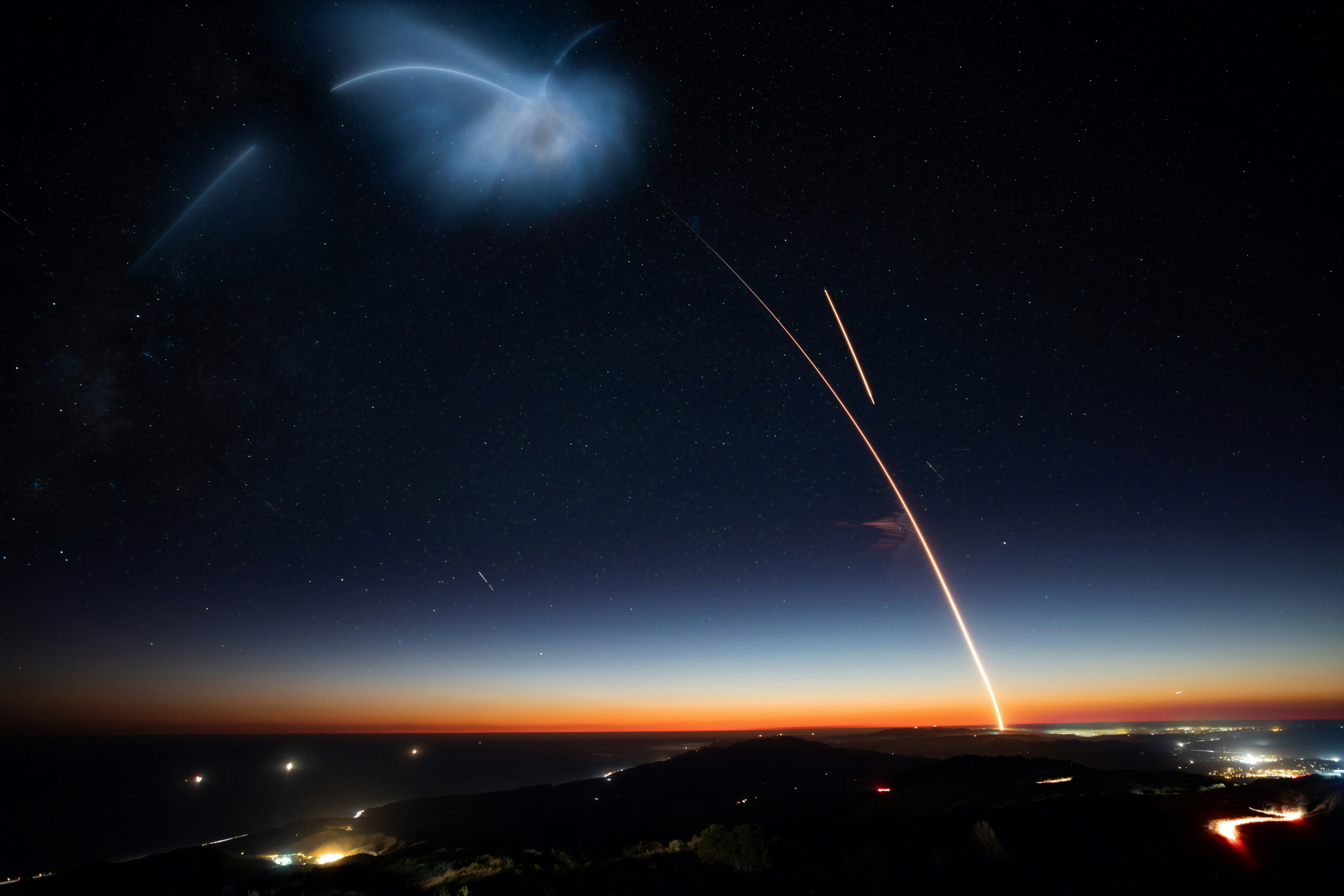
The Starlink 17-54 mission lifted off from pad 4E at Vandenberg Space Force Base, carrying what SpaceX counts as the 1,500th Starlink satellite launched in 2026 alone. That’s an average of roughly 250 satellites per month through mid-June. The mission also coincides with SpaceX’s first trading day on Nasdaq, where shares jumped 19% and Elon Musk projected $1 trillion in annual revenue by 2030.
For trackers, each new Starlink batch adds to an already dense low Earth orbit shell. The 17-54 group will join thousands of existing Starlink objects cataloged in KeepTrack — watch for new TLEs to populate within 24–48 hours of deployment.
Read the full story: Spaceflight Now
SpaceX Nasdaq Debut: 19% Surge, Musk Targets $1 Trillion Revenue by 2030
SpaceX closed its first Nasdaq trading day up 19%. Musk’s $1 trillion revenue projection by 2030 is premised heavily on Starlink’s subscriber growth and future Starship commercial operations. For context, SpaceX’s last reported valuation was approximately $350 billion.
The public listing gives outside investors — and analysts — their first ongoing window into SpaceX financials. Whether Starlink capacity scales fast enough to support that revenue target depends in part on how quickly the current orbital shell expands and how regulators handle spectrum allocation.
Read the full story: Teslarati
Solid Rocket Motor Shortfall Threatens 2027 Missile Interceptor Buys
A new report from the Center for Strategic and International Studies warns that U.S. planned interceptor procurement in 2027 will run directly into a solid rocket motor supply chain that hasn’t recovered from decades of industrial consolidation. The report doesn’t name a specific production rate gap, but flags that current capacity is insufficient to meet the planned buy volume.
This matters beyond missiles. Solid rocket motors are shared infrastructure across launch vehicles, interceptors, and orbital maneuvering systems. A constrained supply chain affects timelines across the defense space sector, not just missile defense programs.
Read the full story: SpaceNews
Starship Booster 20 Completes Cryo Testing, Ship 40 Approaching Static Fire
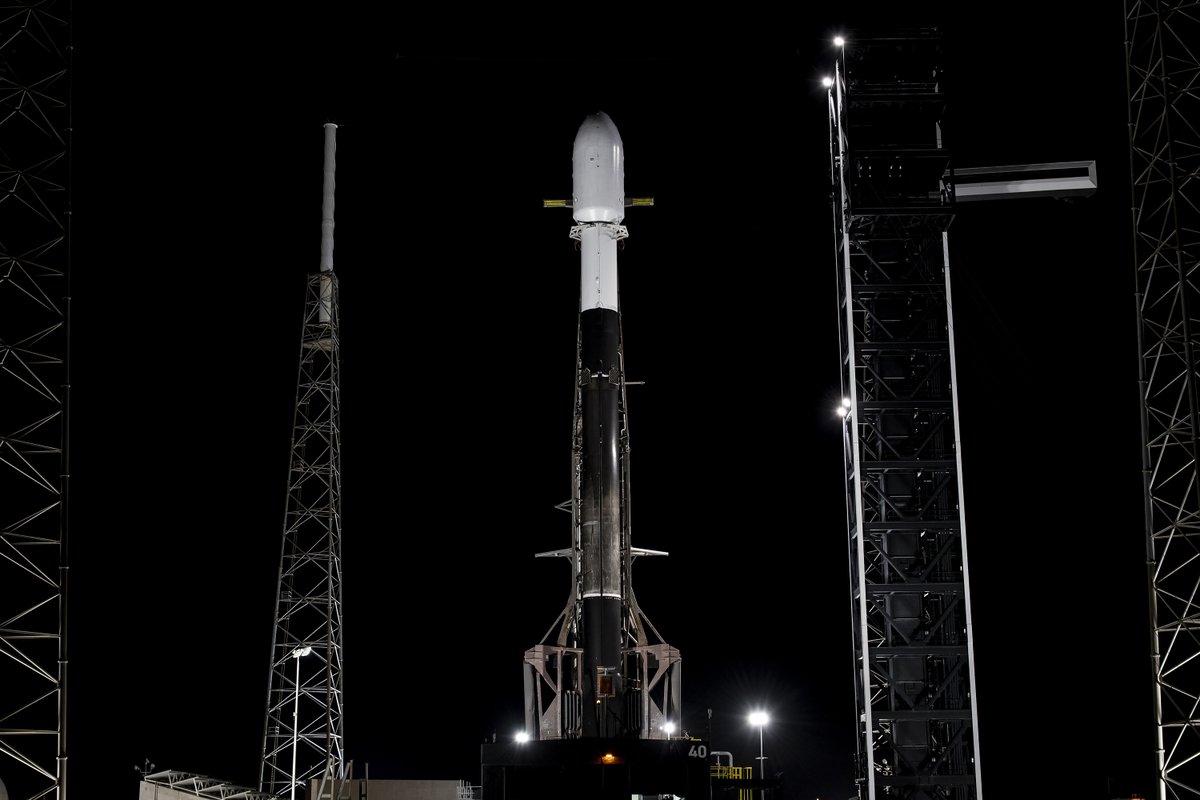
Booster 20 has completed cryogenic proof testing at Starbase, clearing one of the major pre-flight checkpoints. Ship 40 is approaching its static fire test, which would be the next major milestone before the vehicle stack is cleared for a full flight attempt. Flight 12 wrapped roughly three weeks ago.
SpaceX’s turnaround cadence between Starship flights has been tightening with each iteration. If Ship 40’s static fire goes clean, a Flight 13 attempt could come within weeks. KeepTrack users tracking reentry debris from previous Starship missions can reference past cataloged objects for context on what each flight adds to the tracked population.
Read the full story: NASASpaceFlight
Mercury at Greatest Eastern Elongation on June 15
Mercury reaches greatest eastern elongation on June 15, putting it at its maximum angular separation from the Sun in the current evening apparition. This is the optimal window to observe it low in the western sky after sunset before it drops back toward the Sun over the coming weeks.
No satellite tracking implications here — but for KeepTrack users who also do visual observation, the current new moon phase (June 14) means dark skies, making this one of the better opportunities to catch Mercury without lunar interference.
Read the full story: Space.com
Satellite of the Day
FLOCK 4Q-31
FLOCK 4Q-31 is a 3U CubeSat technology demonstrator built and operated by Planet Labs (PLAN). Launched on November 11, 2023, aboard a SpaceX Falcon 9 from Vandenberg Space Force Base, this tiny satellite is part of the broader Flock constellation—a network of Earth-imaging CubeSats designed to collect high-frequency imagery of our planet. At just 5.7 kilograms, FLOCK 4Q-31 carries a Dove 24f2 imaging payload equipped with advanced optical sensors, proving that serious Earth observation doesn’t always require large, expensive platforms.
What makes FLOCK 4Q-31 particularly interesting is its flexible orbital deployment strategy. Depending on mission needs, the satellite can operate in a near-ISS orbit for about one year or transition to a Sun-Synchronous Orbit (SSO) for 2–3 years of extended service. The use of solar cells and batteries for power, combined with its compact Box+2 panel design, exemplifies modern small-satellite engineering. While it lacks traditional propulsion (except for FEEP thrusters on certain Flock variants), the satellite demonstrates how CubeSats continue to push the boundaries of what’s possible in space technology and Earth observation.
| Detail | Value |
|---|---|
| NORAD ID | 58285 |
| Operator | Planet Labs (PLAN) |
| Launch Date | November 11, 2023 |
| Orbit | Near-ISS or Sun-Synchronous Orbit (SSO); 97.39° inclination |
| Purpose | Earth observation and technology demonstration |
| Status | Active |
Track this satellite in real-time: Track FLOCK 4Q-31
Upcoming Space Launches
June 15
-
SpaceX Falcon 9 Block 5:
- Starlink Group 17-54 from Space Launch Complex 4E, Vandenberg SFB, CA, USA (14:00 UTC) A SpaceX Falcon 9 will deploy 29 Starlink V2 Mini Optimized satellites into low Earth orbit. Booster B1080, flying for its 27th time, will land on drone ship A Shortfall of Gravitas in the Atlantic Ocean. Watch Live Launch Preview
-
Isar Aerospace Spectrum:
- Onward and Upward from Orbital Launch Pad, Andøya Spaceport, Norway (20:00 UTC) Spectrum’s second test flight, carrying six payloads: CyBEEsat (TU Berlin), TriSat-S (University of Maribor), Platform 6 (EnduroSat), FramSat-1 (NTNU), SpaceTeamSat1 (TU Wien Space Team), and the “Let it Go” experiment from Dcubed. Exolaunch is managing payload integration and deployment. Spectrum is a small two-stage launch vehicle developed by German company Isar Aerospace, with a low Earth orbit capacity of approximately 1,000 kg. Watch Live Launch Preview
June 16
- China Aerospace Science and Technology Corporation Long March 3B/E:
- Unknown Payload from Launch Complex 2 (LC-2), Xichang Satellite Launch Center, People’s Republic of China (09:37 UTC) Payload details are not yet available. The Long March 3B/E is one of China’s most capable medium-range launch vehicles and the strongest variant of the CZ-3 series, purpose-built for heavy communications satellites targeting geostationary transfer orbit. It features stretched solid boosters and extended first-stage fuel tanks over the standard CZ-3B, with a lift capacity of up to 12,000 kg to low Earth orbit. Launch Preview
June 17
-
China Aerospace Science and Technology Corporation Long March 12:
- Unknown Payload from Commercial LC-2, Wenchang Space Launch Site, People’s Republic of China (02:37 UTC) Payload details are not yet available. The Long March 12 is a medium-lift vehicle developed by the Shanghai Academy of Spaceflight Technology, using kerosene and liquid oxygen propellants. First flown in November 2024, it is capable of lifting up to 12,000 kg to low Earth orbit. Launch Preview
-
ExPace Kuaizhou 11:
- Unknown Payload from Launch Area 95A, Jiuquan Satellite Launch Center, People’s Republic of China (03:31 UTC) Payload details are not yet available. The Kuaizhou-11 is a Chinese commercial solid-fueled launch vehicle with a low Earth orbit capacity of approximately 1,000 kg. Launched from a mobile launch truck, the three-stage rocket features grid fins on its first stage. Launch Preview
-
SpaceX Falcon 9 Block 5:
- BlueBird Block 2 #3–5 from Space Launch Complex 40, Cape Canaveral Space Force Station, FL, USA (06:39 UTC) Three AST SpaceMobile Block 2 BlueBird satellites bound for low Earth orbit. The Block 2 satellites deliver up to 10 times the bandwidth of their Block 1 predecessors, featuring communications arrays of up to 2,400 square feet — making them the largest commercial satellites ever deployed in low Earth orbit. They are designed to support 24/7 continuous cellular broadband coverage across the United States, with peak data speeds up to 120 Mbps supporting voice, data, and video applications. Watch Live
-
Arianespace Ariane 64 Block 2:
- Amazon Leo (LE-03) from Ariane Launch Area 4, Guiana Space Centre, French Guiana (11:53 UTC) This Ariane 6 mission will deploy 36 Amazon Leo (formerly Project Kuiper) broadband internet satellites into low Earth orbit. Amazon Leo is a planned mega constellation of 3,276 satellites managed by Kuiper Systems LLC, a subsidiary of Amazon, targeting underserved and remote areas with high-speed, low-latency broadband connectivity. Satellites will operate at altitudes of 590, 610, and 630 km across 98 orbital planes.
-
Rocket Lab Electron:
- Ten Owl Of Ten (StriX Launch 10) from Rocket Lab Launch Complex 1, Mahia Peninsula, New Zealand (20:40 UTC) The tenth StriX-series synthetic aperture radar Earth observation satellite for Synspective, a Japanese Earth imaging company. Electron is a small-lift, electric-pump-fed launch vehicle capable of carrying up to 300 kg to orbit.
June 18
- SpaceX Falcon 9 Block 5:
- NROL-179 from Space Launch Complex 4E, Vandenberg SFB, CA, USA (08:54 UTC) The fourteenth batch of satellites for a classified reconnaissance constellation built by SpaceX and Northrop Grumman for the National Reconnaissance Office, providing imaging and other intelligence-gathering capabilities. This is a government/top secret mission operated on behalf of the National Reconnaissance Office. Watch Live
June 20
- SpaceX Falcon 9 Block 5:
- Globalstar 2-R Mission 1 from Space Launch Complex 40, Cape Canaveral Space Force Station, FL, USA (06:39 UTC) A SpaceX Falcon 9 will launch nine Globalstar HIBLEO-4 satellites into low Earth orbit, constituting the first of two replenishment launches for Globalstar’s HIBLEO-4 fleet. Booster B1090, flying for its 12th time, will target a landing on drone ship A Shortfall of Gravitas approximately 8.5 minutes after liftoff. (Status: To Be Confirmed) Watch Live Launch Preview
Schedule Changes
- Kinetica 1 | 8 satellites: Status updated from Go for Launch to Launch Successful — this mission has launched and has been removed from the upcoming launch calendar.
Note: Launch dates and times are subject to change due to technical or weather considerations.

Maurice Stellarski