· space brief · 8 min read
SpaceX IPO Surges 20%; China Debuts Tallest Rocket | KeepTrack Space Brief
SpaceX shares jump 20% on first trading day after historic IPO. China launches tallest rocket while LandSpace preps second landing attempt. Tracking data.

Top Stories
SpaceX Shares Jump ~20% on First Day of Trading
SpaceX went public and shares closed roughly 20% above the IPO price on day one. The company had been privately valued in the hundreds of billions of dollars before the listing.
The IPO gives public investors direct exposure to Starlink revenues and Starship development costs for the first time. It also sets a pricing benchmark that will affect how competitors and defense contractors position themselves with investors.
Read the full story: SpaceNews
China Debuts Its Tallest Rocket; LandSpace Plans Second Landing Attempt
China launched three missions for a single internet constellation in the opening weeks of June, capping a busy stretch with the first flight of its tallest rocket. LandSpace is now preparing for a second propulsive landing attempt after its first try earlier this year.
The constellation buildout mirrors the cadence SpaceX used during early Starlink scaling. Tracking the new Chinese broadband satellites in KeepTrack will help analysts watch orbital slot selection and inclination choices as the constellation fills out.
Read the full story: NASASpaceFlight
Solid Rocket Motor Supply Chain Could Stall 2027 Interceptor Buys
A new CSIS report warns that planned 2027 interceptor procurement will strain a solid rocket motor supply chain that hasn’t recovered from years of industry consolidation. Production capacity, not funding or design, is the near-term ceiling.
This has direct implications for ground-based midcourse defense and any program that relies on common SRM suppliers. The report doesn’t name a fix — it identifies the bottleneck.
Read the full story: SpaceNews
Starship Booster 20 Passes Cryo Test; Ship 40 Approaching Static Fire
About three weeks after Flight 12, SpaceX has completed cryogenic proof testing on Booster 20 and is moving Ship 40 toward a static fire. Both milestones are required before the next integrated flight test can be scheduled.
Flight 12 was the most recent full-stack Starship test. The pace of hardware progression suggests SpaceX is targeting a shorter turnaround between flights than in previous cycles.
Read the full story: NASASpaceFlight
NASA Revises Artemis Lander Plans for Blue Origin and SpaceX
NASA has released additional details on revised development approaches for both Blue Origin’s Blue Moon and SpaceX’s Starship Human Landing System. The changes are aimed at accelerating delivery timelines under both contracts.
Neither lander has completed a crewed descent demonstration. The revisions indicate NASA is adjusting requirements or milestones, not just schedules — though the specific scope changes haven’t been fully disclosed publicly.
Read the full story: SpaceNews
Total Solar Eclipse on Aug. 12, 2026 Will Produce Rare Sunset Effect
The August 12, 2026 total solar eclipse will create a 360-degree sunset effect visible to millions along the path of totality. The eclipse path crosses parts of the North Atlantic, Spain, and North Africa.
For satellite trackers, eclipse geometry affects solar panel output and thermal cycling on low-Earth orbit satellites passing through the umbral shadow during the event.
Read the full story: Space.com
Venus-Jupiter Conjunction Captured in 30-Day Collage
An astrophotographer documented the Venus-Jupiter conjunction over 30 consecutive days, producing a composite image showing the planets’ apparent convergence and separation across the sky.
At closest approach, the two planets appeared separated by less than one degree as seen from Earth — despite being hundreds of millions of kilometers apart in actual distance.
Read the full story: Space.com
Satellite of the Day
SPACEBEE-156
SPACEBEE-156 was a tiny but mighty CubeSat developed by SWARMX, a company focused on democratizing satellite communications for the Internet of Things. Launched on January 3, 2023, aboard a SpaceX Falcon 9 from Cape Canaveral Space Force Station, this 0.25U nanosatellite weighed just 284 grams—about as heavy as a smartphone. Despite its diminutive size, it was equipped with solar cells and batteries to power communications for Machine-to-Machine (M2M) and IoT applications, opening new possibilities for remote connectivity in underserved areas.
SPACEBEE-156 operated in a near-polar sun-synchronous orbit at 97.38 degrees inclination, ideal for consistent global coverage. However, the satellite has since decayed and is no longer operational. The Spacebee constellation represented an ambitious attempt to create a low-cost satellite network for IoT connectivity, competing in a crowded field alongside Starlink, Iridium, and other mega-constellations. Its legacy lives on as part of the broader push toward smaller, more affordable satellite solutions for global communications.
| Detail | Value |
|---|---|
| NORAD ID | 55099 |
| Operator | SWARMX |
| Launch Date | January 3, 2023 |
| Orbit | Sun-synchronous, 97.38° inclination |
| Purpose | Communication M2M/IoT |
| Status | Decayed |
Learn more about this satellite: View SPACEBEE-156
Upcoming Space Launches
June 15
-
SpaceX Falcon 9 Block 5:
- Starlink Group 17-54 from Space Launch Complex 4E, Vandenberg Space Force Base, CA, USA (14:00 UTC) A batch of 29 Starlink V2 Mini Optimized satellites launching to low Earth orbit. Booster B1080 flies for its 27th time, landing on drone ship A Shortfall of Gravitas in the Atlantic Ocean. Watch Live Launch Preview
-
CAS Space Kinetica 1:
- Unknown Payload from Launch Area 130, Jiuquan Satellite Launch Center, People’s Republic of China (03:34 UTC) Kinetica 1 (Lijian-1) is China’s largest solid-propellant light launch vehicle, capable of placing up to 2 tonnes into low Earth orbit. It features four stages and a 3.35-metre fairing, with heritage linked to the DF-31 ICBM. Payload details are not yet available. Launch Preview
-
Isar Aerospace Spectrum:
- Onward and Upward from Orbital Launch Pad, Andøya Spaceport, Norway (20:00 UTC) The second test flight of Isar Aerospace’s Spectrum small launch vehicle, carrying five CubeSats: CyBEEsat (TU Berlin), TriSat-S (University of Maribor), Platform 6 (EnduroSat), FramSat-1 (NTNU), and SpaceTeamSat1 (TU Wien Space Team), plus a Dcubed experiment called “Let it Go.” Exolaunch is managing payload integration and deployment. Previously delayed from January 21 due to a pressurization valve issue. Watch Live Launch Preview
June 16
- China Aerospace Science and Technology Corporation Long March 3B/E:
- Unknown Payload from Launch Complex 2 (LC-2), Xichang Satellite Launch Center, People’s Republic of China (09:37 UTC) The Long March 3B/E is the most capable variant of the Long March 3 series, developed for heavy communications satellites destined for geostationary transfer orbit. It features stretched boosters, extended first-stage fuel tanks, and a larger payload fairing compared to the standard 3B. Payload details are not yet available. Launch Preview
June 17
-
China Aerospace Science and Technology Corporation Long March 12:
- Unknown Payload from Commercial LC-2, Wenchang Space Launch Site, People’s Republic of China (02:37 UTC) The Long March 12 is a medium-lift launch vehicle developed by the Shanghai Academy of Spaceflight Technology, using kerosene and liquid oxygen propellant. It is capable of delivering at least 10 tonnes to low Earth orbit and at least 6 tonnes to a 700 km sun-synchronous orbit. Payload details are not yet available. Launch Preview
-
ExPace Kuaizhou 11:
- Unknown Payload from Launch Area 95A, Jiuquan Satellite Launch Center, People’s Republic of China (03:31 UTC) The Kuaizhou-11 is a Chinese commercial solid-fueled launch vehicle launched from a mobile truck, capable of placing up to 1,000 kg into low Earth orbit. Its three-stage design is reportedly based on the DF-31 missile and features grid fins on the first stage. Payload details are not yet available.
-
SpaceX Falcon 9 Block 5:
- BlueBird Block 2 #3-5 from Space Launch Complex 40, Cape Canaveral Space Force Station, FL, USA (06:39 UTC) Three AST SpaceMobile BlueBird Block 2 satellites, each featuring communications arrays of up to 2,400 square feet — the largest ever commercially deployed in low Earth orbit. These satellites deliver up to 10 times the bandwidth of Block 1, supporting voice, full data, and video with peak speeds up to 120 Mbps, advancing AST SpaceMobile’s goal of 24/7 continuous cellular broadband coverage. Watch Live
-
Arianespace Ariane 64 Block 2:
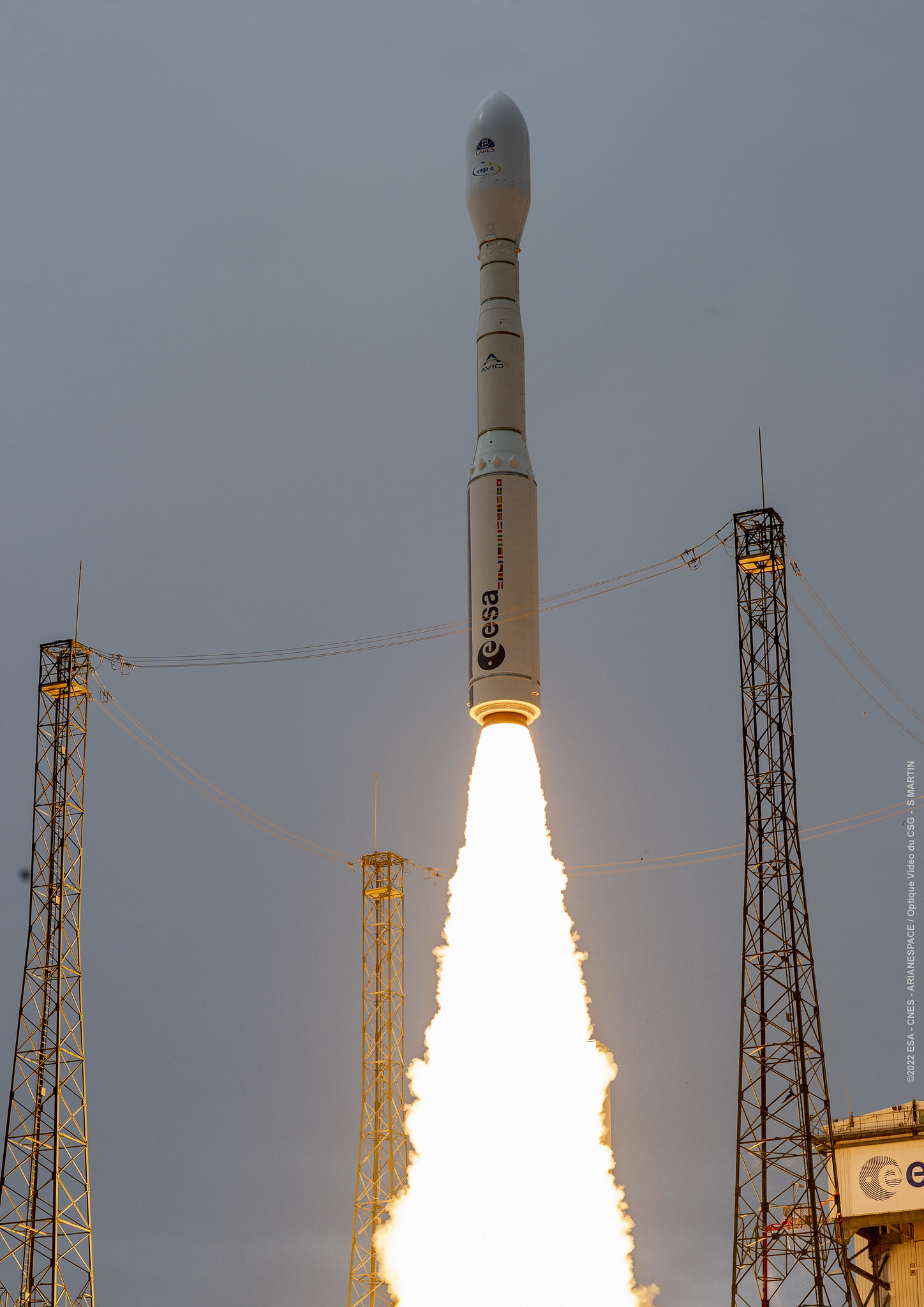
- Amazon Leo (LE-03) from Ariane Launch Area 4, Guiana Space Centre, French Guiana (11:53 UTC) The third Ariane 6 launch carrying 36 satellites for Amazon’s Leo constellation (formerly Project Kuiper), a planned 3,276-satellite broadband megaconstellation in low Earth orbit. Satellites will be distributed across 98 orbital planes at altitudes of 590, 610, and 630 km, with the goal of providing high-speed internet to underserved and remote communities worldwide.
-
Rocket Lab Electron:
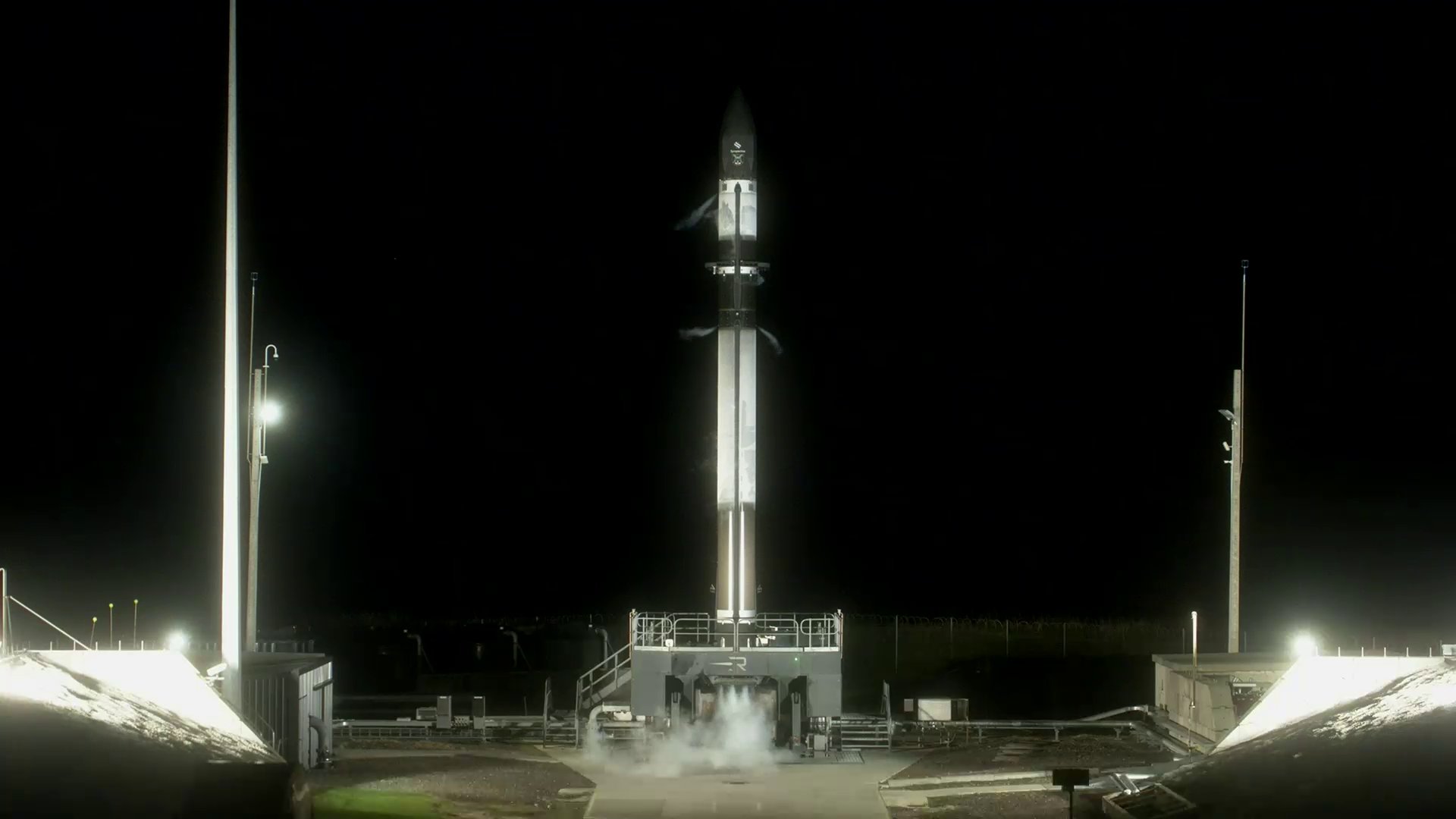
- Ten Owl Of Ten (StriX Launch 10) from Rocket Lab Launch Complex 1, Mahia Peninsula, New Zealand (20:40 UTC) The tenth StriX-series synthetic aperture radar Earth observation satellite for Japanese imaging company Synspective, continuing the build-out of their commercial SAR constellation.
June 18
- SpaceX Falcon 9 Block 5:
- NROL-179 from Space Launch Complex 4E, Vandenberg Space Force Base, CA, USA (08:54 UTC) The fourteenth batch of satellites for a classified reconnaissance constellation developed by SpaceX and Northrop Grumman for the National Reconnaissance Office, providing imaging and other intelligence-gathering capabilities. Watch Live
June 20
- SpaceX Falcon 9 Block 5:
- Globalstar 2-R Mission 1 (x9) from Space Launch Complex 40, Cape Canaveral Space Force Station, FL, USA (06:39 UTC) The first of two launches replenishing Globalstar’s HIBLEO-4 satellite fleet, carrying nine satellites to low Earth orbit. Booster B1090 flies for its 12th time, targeting a landing on drone ship A Shortfall of Gravitas in the Atlantic Ocean. Watch Live Launch Preview
Schedule Changes
- Isar Aerospace Spectrum | Onward and Upward: Status updated from To Be Confirmed to Go for Launch, confirming the second test flight of the Spectrum rocket is cleared to proceed.
- China Aerospace Science and Technology Corporation Long March 12 | Unknown Payload: Status updated from To Be Confirmed to Go for Launch.
- ExPace Kuaizhou 11 | Unknown Payload: Newly added to the manifest with a Go for Launch status, scheduled for June 17 at 03:31 UTC from Jiuquan Satellite Launch Center.
Note: Launch dates and times are subject to change due to technical or weather considerations.

Maurice Stellarski