· space brief · 7 min read
Japan's H3 Returns to Flight With 6 Satellites | KeepTrack Space Brief
Japan's H3 rocket successfully launched June 11, deploying 6 smallsats to orbit after December failure. First return-to-flight for JAXA's flagship heavy-lift vehicle.

Top Stories
Japan’s H3 Rocket Places 6 Smallsats in Orbit on First Flight Since December Failure
Japan’s H3 rocket launched June 11 and successfully delivered six smallsats to orbit — its first flight since a December failure destroyed the payload onboard. JAXA and Mitsubishi Heavy Industries had grounded the vehicle to investigate and correct the failure before attempting another mission.
The six new objects are now trackable in the catalog. Watch for TLEs to propagate as Space-Track ingests the new debris environment from this insertion.
Read the full story: SpaceNews
US Space Force Researching ‘Orbital Warehouses’ for In-Space Logistics
The Space Force is exploring the concept of orbital warehouses — pre-positioned spacecraft stockpiles that could support on-orbit servicing and rapid capability deployment. Two missions to test spacecraft maneuvering are already planned for 2027.
The concept has direct implications for resident space object tracking. Orbital warehouses would add persistent, maneuvering objects to already congested regimes, complicating custody and catalog maintenance.
Read the full story: Space.com
H3 Return-to-Flight: Six Satellites Confirmed in Orbit
Japan’s H3 launched June 11 carrying six smallsats, marking the vehicle’s first successful orbital delivery after the December mission ended in failure. The rocket had previously lost a payload on that earlier flight, putting JAXA’s flagship heavy-lift vehicle under scrutiny.
Read the full story: Space.com
Pentagon CTO: Traditional Weapons Could Be Cut to Fund Autonomous Drones
Pentagon CTO Emil Michael said the Defense Department is willing to trade exquisite weapons programs against low-cost autonomous systems if Congressional reconciliation funding falls short. “How much of those are we willing to sacrifice in place of low-cost autonomous weapons,” Michael said.
For KeepTrack users tracking military constellations, a shift in procurement priority toward autonomous systems — including drone swarms — could alter the on-orbit military object catalog over the next several years.
Read the full story: Breaking Defense
Boeing Exits Navy Trainer Jet Competition
Boeing withdrew from the U.S. Navy’s new trainer jet competition, stating that its T-7A Red Hawk — currently in production for the Air Force — does not meet Navy requirements. Boeing offered no alternative candidate.
Read the full story: Breaking Defense
Elbit Systems and Diehl Defence Partner on SkyStriker Loitering Munition for Germany
Israel’s Elbit Systems and Germany’s Diehl Defence have teamed to pitch the SkyStriker loitering munition to the German military, with the deal structured to include local manufacturing and assembly inside Germany. The partnership is being announced at the Berlin Air Show.
Read the full story: Breaking Defense
Satellite of the Day
ESSA 3
ESSA 3 (Environmental Science Services Administration) was one of the pioneering meteorological satellites of the early space age, launched by the United States on November 10, 1967. Operating in a near-polar orbit, this spacecraft carried advanced imaging instruments—including Advanced Vidicon Camera Systems (AVCS) and Automatic Picture Transmission (APT) equipment—that revolutionized weather observation and forecasting. The satellite’s real-time data transmission capabilities made it possible for weather stations around the world to receive cloud imagery directly, democratizing access to satellite weather data in an era when such information was still relatively novel.
Built by RCA and launched aboard a Thor Delta E1 rocket from Air Force Western Test Range, ESSA 3 was part of a critical transition period in meteorological remote sensing. Its near-polar, sun-synchronous orbit (102° inclination) allowed it to observe nearly every point on Earth’s surface multiple times daily. The satellite remained operational for several years, contributing valuable meteorological data during a formative decade for space-based Earth observation. Today, ESSA 3 is remembered as a technological milestone that demonstrated the immense practical value of satellites for civilian weather monitoring.
| Detail | Value |
|---|---|
| NORAD ID | 03035 |
| Operator | ESSA (US) |
| Launch Date | November 10, 1967 |
| Orbit | Polar, 102.0° inclination |
| Purpose | Meteorology |
| Manufacturer | RCA |
| Launch Vehicle | Thor Delta E1 |
Track this satellite in real-time: Track ESSA 3
Upcoming Space Launches
June 15
-
CAS Space Kinetica 1:
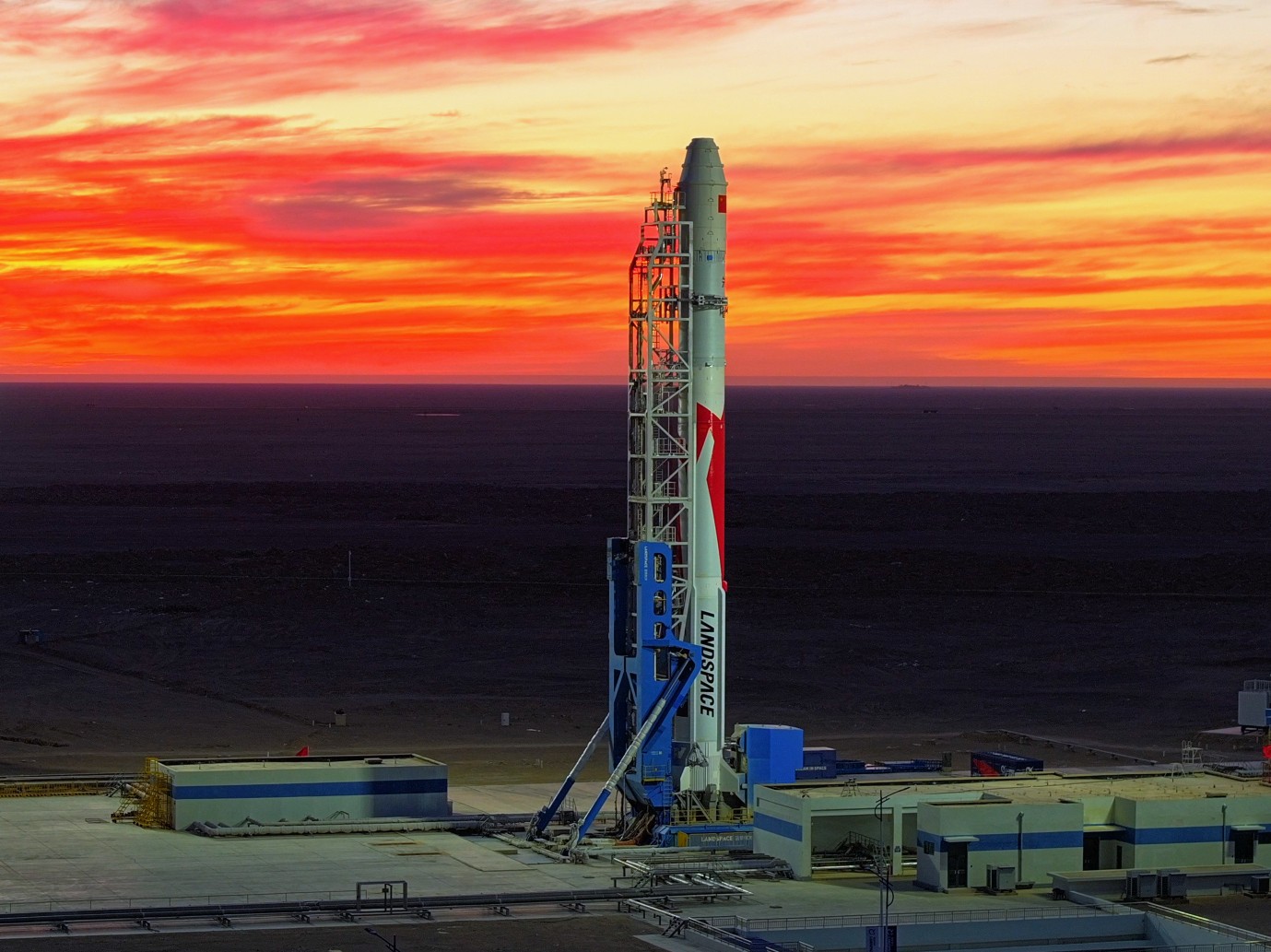
- Unknown Payload from Jiuquan Satellite Launch Center, People’s Republic of China (03:34 UTC) Kinetica 1 (Lijian-1) is a Chinese solid-propellant light launch vehicle developed by CAS Space, a subsidiary of the Chinese Academy of Sciences. Capable of placing approximately 2 tonnes into low Earth orbit, it is the largest Chinese solid propellant launcher to date. Payload details are currently undisclosed. Launch Preview
-
SpaceX Falcon 9 Block 5:
- Starlink Group 17-54 from Vandenberg Space Force Base, CA, USA (14:00 UTC) A SpaceX Falcon 9 rocket will launch 29 Starlink V2 Mini Optimized satellites into low Earth orbit. Booster tail number 1080, flying for its 27th time, will land on the drone ship A Shortfall of Gravitas in the Atlantic Ocean. Watch Live Launch Preview
-
Isar Aerospace Spectrum (To Be Confirmed):
- Onward and Upward from Andøya Spaceport, Norway (20:00 UTC) Spectrum’s second test flight carrying six payloads: CyBEEsat (TU Berlin), TriSat-S (University of Maribor), Platform 6 (EnduroSat), FramSat-1 (NTNU), SpaceTeamSat1 (TU Wien Space Team), and the “Let it Go” experiment from Dcubed. Exolaunch is managing payload integration and deployment. Previously delayed from January 21 due to a pressurization valve issue. Watch Live Launch Preview
June 16
- China Aerospace Science and Technology Corporation Long March 3B/E:
- Unknown Payload from Xichang Satellite Launch Center, People’s Republic of China (09:37 UTC) The Long March 3B/E is the heaviest variant of the Long March 3 series, specially developed for heavy communications satellites destined for geostationary transfer orbit. It features stretched boosters, extended first-stage fuel tanks, and a larger payload fairing compared to the standard CZ-3B. Payload details are currently undisclosed. Launch Preview
June 17
-
China Aerospace Science and Technology Corporation Long March 12 (To Be Confirmed):
- Unknown Payload from Wenchang Space Launch Site, People’s Republic of China (02:00 UTC) The Long March 12 is a medium-lift launch vehicle developed by the Shanghai Academy of Spaceflight Technology, using kerosene and liquid oxygen propellants. Capable of delivering at least 10 tonnes to low Earth orbit and 6 tonnes to a 700 km sun-synchronous orbit, it made its maiden flight in November 2024. Payload details are currently undisclosed. Launch Preview
-
SpaceX Falcon 9 Block 5:
- BlueBird Block 2 #3–5 from Cape Canaveral Space Force Station, FL, USA (06:39 UTC) This mission will deploy three AST SpaceMobile Block 2 BlueBird satellites into low Earth orbit. The Block 2 BlueBirds feature communications arrays as large as 2,400 square feet — making them the largest commercial satellites ever deployed in LEO — and are designed to deliver up to 10 times the bandwidth of Block 1 satellites, enabling 24/7 continuous cellular broadband service across the United States with peak data speeds up to 120 Mbps. Watch Live
-
Arianespace Ariane 64 Block 2:
- Amazon Leo (LE-03) from Guiana Space Centre, French Guiana (11:53 UTC) This Ariane 6 mission will deploy 36 satellites for Amazon’s Leo constellation (formerly Project Kuiper), a planned 3,276-satellite broadband internet constellation managed by Kuiper Systems LLC. Satellites will be placed into low Earth orbit at altitudes between 590 and 630 km across 98 orbital planes, with the goal of delivering high-speed, low-latency connectivity to underserved and remote areas globally.
-
Rocket Lab Electron:
- Ten Owl Of Ten (StriX Launch 10) from Rocket Lab Launch Complex 1, Mahia Peninsula, New Zealand (20:40 UTC) Rocket Lab’s Electron will deploy a synthetic aperture radar Earth observation satellite for Japanese imaging company Synspective. This is the tenth satellite in the StriX constellation.
June 18
- SpaceX Falcon 9 Block 5:
- NROL-179 from Vandenberg Space Force Base, CA, USA (08:54 UTC) The fourteenth batch of satellites for a classified reconnaissance constellation built by SpaceX and Northrop Grumman for the National Reconnaissance Office. The constellation provides imaging and other intelligence, surveillance, and reconnaissance capabilities for the U.S. government. Watch Live
June 20
- SpaceX Falcon 9 Block 5 (To Be Confirmed):
- Globalstar 2-R Mission 1 (x 9) from Cape Canaveral Space Force Station, FL, USA (06:39 UTC) A SpaceX Falcon 9 will launch nine Globalstar HIBLEO-4 replenishment satellites into low Earth orbit. This is the first of two planned launches to refresh Globalstar’s HIBLEO-4 fleet. Booster tail number B1090, flying for its 12th time, will target a landing on the drone ship A Shortfall of Gravitas approximately 8.5 minutes after liftoff. Watch Live Launch Preview
Schedule Changes
- New Launch Added: SpaceX Falcon 9 Block 5 | NROL-179 has been added to the manifest, scheduled for June 18 at 08:54 UTC from Vandenberg Space Force Base.
- Launch Successful: SpaceX Falcon 9 Block 5 | Starlink Group 10-54 has been removed from the upcoming calendar following a successful launch.
- Status Downgrade: SpaceX Falcon 9 Block 5 | Globalstar 2-R Mission 1 (x 9) has moved from Go for Launch to To Be Confirmed, indicating a possible scheduling delay.
Note: Launch dates and times are subject to change due to technical or weather considerations.

Maurice Stellarski