· space brief · 7 min read
Falcon 9 Booster B1067 Reaches 35th Flight Record | KeepTrack Space Brief
Booster B1067 sets new Falcon 9 reuse record with 35th successful flight, deploying 29 Starlink satellites. Quantum Space pursues public markets via SPAC.

Top Stories
Falcon 9 Booster B1067 Sets Reuse Record on 35th Flight
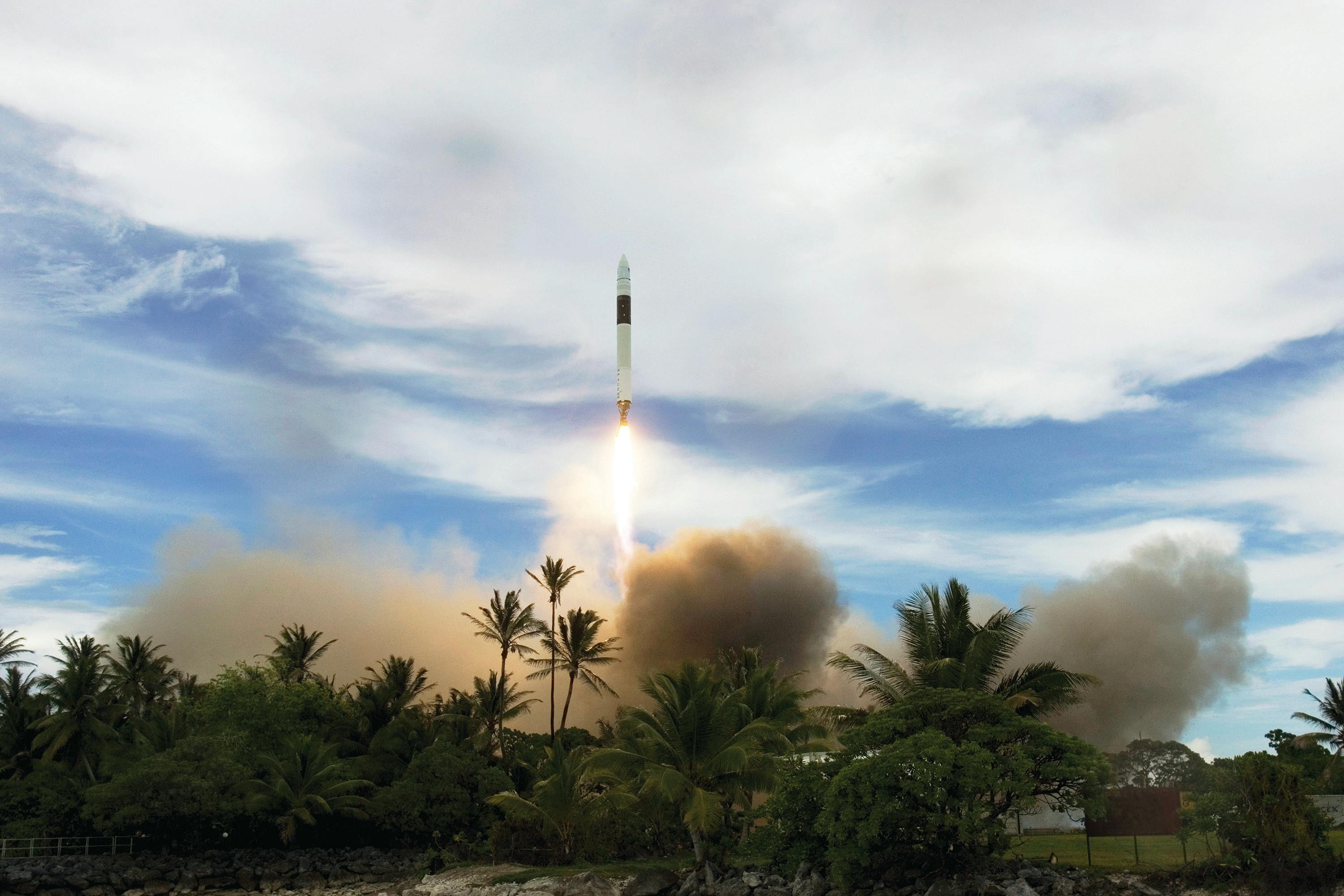
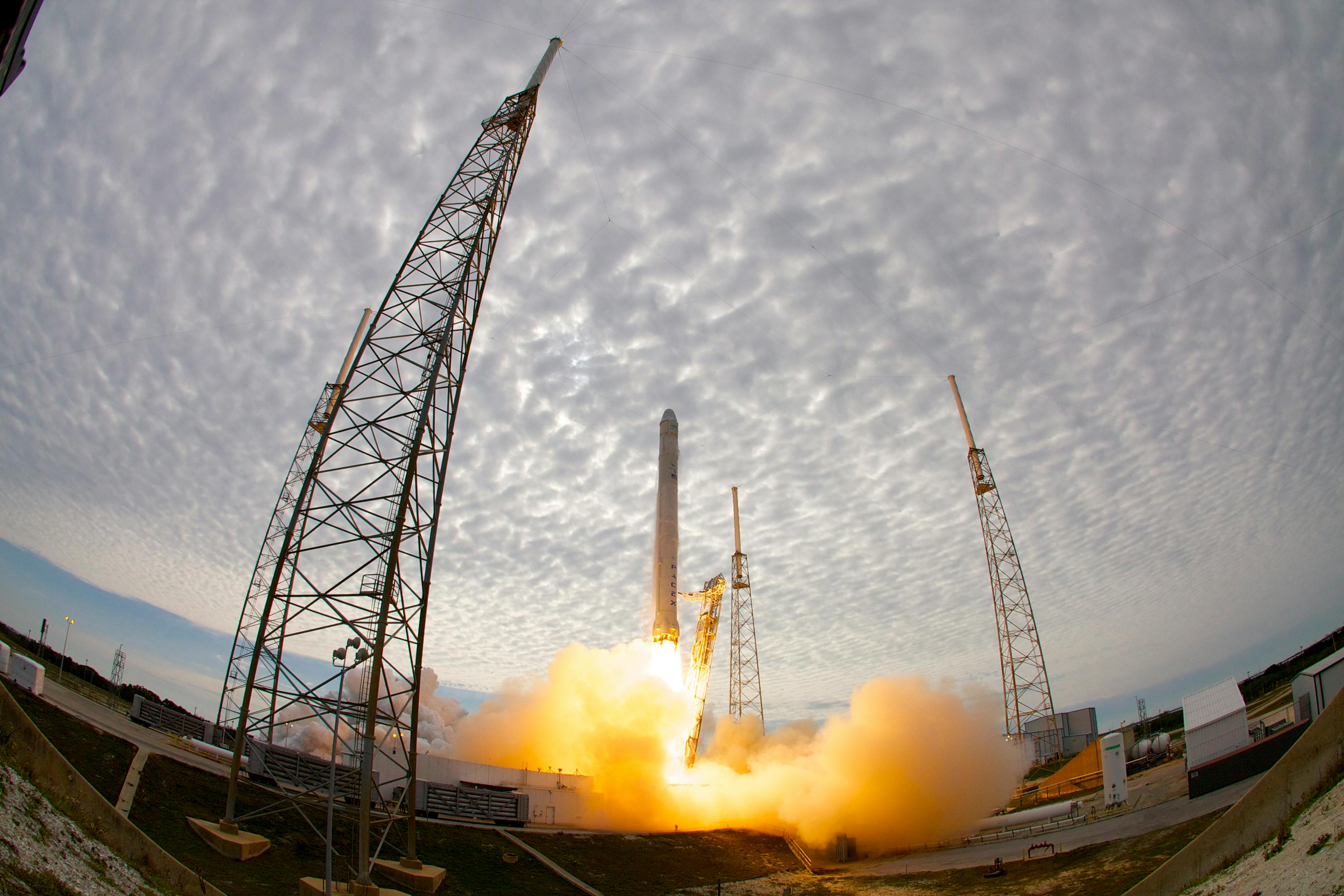
Booster B1067 flew for the 35th time on June 8, 2026, launching 29 Starlink satellites from Cape Canaveral Space Force Station and landing successfully. That’s the highest flight count for any Falcon 9 first stage to date.
The 29 new satellites are part of the Starlink 10-35 batch. You can track active Starlink satellites directly in KeepTrack as they reach operational orbit.
Read the full story: Space.com
Quantum Space Eyes Public Markets via SPAC Merger
Quantum Space, which develops highly maneuverable spacecraft for national security missions, has agreed to go public through a special purpose acquisition company merger. The company is led by a former NASA administrator.
The firm’s focus on maneuverable cislunar and high-orbit spacecraft puts it squarely in the same operational domain that Space Force is actively working to monitor and contest. A public listing would give the company significantly more capital to accelerate development.
Read the full story: SpaceNews
Trump Signs National Security Memo Ordering Overhaul of Military AI Rules
A new National Security Presidential Memorandum directs closer Pentagon collaboration with AI companies and orders a full revision of Biden-era guardrails on military AI use. Companies that don’t comply with Pentagon requirements are excluded from the preferred-partner framework.
The memo follows a high-profile dispute involving Anthropic, which had resisted certain Pentagon AI applications. The directive pushes for faster fielding of AI tools across defense missions, including those with intelligence and space domain awareness applications.
Read the full story: Breaking Defense
US Approves $2B Anduril Counter-Drone Sale to Kuwait
The State Department approved a $2 billion Foreign Military Sale of Anduril counter-drone systems to Kuwait. The announcement came days after Iran attacked Kuwait’s airport with missiles and drones, killing one person and halting flights.
Anduril’s Lattice-based systems are designed to detect, track, and defeat unmanned aerial threats. The timing of the approval reflects direct operational urgency rather than routine procurement planning.
Read the full story: Breaking Defense
Airbus Unveils U145 Autonomous Cargo Helicopter Drone
Airbus has revealed the U145, an autonomous helicopter drone designed primarily for cargo resupply. The company also lists armed scouting, surveillance, crewed-uncrewed teaming, and launching air effects as secondary military roles.
The U145 is positioned as a “mothership” platform capable of deploying smaller drones, which adds an autonomous force-multiplication dimension beyond basic logistics.
Read the full story: Breaking Defense
Satellite of the Day
Kosmos 1149
Launched on March 15, 1979, Kosmos 1149 is a Soviet military communications satellite operated by the GUKOSR (Main Directorate of Space Assets of the Russian Federation’s predecessor). This satellite was part of the extensive Kosmos program, the Soviet Union’s workhorse for deploying various payloads into orbit, ranging from reconnaissance systems to communications relays. With a launch mass of just 60 kg, Kosmos 1149 represents the compact but functional design philosophy of Cold War-era Soviet space assets.
The satellite maintains a highly inclined orbit of 74 degrees, making it valuable for high-latitude communications coverage—particularly useful for connecting with Soviet military installations across the Arctic regions and Eastern Europe. Launched aboard a Kosmos 11K65M vehicle from Plesetsk Cosmodrome, this satellite exemplifies the reliability and operational tempo of Soviet military space operations during the latter stages of the Cold War. Its decades of designation in tracking databases underscores both the longevity of early space hardware and the comprehensive cataloging efforts of space domain awareness.
| Detail | Value |
|---|---|
| NORAD ID | 11298 |
| Operator | GUKOSR (Soviet Union) |
| Launch Date | March 15, 1979 |
| Orbit | 74.0334° inclination |
| Purpose | Military Communication |
| Status | Active |
Track this satellite in real-time: Track Kosmos 1149
Upcoming Space Launches
June 9
- LandSpace Zhuque-2E Block 2:
- Unknown Payload from Jiuquan Satellite Launch Center, People’s Republic of China (08:11 UTC) The Zhuque-2E Block 2 is an enhanced liquid oxygen/methane medium-lift rocket capable of delivering up to 6,000 kg to low Earth orbit, featuring upgraded TQ-12A engines, a new TQ-15A upper stage engine, and a lengthened first stage with increased propellant capacity.
June 10
-
Indian Space Research Organization GSLV Mk II:
- GISAT-1A (EOS-05) from Satish Dhawan Space Centre Second Launch Pad, Satish Dhawan Space Centre, India (TBD) GISAT-1A is an Indian geostationary Earth observation satellite designed for continuous imaging of the Indian subcontinent and rapid monitoring of natural hazards and disasters. The GSLV Mk II is India’s largest operational launch vehicle, featuring an indigenous cryogenic upper stage.
-
China Rocket Co. Ltd. Smart Dragon 3:
- Unknown Payload from Haiyang Oriental Spaceport (00:30 UTC) Smart Dragon-3 is a commercially focused solid-fuel orbital rocket developed by a subsidiary of the state-owned China Aerospace Science and Technology Corporation group.
-
SpaceX Falcon 9 Block 5:
- Starlink Group 17-44 from Vandenberg Space Force Base, CA, USA (14:00 UTC) Batch of 29 Starlink V2 Mini Optimized satellites to low Earth orbit. Watch Live
June 11
-
China Aerospace Science and Technology Corporation Long March 5:
- Unknown Payload from Wenchang Space Launch Site, People’s Republic of China (07:22 UTC) Long March 5 is China’s heavy-lift workhorse, capable of delivering up to 25,000 kg to low Earth orbit and 14,000 kg to geostationary transfer orbit, using non-hypergolic liquid propellants. Payload details for this mission are not yet available.
-
Rocket Lab HASTE:
- Curveball from Rocket Lab Launch Complex 2 (Launch Area 0 C), Wallops Flight Facility, Virginia, USA (04:00 UTC) A suborbital hypersonic test flight under Rocket Lab’s Hypersonic Accelerator Suborbital Test Electron (HASTE) program. The Electron-derived HASTE vehicle serves as a testbed for hypersonics research on behalf of government customers.
June 12
-
Mitsubishi Heavy Industries H3-30:
- H3-30 Test Flight from Yoshinobu Launch Complex LP-2, Tanegashima Space Center, Japan (00:53 UTC) Test flight of the H3-30 variant, featuring three LE-9 engines on the first stage and no solid rocket boosters. The mission will carry the Vehicle Evaluation Payload 5 (VEP-5) dummy primary payload along with several small hitchhiking satellites: PETREL, STARS-X, BRO-22, VERTECS, and HORN-L/R, targeting a Sun-synchronous orbit.
-
SpaceX Falcon 9 Block 5:
- Starlink Group 10-54 from Space Launch Complex 40, Cape Canaveral Space Force Station, FL, USA (12:27 UTC) Batch of 29 Starlink V2 Mini Optimized satellites to low Earth orbit. Watch Live
June 14
- SpaceX Falcon 9 Block 5:
- Starlink Group 17-54 from Space Launch Complex 4E, Vandenberg Space Force Base, CA, USA (14:00 UTC) Batch of 29 Starlink V2 Mini Optimized satellites to low Earth orbit. Watch Live
June 15
- CAS Space Kinetica 1:
- Unknown Payload from Launch Area 130, Jiuquan Satellite Launch Center, People’s Republic of China (03:34 UTC) Kinetica 1 (Lijian-1) is a four-stage solid-propellant light launch vehicle developed by CAS Space, a subsidiary of the Chinese Academy of Sciences. Capable of lifting approximately 2,000 kg to low Earth orbit, it is the largest Chinese solid-propellant launcher to date. Payload details for this mission are not yet available.
June 16
- China Aerospace Science and Technology Corporation Long March 3B/E:
- Unknown Payload from Launch Complex 2 (LC-2), Xichang Satellite Launch Center, People’s Republic of China (09:37 UTC) The Long March 3B/E is an enhanced heavy-lift variant of the CZ-3 series, purpose-built for delivering large communications satellites to geostationary transfer orbit, featuring stretched boosters, extended first-stage fuel tanks, and a larger payload fairing. Payload details are not yet available.
June 17
- China Aerospace Science and Technology Corporation Long March 12:
- Unknown Payload from Commercial Launch Complex 2, Wenchang Space Launch Site, People’s Republic of China (02:00 UTC) Long March 12 is a medium-lift kerosene/liquid oxygen launch vehicle developed by the Shanghai Academy of Spaceflight Technology, capable of delivering up to 10,000 kg to low Earth orbit. Payload details for this mission are not yet available.
Schedule Changes
- New launch added: CAS Space Kinetica 1 carrying an unknown payload has been added to the manifest, scheduled for June 15 at 03:34 UTC from Jiuquan Satellite Launch Center, People’s Republic of China.
- Status update: The SpaceX Falcon 9 Block 5 mission Starlink Group 10-35 has been removed from the upcoming calendar following a successful launch.
- Status update: The China Aerospace Science and Technology Corporation Long March 3B/E carrying an unknown payload has been upgraded from To Be Confirmed to Go for Launch, now firmly scheduled for June 16 at 09:37 UTC from Xichang Satellite Launch Center.
Note: Launch dates and times are subject to change due to technical or weather considerations.

Maurice Stellarski