· space brief · 8 min read
NASA Ends MAVEN After 6-Month Contact Loss; Falcon 9 Sets 35th Reuse Record | KeepTrack Space Brief
NASA concludes MAVEN mission after six months attempting to restore contact with Mars probe. Meanwhile, Falcon 9 booster flies record 35th flight on Starlink 10-35 mission.
Top Stories
NASA Ends MAVEN Mission After Six-Month Fight to Restore Contact
NASA has officially concluded the MAVEN (Mars Atmosphere and Volatile Evolution) mission following a six-month attempt to regain communications with the spacecraft. Before the mission ended, scientists extracted enough data to identify a previously undocumented atmospheric phenomenon at Mars.
MAVEN launched in 2013 and had been studying how Mars lost its atmosphere over time. Losing contact and then spending six months trying to recover it before pulling the plug is an unusual end for a flagship planetary science mission. No replacement mission for this atmospheric monitoring role is currently announced.
Read the full story: NASASpaceFlight
Falcon 9 Booster Flies Record 35th Mission on Starlink 10-35
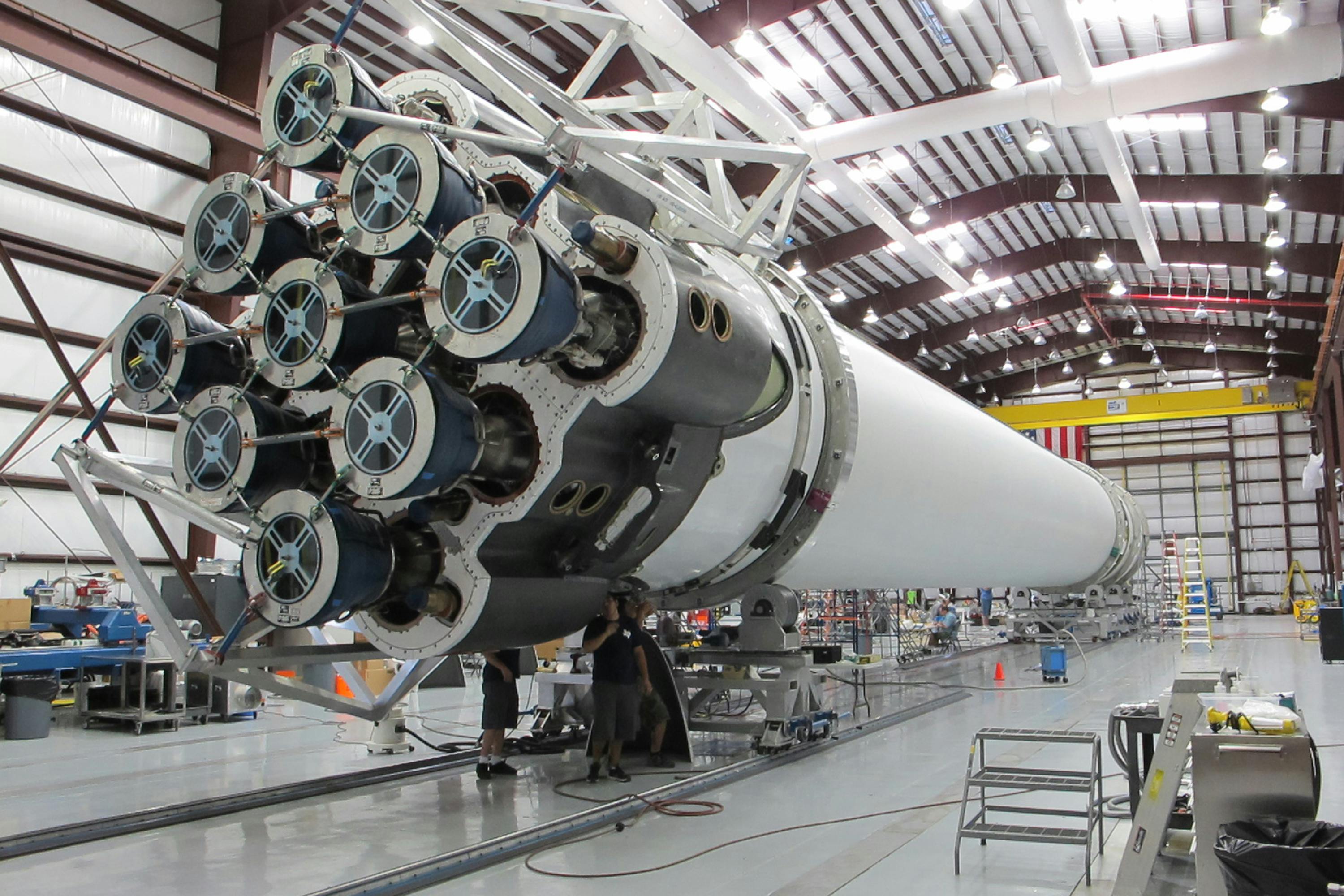
A Falcon 9 first stage flew its 35th flight on the Starlink 10-35 mission, the highest reuse count for any orbital booster. Liftoff was from LC-40 at Cape Canaveral Space Force Station during a window opening at 6:07 a.m. EDT.
Starlink 10-35 is the 53rd dedicated Starlink Group 10 launch. Each new batch adds to the growing catalog of active Starlink satellites trackable in KeepTrack’s real-time satellite browser.
Read the full story: Spaceflight Now
NASA Open to Hubble Reboost If Operating Costs Drop
NASA says it would consider a reboost mission for Hubble, which is in a slowly decaying orbit, but only if the telescope’s operating costs can be reduced first. The agency is currently preparing a reboost attempt for a separate astronomy spacecraft in a similar situation.
Hubble currently orbits at roughly 540 km. Without intervention, atmospheric drag will bring it down over the coming decades. Track Hubble to monitor its current orbital altitude and decay trend.
Read the full story: SpaceNews
UK’s NewOrbit Raises $18.5M to Build VLEO Satellites
NewOrbit Space closed an $18.5 million Series A round to develop satellites for very low Earth orbit (VLEO), typically defined as below 450 km. The UK-based company is targeting a regime that offers improved resolution for Earth observation but demands active propulsion to counteract significantly higher atmospheric drag.
VLEO is getting more crowded on the investment side. NewOrbit joins a small group of companies — including Skeyeon and AtmosOne — explicitly targeting this altitude band as a product differentiator.
Read the full story: SpaceNews
OQ Technology Plans Direct-to-Smartphone Demo in Germany Using Local Spectrum
Luxembourg-based OQ Technology plans to test satellite direct-to-smartphone connectivity in Germany using spectrum licensed to a German telecommunications operator. The demo is targeted for 2027.
The approach — using a local telco’s cellular spectrum rather than satellite-specific bands — is a direct challenge to how AST SpaceMobile and Starlink have structured their direct-to-cell services. Regulatory access to cellular spectrum varies sharply by country, which makes this a replicable model in markets where U.S.-led services face licensing friction.
Read the full story: SpaceNews
NASA to Pick New Washington-Area Headquarters by End of 2026
NASA plans to select a new headquarters building before the end of this year. The agency is staying in the Washington area but moving out of its current Two Independence Square location.
The relocation is an administrative move, but the timeline adds to an already busy period of organizational pressure at NASA, including ongoing budget uncertainty and workforce reductions under the current administration.
Read the full story: SpaceNews
Large Magellanic Cloud Is Tidally Disrupting the Small Magellanic Cloud
New research confirms the Large Magellanic Cloud is actively stripping material from its smaller companion, the Small Magellanic Cloud, through tidal forces. Both galaxies are making what is likely their first close pass by the Milky Way.
The two have been gravitationally interacting with each other for billions of years despite that first-pass status relative to our galaxy. The observed disruption is helping astronomers model how dwarf galaxy interactions evolve before a larger galactic merger.
Read the full story: Space.com
Satellite of the Day
TYSK Satellite (NORAD 57581)
Launched on August 10, 2023, from the Jiuquan Satellite Center aboard a Gushenxing 1 vehicle, this Chinese satellite was designed and manufactured by WEINA. The spacecraft features a box-shaped body with two solar panels and had a launch mass of 35 kilograms, making it a compact payload in China’s expanding satellite constellation. Despite its relatively recent launch, this satellite has since decayed from orbit, marking the end of its operational mission.
The satellite was placed into a sun-synchronous orbit with a 97.419° inclination, ideal for Earth observation and remote sensing applications common to many contemporary small satellite programs. While the specific mission details remain limited in open sources, its orbital characteristics suggest it was designed for persistent observation capabilities. This mission represents part of China’s broader effort to build a comprehensive space-based monitoring infrastructure using distributed small satellite networks.
| Detail | Value |
|---|---|
| NORAD ID | 57581 |
| Operator | TYSK (China) |
| Launch Date | August 10, 2023 |
| Orbit | Sun-synchronous, 97.419° inclination |
| Status | Decayed |
Learn more about this satellite: View TYSK Satellite
Upcoming Space Launches
June 8
-
Agency for Defense Development South Korean ADD Solid-Fuel SLV:
- Demo Flight from Sea Launch (05:00–09:00 UTC) South Korea’s Agency for Defense Development conducts a test flight of its solid-fuel small launch vehicle from an offshore sea launch platform, targeting low Earth orbit with a payload capacity of approximately 500 kg. Launch Preview
-
SpaceX Falcon 9 Block 5:
- Starlink Group 10-35 from Space Launch Complex 40, Cape Canaveral Space Force Station, FL, USA (10:07 UTC) Batch of 29 Starlink V2 Mini Optimized satellites to low Earth orbit. Watch Live Launch Preview
June 9
- LandSpace Zhuque-2E Block 2:
- Unknown Payload from Launch Area 96A, Jiuquan Satellite Launch Center, People’s Republic of China (08:11 UTC) Launch of LandSpace’s enhanced Zhuque-2E Block 2 medium-lift rocket, powered by liquid oxygen and methane. The Block 2 variant features a lengthened first stage and upgraded TQ-12A and TQ-15A engines, capable of lifting up to 6,000 kg to low Earth orbit. Payload details are not yet disclosed.
June 10
-
Indian Space Research Organization GSLV Mk II:
- GISAT-1A (EOS-05) from Satish Dhawan Space Centre Second Launch Pad, Satish Dhawan Space Centre, India (time TBD) GISAT-1A (GEO Imaging Satellite / EOS-05) is an Indian Earth observation satellite that will operate from geostationary orbit, enabling continuous monitoring of the Indian subcontinent and rapid assessment of natural hazards and disasters. Launched aboard India’s Geosynchronous Satellite Launch Vehicle Mark II, a three-stage vehicle with an indigenous cryogenic upper stage.
-
China Rocket Co. Ltd. Smart Dragon 3:
- Unknown Payload from Haiyang Offshore Launch Location, Haiyang Oriental Spaceport (00:30–06:30 UTC) Commercial solid-fuel orbital launch by China Rocket Co. Ltd., a subsidiary of the state-owned CASC group. Payload details are not yet disclosed.
-
Mitsubishi Heavy Industries H3-30:
- H3-30 Test Flight from Yoshinobu Launch Complex LP-2, Tanegashima Space Center, Japan (00:53 UTC) Test flight of the H3-30 variant, featuring three LE-9 engines on the first stage and no solid rocket boosters. The vehicle will carry a dummy primary payload (Vehicle Evaluation Payload 5, VEP-5) along with several hitchhiking small satellites: PETREL, STARS-X, BRO-22, VERTECS, and HORN-L/R. The H3 is Japan’s next-generation expendable launch vehicle developed by Mitsubishi Heavy Industries and JAXA.
-
China Aerospace Science and Technology Corporation Long March 5:
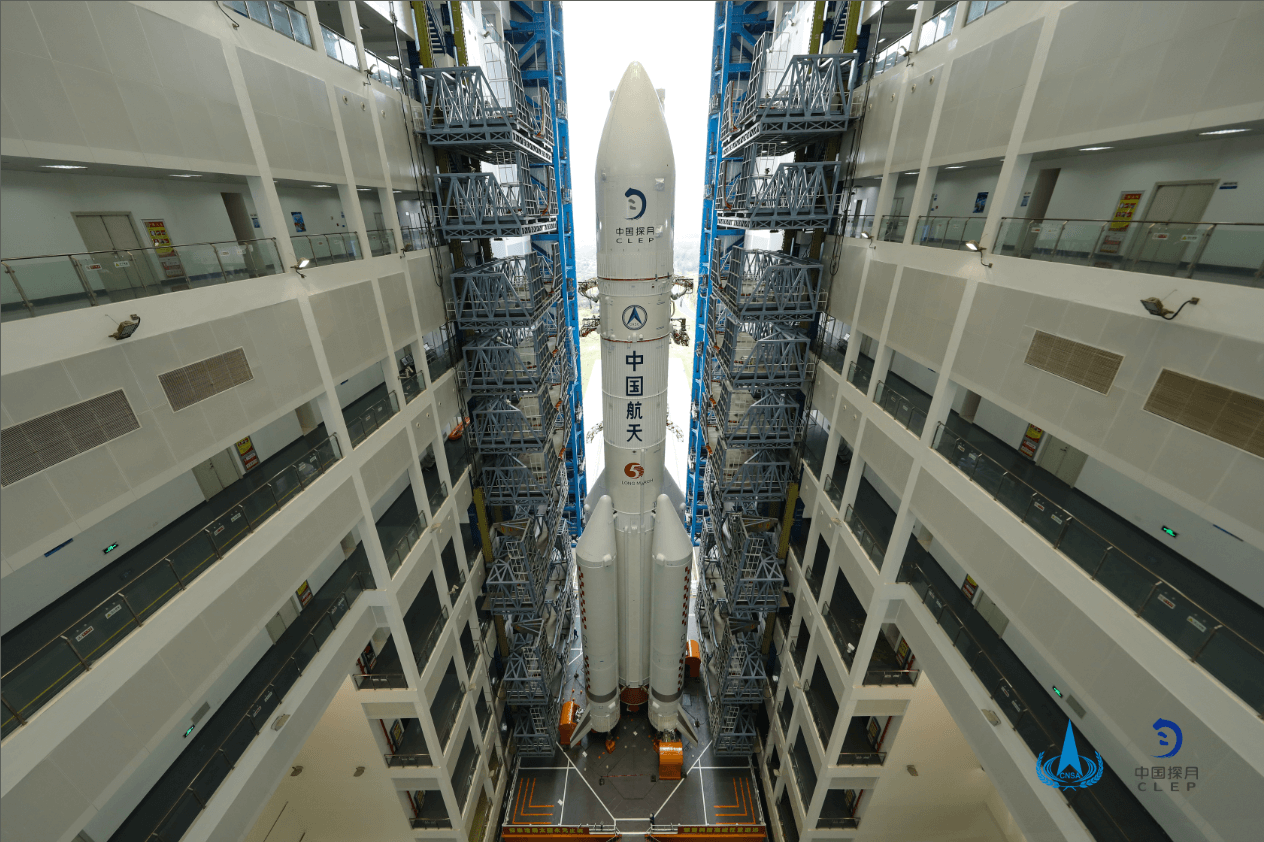
- Unknown Payload from Launch Complex 101, Wenchang Space Launch Site, People’s Republic of China (07:22 UTC) Launch of China’s heavy-lift Long March 5, one of the most powerful rockets in China’s fleet with a low Earth orbit capacity of approximately 25,000 kg. Payload details have not been disclosed.
-
SpaceX Falcon 9 Block 5:
- Starlink Group 17-44 from Space Launch Complex 4E, Vandenberg Space Force Base, CA, USA (14:00–18:00 UTC) Batch of 29 Starlink V2 Mini Optimized satellites to low Earth orbit. Watch Live
June 11
- Rocket Lab HASTE:
- Curveball from Rocket Lab Launch Complex 2 (Launch Area 0 C), Wallops Flight Facility, Virginia, USA (04:00–09:15 UTC) Suborbital hypersonic test flight under Rocket Lab’s Hypersonic Accelerator Suborbital Test Electron (HASTE) program. The mission is classified as Government/Top Secret; further payload details are not disclosed. HASTE uses a modified Electron rocket as a hypersonics research testbed.
June 12
- SpaceX Falcon 9 Block 5:
- Starlink Group 10-54 from Space Launch Complex 40, Cape Canaveral Space Force Station, FL, USA (12:27 UTC) Batch of 29 Starlink V2 Mini Optimized satellites to low Earth orbit. Watch Live
June 14
- SpaceX Falcon 9 Block 5:
- Starlink Group 17-54 from Space Launch Complex 4E, Vandenberg Space Force Base, CA, USA (14:00–18:00 UTC) Batch of 29 Starlink V2 Mini Optimized satellites to low Earth orbit. Watch Live
June 16
- China Aerospace Science and Technology Corporation Long March 3B/E:
- Unknown Payload from Launch Complex 2 (LC-2), Xichang Satellite Launch Center, People’s Republic of China (08:00–12:00 UTC) Launch of the Long March 3B/E, the enhanced variant of China’s workhorse medium-lift rocket optimized for heavy communications satellites to geostationary transfer orbit. The “E” designation denotes a larger payload fairing, stretched strap-on boosters, and extended first-stage fuel tanks. Payload details are not yet disclosed.
June 17
- China Aerospace Science and Technology Corporation Long March 12:
- Unknown Payload from Commercial LC-2, Wenchang Space Launch Site, People’s Republic of China (02:00–06:00 UTC) Launch of the Long March 12, a medium-lift vehicle developed by the Shanghai Academy of Spaceflight Technology using kerosene and liquid oxygen propellants. Capable of delivering up to 12,000 kg to low Earth orbit or 6,000 kg to a 700 km sun-synchronous orbit. Payload details are not yet disclosed.
Schedule Changes
- Long March 12 | Unknown Payload has been newly added to the manifest, scheduled for June 17, 2026 at 02:00 UTC from Commercial LC-2 at Wenchang Space Launch Site, People’s Republic of China. The launch is currently listed as To Be Confirmed.
Note: Launch dates and times are subject to change due to technical or weather considerations.

Maurice Stellarski