· space brief · 7 min read
New Glenn Damaged in Hotfire Anomaly at LC-36 | KeepTrack Space Brief
Blue Origin's New Glenn suffered a damaging anomaly during hotfire testing at Launch Complex 36, grounding the heavy-lift rocket indefinitely with no return-to-flight timeline announced.

Top Stories
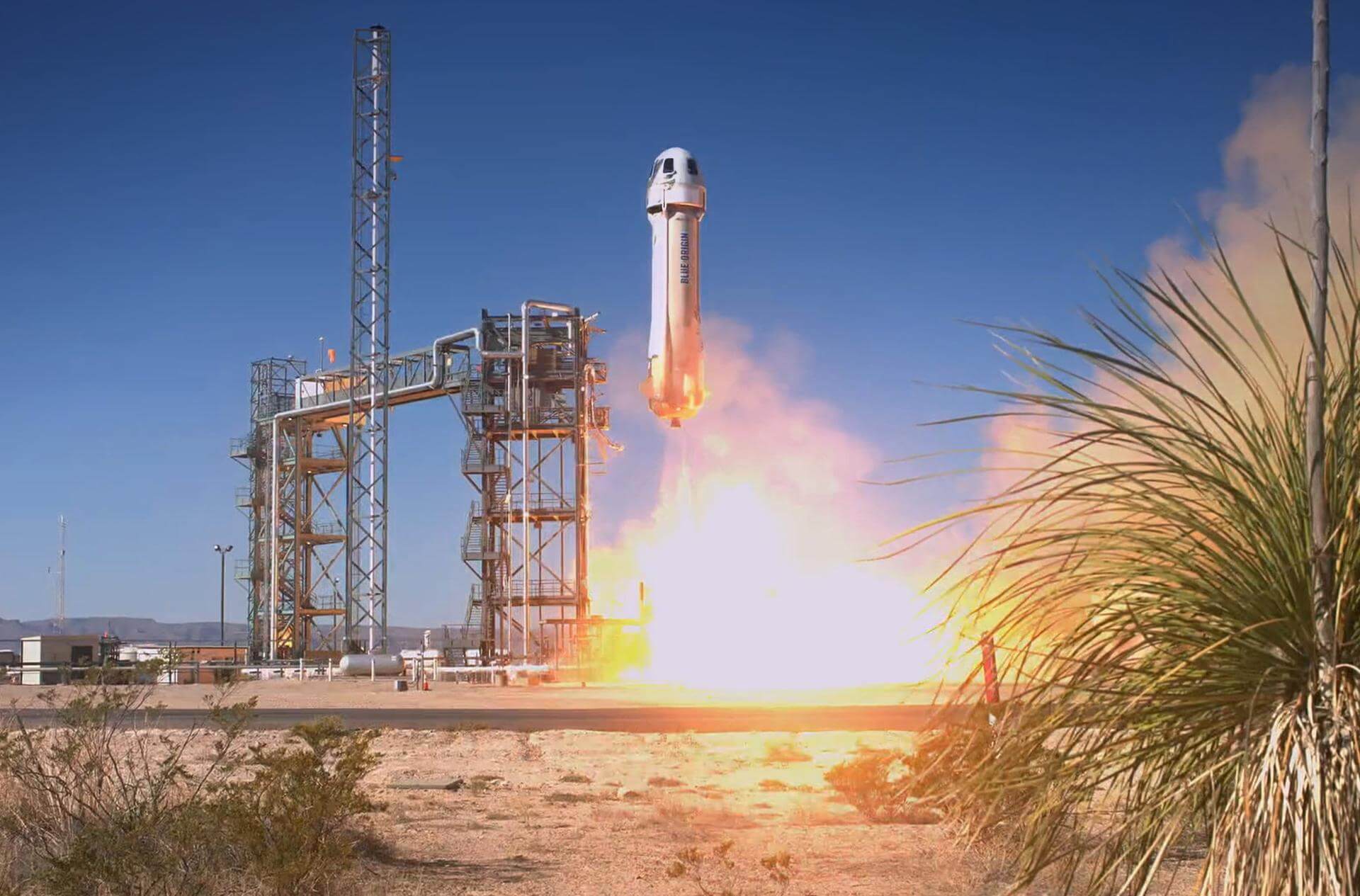
New Glenn Suffers Damaging Anomaly During Hotfire at Launch Complex 36
Blue Origin lost New Glenn to a damaging anomaly during hotfire testing at Launch Complex 36. The extent of the damage hasn’t been fully detailed publicly, but Blue Origin is continuing development of Blue Moon and its Mars mission objectives despite the setback.
This effectively grounds New Glenn for an indeterminate period. Blue Origin has not announced a timeline for assessment or return to flight.
Read the full story: NASASpaceFlight
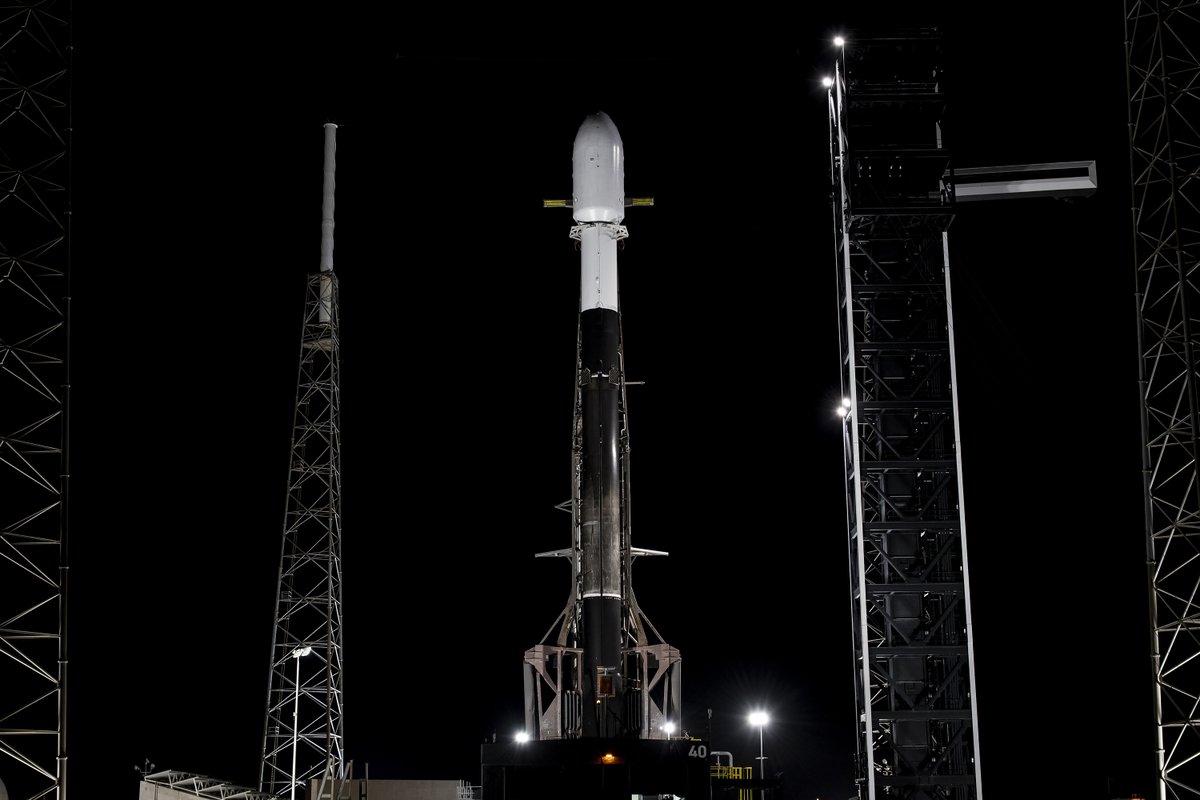
SpaceX Launches 2 Starshield Satellites Alongside Starlink from Vandenberg
SpaceX launched two Starshield satellites on a Starlink mission from pad 4E at Vandenberg Space Force Base at 9:24:45 p.m. PDT on June 6. Starshield is a government-variant of Starlink built for national security customers — public acknowledgment of these launches is uncommon.
The satellites will likely appear in tracking data alongside the standard Starlink batch. Watch for new objects in the catalog following the June 7 UTC deployment window.
Read the full story: Spaceflight Now
NASA Ordered ISS Crew to Shelter in Crew Dragon Over Russian Repair Risk
NASA directed astronauts aboard the ISS to shelter inside a Crew Dragon after Russian cosmonauts planned maintenance the agency assessed as creating “elevated risk” to the station. NASA did not specify publicly what the repairs involved or how long the shelter-in-place lasted.
The decision reflects ongoing operational friction between NASA and Roscosmos over risk tolerance and coordination aboard the station.
Read the full story: SpaceNews
NASA Open to Hubble Reboost, but Only If Operating Costs Drop
NASA confirmed it is open to rebooting Hubble’s decaying orbit if the telescope’s operating costs can be brought down first. The statement comes as NASA prepares a reboost attempt on a separate astronomy spacecraft already in a decaying orbit.
Hubble currently sits in an orbit that will continue to decay without intervention. A reboost would extend its operational life, but NASA is clearly conditioning that investment on a leaner operating budget for the observatory.
Read the full story: SpaceNews
NASA’s X-59 Breaks Sound Barrier for the First Time at Mach 1.1
NASA’s X-59 quiet supersonic research aircraft broke the sound barrier on June 5, reaching Mach 1.1. It’s the first supersonic flight for the aircraft, which is designed to generate a quieter sonic thump rather than a traditional boom.
The X-59 is the centerpiece of NASA’s Quesst mission, which aims to collect community noise data that could eventually inform FAA and ICAO rules on overland supersonic flight.
Read the full story: Space.com
Satellite of the Day
ONEWEB-0448
OneWeb’s constellation continues its ambitious mission to provide global broadband coverage, and ONEWEB-0448 is one of hundreds of satellites working toward that goal. Launched on February 10, 2022, from the Guiana Space Centre aboard a Soyuz-ST-B rocket, this Ku-band communication satellite represents the UK-based company’s push to connect underserved regions worldwide. With a compact design—just 1.3 meters long with solar arrays spanning 5 meters—the satellite was engineered for efficiency and longevity, rated to operate for up to seven years in orbit.
The satellite carries a Ku-band payload and uses Hall effect thrusters (SPT-50 or BHT-350) for station-keeping and orbital maneuvers. At 148 kg at launch, ONEWEB-0448 is part of a mega-constellation strategy that leverages hundreds of satellites in low Earth orbit to reduce latency and improve coverage compared to traditional geostationary systems. This particular unit operates at a high inclination of nearly 88 degrees, allowing OneWeb to serve polar and high-latitude regions that many other constellations struggle to reach efficiently.
| Detail | Value |
|---|---|
| NORAD ID | 51641 |
| Operator | OneWeb (UK) |
| Launch Date | February 10, 2022 |
| Orbit | Low Earth Orbit, 87.8845° inclination |
| Purpose | Communication |
| Status | Active |
Track this satellite in real-time: Track ONEWEB-0448
Upcoming Space Launches
June 8
-
Agency for Defense Development South Korean ADD Solid-Fuel SLV:
- Demo Flight from Sea Launch (05:00–09:00 UTC) South Korea’s Agency for Defense Development conducts a demonstration test flight of its solid-fuel space launch vehicle from an offshore launch platform, carrying a payload to low Earth orbit. The rocket has a stated LEO capacity of 500 kg. Launch Preview
-
SpaceX Falcon 9 Block 5:
- Starlink Group 10-35 from Space Launch Complex 40, Cape Canaveral Space Force Station, FL, USA (10:07–14:07 UTC) Routine Starlink broadband constellation replenishment mission to low Earth orbit. Watch Live
June 9
- LandSpace Zhuque-2E Block 2:
- Unknown Payload from Launch Area 96A, Jiuquan Satellite Launch Center, People’s Republic of China (08:11–08:55 UTC) The Zhuque-2E Block 2 is an enhanced medium-lift rocket powered by liquid oxygen and methane, capable of delivering up to 6,000 kg to LEO or 4,000 kg to SSO. The Block 2 variant features a lengthened first stage with higher-thrust TQ-12A engines and a new TQ-15A engine on the second stage. Payload details are not yet disclosed.
June 10
-
Indian Space Research Organization GSLV Mk II:
- GISAT-1A (EOS-05) from Satish Dhawan Space Centre Second Launch Pad, Satish Dhawan Space Centre, India (TBD UTC) GISAT-1A (GEO Imaging Satellite) is an Indian Earth observation satellite that will operate from geostationary orbit, enabling continuous monitoring of the Indian subcontinent and rapid assessment of natural hazards and disasters. The GSLV Mk II is a four-stage vehicle featuring an indigenously developed cryogenic upper stage.
-
China Rocket Co. Ltd. Smart Dragon 3:
- Unknown Payload from Haiyang Offshore Launch Location, Haiyang Oriental Spaceport (00:30–06:30 UTC) Smart Dragon-3 is a solid-fuel orbital rocket developed by a CASC subsidiary for the commercial launch market, with its maiden flight in December 2022. Payload details are not yet disclosed.
-
Mitsubishi Heavy Industries H3-30:
- H3-30 Test Flight from Yoshinobu Launch Complex LP-2, Tanegashima Space Center, Japan (00:53–02:52 UTC) Test flight of the H3-30 variant, featuring three LE-9 engines on the first stage and no solid rocket boosters. The vehicle has a launch mass of approximately 274 tonnes. The flight will carry a dummy main payload (Vehicle Evaluation Payload 5, VEP-5) along with several small hitchhiking satellites: PETREL, STARS-X, BRO-22, VERTECS, and HORN-L/R. The H3 is an expendable liquid-propellant launch vehicle developed jointly by Mitsubishi Heavy Industries and JAXA.
-
China Aerospace Science and Technology Corporation Long March 5:
- Unknown Payload from Launch Complex 101, Wenchang Space Launch Site, People’s Republic of China (07:22–08:40 UTC) Heavy-lift mission aboard the Long March 5, one of China’s most capable launch vehicles with a LEO capacity of up to 25,000 kg. The Long March 5 uses non-hypergolic liquid propellants and roughly matches the capability of American EELV heavy-class vehicles. Payload details are not yet disclosed.
-
SpaceX Falcon 9 Block 5:
- Starlink Group 17-44 from Space Launch Complex 4E, Vandenberg Space Force Base, CA, USA (14:00–18:00 UTC) Routine Starlink broadband constellation replenishment mission to low Earth orbit. Watch Live
June 11
- Rocket Lab HASTE:
- Curveball from Rocket Lab Launch Complex 2 (Launch Area 0 C), Wallops Flight Facility, Virginia, USA (04:00–09:15 UTC) A suborbital hypersonic test flight under Rocket Lab’s Hypersonic Accelerator Suborbital Test Electron (HASTE) program. HASTE uses a modified Electron rocket as a suborbital testbed for hypersonics research. This mission is classified as Government/Top Secret; further payload details are not disclosed.
June 12
- SpaceX Falcon 9 Block 5:
- Starlink Group 10-54 from Space Launch Complex 40, Cape Canaveral Space Force Station, FL, USA (12:27–16:27 UTC) Routine Starlink broadband constellation replenishment mission to low Earth orbit. Watch Live
June 14
- SpaceX Falcon 9 Block 5:
- Starlink Group 17-54 from Space Launch Complex 4E, Vandenberg Space Force Base, CA, USA (14:00–18:00 UTC) Routine Starlink broadband constellation replenishment mission to low Earth orbit. Watch Live
June 16
- China Aerospace Science and Technology Corporation Long March 3B/E:
- Unknown Payload from Launch Complex 2 (LC-2), Xichang Satellite Launch Center, People’s Republic of China (08:00–12:00 UTC) The Long March 3B/E is the most capable variant of the CZ-3 series, developed specifically to deliver heavy communications satellites to geostationary transfer orbit. It features stretched strap-on boosters, a taller payload fairing, and extended first-stage fuel tanks, with a LEO capacity of up to 12,000 kg. Payload details are not yet disclosed.
Schedule Changes
- SpaceX Falcon 9 Block 5 | Starlink Group 17-43: Status changed from Go for Launch to Launch Successful — this mission has completed and has been removed from the upcoming launch calendar.
Note: Launch dates and times are subject to change due to technical or weather considerations.

Maurice Stellarski