Top Stories
Vulcan Grounding Could Last Months, Space Force Exploring Alternatives
ULA’s Vulcan Centaur is facing a potential months-long stand-down, and Space Force officials are now actively weighing how to cover the missions it was meant to fly. Options include reassigning payloads to other launch vehicles and extending the operational life of satellites already on orbit.
Vulcan had been positioned as a key vehicle for national security launches after its certification effort. A prolonged grounding puts pressure on an already constrained U.S. launch manifest — and raises questions about how much schedule slack remains in Space Force’s constellation plans.
Read the full story: SpaceNews
Telesat Adding Military Ka-Band, Plans 2027 NASA Laser Comms Demo
Telesat is adding military Ka-band capability to its Lightspeed LEO constellation and has a laser communications demonstration with NASA scheduled for 2027. The moves are a direct play for Pentagon contracts as the DoD accelerates its push for faster space-based data transport.
Optical inter-satellite links are increasingly relevant to space domain awareness. High-throughput LEO constellations with laser comms change how quickly tactical data — including imagery and tracking data — can move from orbit to warfighters. Watch this space as Telesat’s LEO constellation approaches its debut.
Read the full story: SpaceNews
Sift Closes $42M Series B to Expand Hardware Sensor Data Tools
Sift, a Southern California startup building infrastructure for hardware sensor data interpretation, raised $42 million in a Series B round. The company develops tools that help engineers parse sensor data from systems controlled by AI algorithms — customers include rocket and satellite manufacturers.
As constellations scale and on-orbit anomaly detection becomes harder to manage manually, tooling that automates sensor data analysis has direct operational value. Sift plans to use the funding to grow its engineering team.
Read the full story: SpaceNews
Pentagon and Lockheed Sign Production Deal to Increase PrSM Missile Output
The Pentagon and Lockheed Martin have signed a framework agreement to boost production of the Precision Strike Missile. BAE Systems and Honeywell Aerospace signed separate framework deals tied to broader munitions production increases.
PrSM is the Army’s primary long-range surface-to-surface precision strike system, replacing ATACMS. Scaling production reflects both Ukraine-driven drawdown concerns and renewed focus on large-scale peer conflict scenarios.
Read the full story: Breaking Defense
Army’s Drone Marketplace Now Open, Vendors Can Self-Certify Readiness
The Army has officially launched its digital marketplace for unmanned aerial systems, allowing drone vendors to enter the procurement pipeline on a rolling basis rather than through traditional competitive rounds. Col. Danielle Medaglia, head of the Army’s UAS project management office, described the shift: vendors declare when they’re ready rather than waiting for a formal competition cycle.
The platform is designed to compress acquisition timelines for UAS — a category where commercial technology is advancing faster than traditional DoD procurement can track.
Read the full story: Breaking Defense
Army’s MV-75 Tilt-Rotor Delivery Timeline Still Uncertain
Maj. Gen. Clair Gill told Breaking Defense it’s too early to confirm whether the Army’s MV-75 tilt-rotor aircraft will meet its delivery schedule for testing. “Ultimately, we’ll have to make some risk decisions about when the performance of the system is not going to keep pace with the schedule,” Gill said.
The MV-75 is Bell’s next-generation tilt-rotor intended to replace the Black Hawk. Schedule pressure at this stage typically signals either technical integration issues or supply chain constraints — neither detail has been confirmed publicly.
Read the full story: Breaking Defense
Senate Budget Chairman Graham Advances Second Reconciliation Bill With Defense Funding
Senate Budget Committee Chairman Lindsey Graham confirmed the GOP is moving forward with a second reconciliation bill that includes defense funding. Graham framed the bill as focused on homeland security and military readiness.
No specific topline numbers have been released. For space programs — including Space Force procurement and missile defense — the bill’s final shape will determine whether funding gaps created by continuing resolutions get closed this fiscal year.
Read the full story: Breaking Defense
Satellite of the Day
COSMOS 2115
COSMOS 2115 (also known as Kosmos-2115) is a Soviet military communication satellite that has been in orbit since its launch on December 22, 1990, from the Plesetsk Cosmodrome. Manufactured by NPO PM and launched aboard a Tsiklon-3 rocket, this compact satellite carries a Strela-3 payload—part of the Soviet Union’s strategic communication infrastructure during the final days of the Cold War. At just 225 kilograms and measuring 1.6 meters in length with a 7-meter antenna span, COSMOS 2115 represents the efficient, purpose-built design philosophy of Soviet military space assets.
This satellite remains one of the longest-operating military communication platforms, having served its mission through the dissolution of the Soviet Union and into the modern era. Its near-polar orbit (82.6° inclination) provides exceptional coverage over high-latitude regions and polar areas, making it ideal for command and control communications across vast territories. Despite its age, COSMOS 2115 continues to demonstrate the durability of Soviet-era space hardware—a testament to robust engineering that has allowed it to function for over three decades in the harsh radiation environment of near-Earth orbit.
| Detail | Value |
|---|---|
| NORAD ID | 21029 |
| Operator | Soviet Union |
| Launch Date | December 22, 1990 |
| Orbit | Near-polar, 82.6° inclination |
| Purpose | Military Communication |
| Status | Active |
Track this satellite in real-time: Track COSMOS 2115
Upcoming Space Launches
March 26–27
- SpaceX Falcon 9 Block 5:
- Starlink Group 17-17 from Vandenberg Space Force Base, Space Launch Complex 4E (23:03 UTC) A batch of 25 Starlink V2 Mini Optimized satellites launching to low Earth orbit. Booster B1081 will land on drone ship Of Course I Still Love You in the Pacific Ocean on its 23rd flight. Watch Live Launch Preview
March 27
-
China Aerospace Science and Technology Corporation Long March 2C/YZ-1S:
- Unknown Payload from Jiuquan Satellite Launch Center, Launch Area 94 (04:04 UTC) Details of the payload have not been disclosed. Launch Preview
-
SpaceX Falcon 9 Block 5:
- Starlink Group 10-44 from Cape Canaveral Space Force Station, Space Launch Complex 40 (11:00 UTC) A batch of 25 Starlink V2 Mini Optimized satellites launching to low Earth orbit. Watch Live Launch Preview
March 29
-
United Launch Alliance Atlas V 551:
- Amazon Leo (LA-05) from Cape Canaveral Space Force Station, Space Launch Complex 41 (07:53 UTC) A United Launch Alliance Atlas V 551 rocket will carry a batch of broadband internet satellites for Amazon’s Project Kuiper low Earth orbit constellation. This is the sixth of nine Atlas V rockets contracted by Amazon for its satellite deployment campaign. The Atlas V uses a Russian-built RD-180 engine on its first stage and a Centaur upper stage powered by the RL10 engine. Watch Live Launch Preview
-
RKK Energiya Soyuz-5:
- Demo Flight from Baikonur Cosmodrome, Site 45/1 (11:00 UTC) The inaugural demonstration flight of Russia’s new Soyuz-5 (Irtysh) launch vehicle, carrying a mass simulator. Soyuz-5 is designed to replace the Zenit-2 and Proton Medium rockets, capable of lifting up to 17 tonnes to low Earth orbit powered by an RD-171MV engine on its first stage. Launch Preview
March 30
- SpaceX Falcon 9 Block 5:
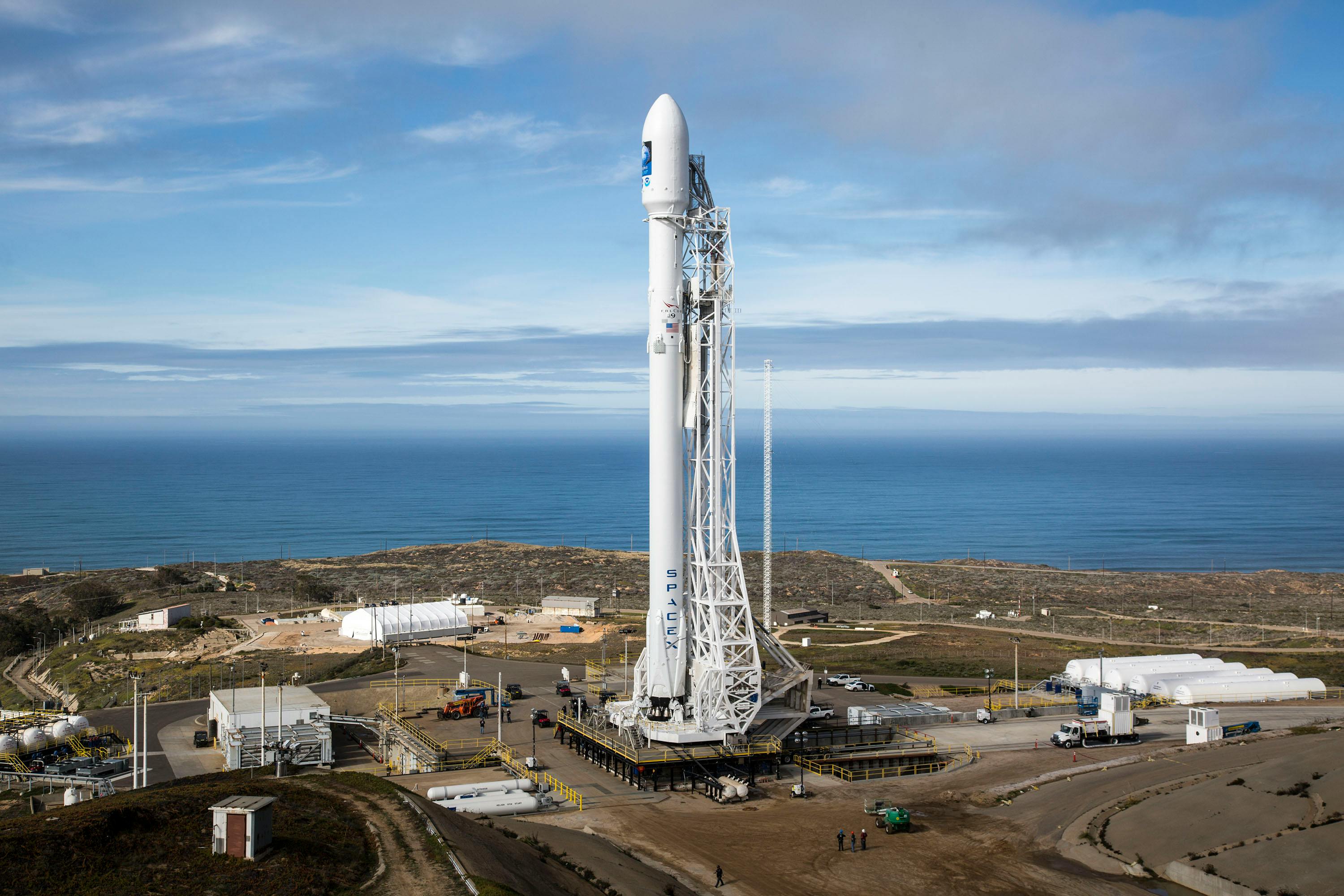
- Transporter 16 (Dedicated SSO Rideshare) from Vandenberg Space Force Base, Space Launch Complex 4E (10:20 UTC) A dedicated smallsat rideshare mission deploying dozens of customer satellites to Sun-synchronous orbit, including 57 payloads manifested by German company Exolaunch and 19 payloads from Texas-based Seops Space. Watch Live Launch Preview
March 31
-
Rocket Lab Electron:
- Daughter Of The Stars (LEO-PNT Pathfinder A) from Rocket Lab Launch Complex 1A, Mahia Peninsula, New Zealand (To Be Determined) A dedicated mission for the European Space Agency launching the first two satellites — IOD-1 and IOD-2 — of the Celeste LEO-PNT constellation into a 510 km circular orbit. This 11-satellite constellation will demonstrate how low Earth orbit navigation assets can complement Galileo, EGNOS, and other Global Navigation Satellite System constellations to improve resilience and positioning services. Watch Live Launch Preview
-
Blue Origin New Glenn:
- BlueBird Block 2 #2 from Cape Canaveral Space Force Station, Launch Complex 36A (To Be Determined) AST SpaceMobile’s BlueBird Block 2 FM2 satellite features a communications array of up to 2,400 square feet — making it among the largest commercial satellites ever deployed to low Earth orbit. The Block 2 design delivers up to 10 times the bandwidth of Block 1 satellites, supporting voice, data, and video services with peak speeds up to 120 Mbps.
-
China Aerospace Science and Technology Corporation Long March 2C:
- Unknown Payload from Jiuquan Satellite Launch Center, Launch Area 94 (To Be Determined) Details of the payload have not been disclosed.
Schedule Changes
- New Launch Added: Blue Origin New Glenn | BlueBird Block 2 #2 has been added to the manifest, currently targeting no earlier than March 31, 2026 (date To Be Determined).
- Status Update: SpaceX Falcon 9 Block 5 | Transporter 16 (Dedicated SSO Rideshare) has been upgraded from To Be Confirmed to Go for Launch, targeting March 30, 2026 at 10:20 UTC.
- Launch Completed: China Aerospace Science and Technology Corporation Long March 2D | SuperView Neo 2-05 & 06 has been removed from the upcoming calendar following a successful launch.
Note: Launch dates and times are subject to change due to technical or weather considerations.