📰Top Stories
U.S. Space Force Retires Resilient GPS Program
The U.S. Space Force has decided to terminate its ‘Resilient GPS’ (R-GPS) program, which aimed to strengthen the Global Positioning System with smaller and more cost-effective satellites. This initiative, launched in 2024, aimed to diversify satellite sources and protect against potential threats, marking a strategic pivot in military satellite operations.
Read the full story: SpaceNews
GE and Lockheed Pioneer Hypersonic Ramjet Technology
In a collaborative breakthrough, GE Aerospace and Lockheed Martin have successfully validated a new liquid-fueled rotating detonation ramjet engine designed for hypersonic missile applications. This propulsion system, part of a broader technological partnership, could revolutionize future military and space propulsion technology.
Read the full story: SpaceDaily
Eutelsat Plans OneWeb Satellite Launch with MaiaSpace
Eutelsat has joined forces with the French aerospace startup MaiaSpace to deploy a series of OneWeb’s replenishment satellites. This deal marks a significant step in expanding OneWeb’s broadband satellite constellation, underscoring Eutelsat’s commitment to enhancing global connectivity.
Read the full story: SpaceNews
Atomic 6’s Space Armor to Shield New Spacecraft
Atomic-6 will implement its innovative Space Armor tiles on an upcoming spacecraft mission by Portal Space Systems, scheduled for October 2026. These tiles will serve as essential defenses against micrometeoroid and orbital debris, marking their first operational use in space.
Read the full story: SpaceDaily
China Tests Reusable Long March 12B Rocket
China has executed a successful static firing of its Long March 12B rocket’s reusable first stage, paving the way for future sustainable space missions. Conducted at the Jiuquan Satellite Launch Center, this test could herald a new era of cost-effective and eco-friendly satellite launches.
Read the full story: SpaceDaily
Innovative Graviton Detector Concept Developed
A team backed by the Keck Foundation has made strides toward developing the first graviton detector, potentially solving one of quantum physics’ greatest challenges. This detector aims to bridge the gap between quantum mechanics and general relativity by identifying gravitons, the hypothetical carriers of gravity.
Read the full story: SpaceDaily
🛰️Satellite Spotlight
- Satellite Name: AMOS-17
- NORAD ID: 44479
- Launch Date: August 6, 2019
- Mission: AMOS-17 serves as a communication satellite, providing broadband services, direct-to-home television, and various data services across a vast region.
- Orbit: GEO (Geostationary Orbit)
- Operator: IAIS (Israel Aerospace Industries)
- Fun Fact: AMOS-17 is equipped with multiple transponder bands including Ku-band, C-band, and Ka-band, allowing it to support a wide range of communication needs.
Track this satellite in real-time on our web app: Track AMOS-17
🌌Space Weather
Next 24 Hours
-
Radio Blackouts Probability
- Minor: 65
- Major: 20
- Risk: None
-
Solar Radiation
- Probability: 99
- Risk: None
-
Geomagnetic Storming
- Scale: 0
- Impact: none
- Activity: Low
-
Impact Summary
- No risk of radio blackouts.
- No risk of solar radiation storms.
- Geomagnetic outlook indicates low activity, providing a stable environment for satellite operations and ground-based observations.
Long Term Forecast
- Impact Summary
- Solar activity may exhibit low levels with potential for R1-R2 (Minor-Moderate) and a slight chance for R3 (Strong) radio blackouts, mainly due to multiple solar regions.
- Anticipated S1 (Minor) solar radiation storms expected on 19-20 Jan could impact satellite systems at geosynchronous orbit.
- High levels of electron flux expected during certain periods may affect satellite operations, especially for LEO satellites.
- Geomagnetic activity is forecasted to reach G1 (Minor) storm levels on 29 Jan, which could impact communication systems and satellite drag rates during that time. Most of the period is expected to remain quiet.
🚀Upcoming Space Launches
January 20
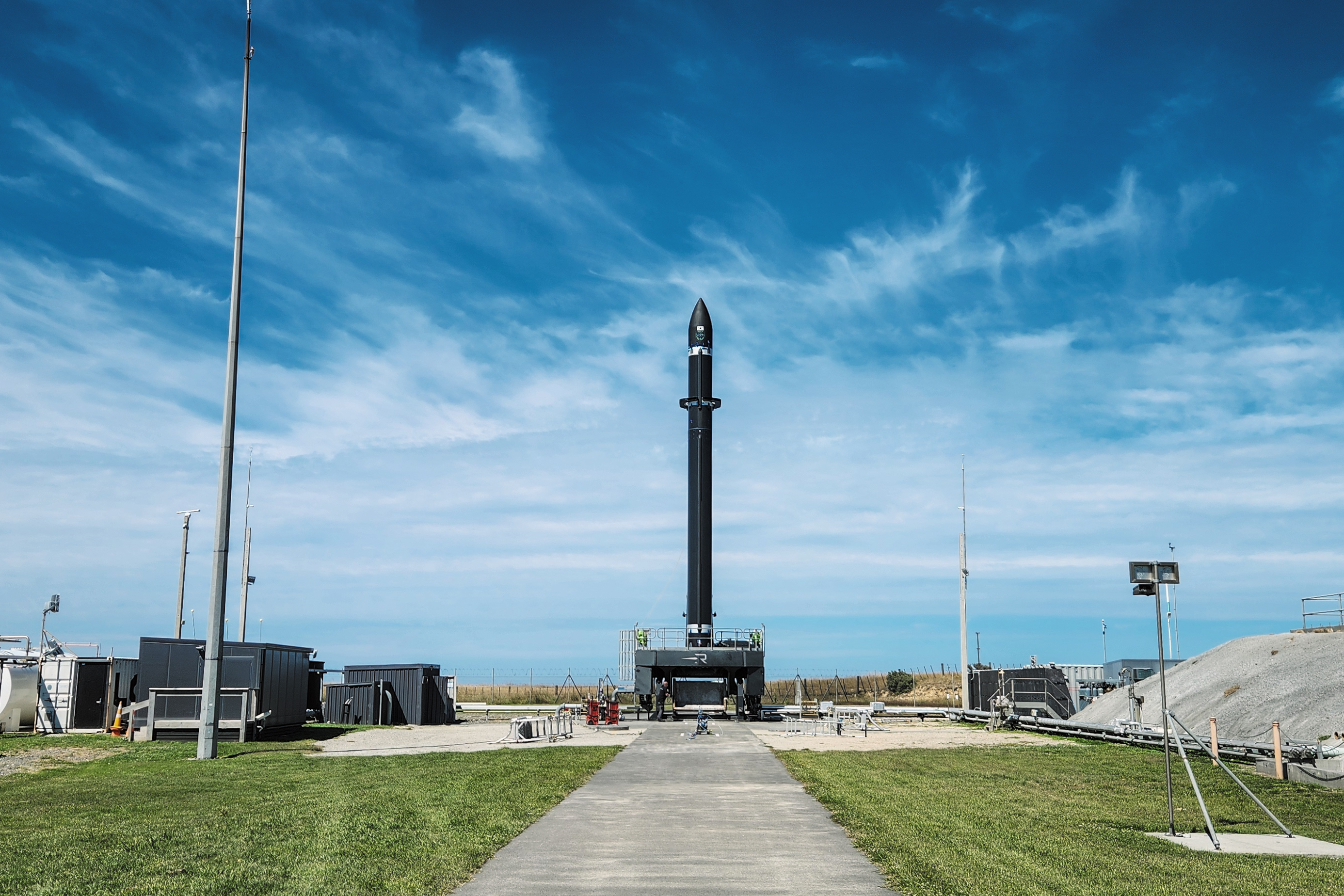
- Rocket Lab Electron:
- The Cosmos Will See You Now (Open Cosmos Constellation Launch 1) from Rocket Lab Launch Complex 1, Mahia Peninsula, New Zealand (11:09 UTC)
- First 2 satellites of UK-based Open Cosmos’ secure LEO broadband constellation designed to provide independent and resilient connectivity infrastructure for Europe and the world.
January 21
- Isar Aerospace Spectrum:
- Onward and Upward from Andøya Spaceport (20:00 UTC)
- Second test flight of the Isar Spectrum launch vehicle. This launch will carry 5 cubesats and 1 non-separable experiment as part of ESA’s “Boost!” program.
January 22
-
SpaceX Falcon 9 Block 5:
- Starlink Group 17-30 from Space Launch Complex 4E, Vandenberg SFB, CA, USA (02:43 UTC)
- A batch of 25 satellites for the Starlink mega-constellation - SpaceX’s project for space-based Internet communication system.
-
Blue Origin New Shepard:
- NS-38 from Corn Ranch, Van Horn, TX, USA (14:30 UTC)
- NS-38 is the 17th crewed flight for the New Shepard program and the 38th in the New Shepard program’s history.
January 25
-
China Rocket Co. Ltd. Smart Dragon 3:
- Unknown Payload from Haiyang Oriental Spaceport (04:00 UTC)
- Possibly an Earth observation satellite for the Pakistan government’s SUPARCO, details TBD.
-
SpaceX Falcon 9 Block 5:
- Starlink Group 17-20 from Space Launch Complex 4E, Vandenberg SFB, CA, USA (15:17 UTC)
- A batch of 24 satellites for the Starlink mega-constellation - SpaceX’s project for space-based Internet communication system.
January 26
- China Aerospace Science and Technology Corporation Long March 7A:
- Unknown Payload from Wenchang Space Launch Site, People’s Republic of China (21:00 UTC)
- Details TBD.
January 31
- Rocket Lab Electron:
- Bridging The Swarm (NeonSat-1A) from Rocket Lab Launch Complex 1, Mahia Peninsula, New Zealand (00:00 UTC)
- The NeonSat-1A is designed to test the constellation capabilities of the South Korean government’s Earth observation micro-satellite constellation.
Note: Launch dates and times are subject to change due to technical or weather considerations.