📰Top Stories
Firefly Aerospace Expands into Defense Market with SciTec Acquisition
Firefly Aerospace is set to acquire defense contractor SciTec in a deal valued at $855 million. This acquisition aims to boost Firefly’s presence within the defense sector, particularly with its ambitions in the Golden Dome program. The move marks a significant step for Firefly, traditionally known for its launch capabilities, as it ventures deeper into defense contracting and satellite technologies.
Read the full story: SpaceNews
DARPA Lays out a Field Guide to Boost Moon Economy
DARPA has developed a comprehensive “field guide” intended to stimulate an economic connection between the Earth and the moon. This initiative explores the feasibility of industrial activities at lunar bases, outlining steps to effectively initiate a lunar economy. The potential economic expansion to the moon could redefine future space commerce and exploration.
Read the full story: Space.com
Vantor and Lanteris Usher in New Era for Space Intelligence and Defense
Formerly operating under the Maxar Technologies umbrella, Vantor and Lanteris have rebranded, signifying their transformation into independent entities focused on space intelligence and defense technology. This strategic evolution allows both companies to innovate and specialize within their respective niches, enhancing their contributions to the broader space and defense sectors.
Read the full story: SpaceDaily
European Space Agency Unveils New Deep Space Antenna in Australia
The European Space Agency has inaugurated a new deep space antenna in Australia, a strategic development to bolster collaborations between Europe and Australia in the realm of deep space exploration and tracking. This state-of-the-art facility will enhance communication capabilities for distant missions while fostering international partnerships.
Read the full story: SpaceNews
Record-Breaking Growth Spurt Observed in Young Rogue Planet
Astronomers have observed a rogue planet experiencing a dramatic growth phase, accumulating matter at an unprecedented rate of six billion tonnes per second. This discovery sheds light on the rapid development processes of free-floating planets and underscores the dynamic nature of these celestial objects.
Read the full story: SpaceDaily
🛰️Satellite Spotlight
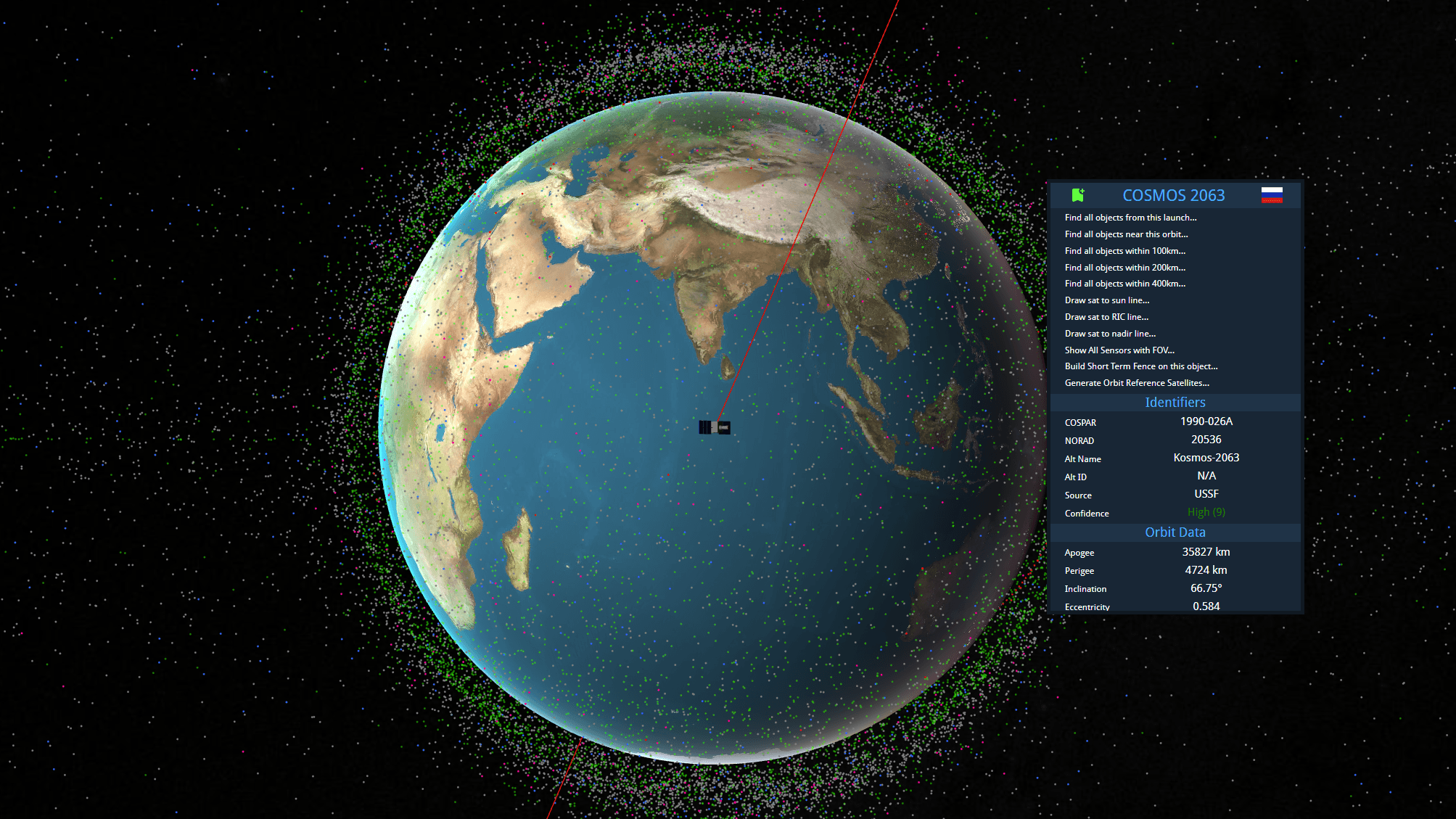
- Satellite Name: TURKMENALEM52E/MONACOSAT
- NORAD ID: 40617
- Launch Date: April 27, 2015
- Mission: This satellite is primarily designed for communication purposes, facilitating connectivity across various regions.
- Orbit: GEO (Geostationary Orbit)
- Operator: SSIM/TMTEL
- Fun Fact: The satellite features 38 active Ku-band transponders, which enhance its communication capabilities across vast distances.
Track this satellite in real-time on our web app: Track TURKMENALEM52E/MONACOSAT
🌌Space Weather
Next 24 Hours
-
Radio Blackouts Probability
- Minor: 45
- Major: 10
- Risk: None
-
Solar Radiation
- Probability: 10
- Risk: None
-
Geomagnetic Storming
- Scale: 0
- Impact: none
- Activity: Low
-
Impact Summary
- Next 24 hours: No risk of radio blackouts, no risk of solar radiation storms.
- Geomagnetic outlook: Periods of G1 (Minor) geomagnetic storming are likely on 07-08 Oct due to the anticipated arrival of two slow-moving CMEs that left the Sun on 03 Oct.
- Radiation outlook: There is a slight chance for S1 (Minor) solar radiation storms over 06-08 Oct.
- Radio blackout outlook: There is a chance for R1-R2 (Minor-Moderate) radio blackouts and a slight chance for an R3 (Strong) or greater event over 06-08 Oct.
Long Term Forecast
- Forecast of Solar and Geomagnetic Activity 06 October - 01 November 2025:
- Solar activity is expected to be low with a varying chance for M-class flare (R1-R2/Minor-Moderate) activity throughout the period.
- No proton events are expected at geosynchronous orbit.
- High levels of greater than 2 MeV electron flux at geosynchronous orbit are expected on 06-08 Oct, 13-16 Oct, 21-24 Oct, 28-31 Oct, and 01 Nov, with normal to moderate levels in between.
- Geomagnetic activity is likely to reach active levels on 06 Oct due to continued positive polarity coronal hole high-speed stream (CH HSS) influences, with G1 storming anticipated on 07-08 Oct.
- Additional active conditions are expected on 11 Oct and G1 storming on 20 Oct due to negative polarity influences.
- Periods of active conditions are likely over 25-26 Oct, with positive polarity influences expected towards the end of the month, leading to potential G1-G2 storming on 29 Oct.
- Quiet and unsettled levels are expected to prevail throughout the rest of the period.
🚀 Upcoming Space Launches
October 7
- SpaceX Falcon 9:
- Starlink Group 10-59 from Cape Canaveral Space Force Station, FL, USA (04:10 UTC) A batch of 28 satellites for the Starlink mega-constellation - SpaceX’s project for space-based Internet communication system.
October 8
-
SpaceX Falcon 9:
- Starlink Group 11-17 from Vandenberg Space Force Base, CA, USA (01:00 UTC) A batch of satellites for the Starlink mega-constellation - SpaceX’s project for space-based Internet communication system.
-
Blue Origin New Shepard:
- NS-36 from West Texas Suborbital Launch Site, Corn Ranch, TX, USA (12:30 UTC) NS-36 is the 15th crewed flight for the New Shepard program and the 36th in the New Shepard program’s history.
October 10
- SpaceX Falcon 9:
- Project Kuiper (KF-03) from Cape Canaveral Space Force Station, FL, USA (01:34 UTC) Third of a three launches contract for Amazon’s Kuiper low Earth orbit satellite internet constellation, with 24 satellites on board.
October 12
-
SpaceX Falcon 9:
- Starlink Group 10-52 from Cape Canaveral Space Force Station, FL, USA (08:11 UTC) A batch of satellites for the Starlink mega-constellation - SpaceX’s project for space-based Internet communication system.
-
SpaceX Falcon 9:
- Starlink Group 11-19 from Vandenberg Space Force Base, CA, USA (19:59 UTC) A batch of satellites for the Starlink mega-constellation - SpaceX’s project for space-based Internet communication system.
October 13
- SpaceX Starship:
- Flight 11 from SpaceX Starbase, TX, USA (23:15 UTC) 11th test flight of the two-stage Starship launch vehicle.
October 14
- SpaceX Falcon 9:
- SDA Tranche 1 Transport Layer C from Vandenberg Space Force Base, CA, USA (23:11 UTC) Tranche 1 Transport Layer C is one of six missions by the United States Space Force Space Development Agency (SDA) for the Proliferated Warfighter Space Architecture (PWSA) Tranche 1 Transport Layer constellation. This launch carries 21 satellites manufactured by Lockheed Martin.
October 15
- SpaceX Falcon 9:
- Starlink Group 10-17 from Cape Canaveral Space Force Station, FL, USA (16:21 UTC) A batch of satellites for the Starlink mega-constellation - SpaceX’s project for space-based Internet communication system.
October 21
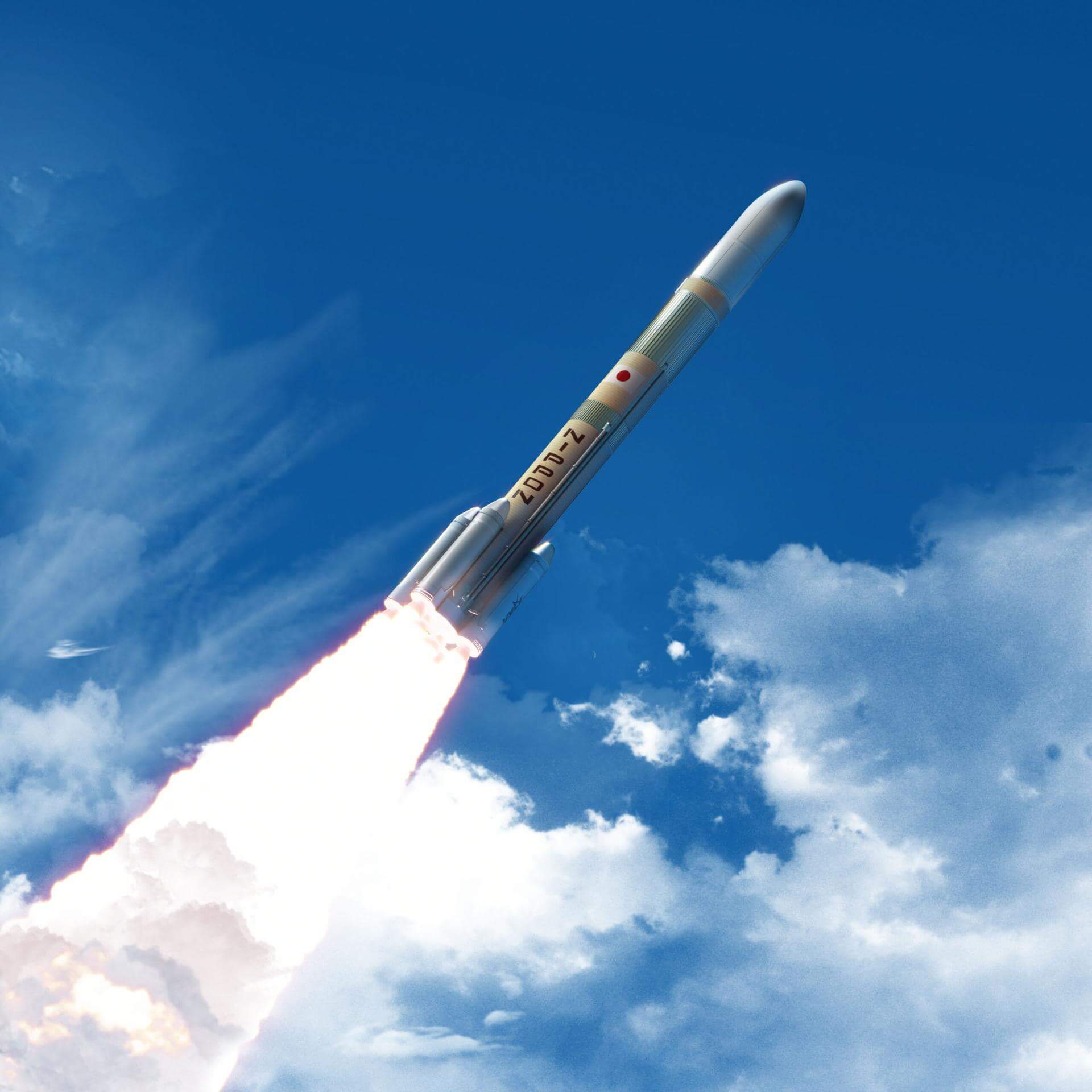
- Mitsubishi Heavy Industries H3-24:
- HTV-X1 from Tanegashima Space Center, Japan (01:58 UTC) First flight of the upgraded Japanese HTV-X spacecraft designed to resupply the International Space Station.
Note: Launch dates and times are subject to change due to technical or weather considerations.