📄Top Stories
NASA is pioneering a shift by asking private companies for astronaut rescue services, aiming to enhance response in emergencies. Meanwhile, the EU is eyeing a collaboration with SES to augment Starlink in bolstering space communications. Also in focus, contracts are enhancing military infrastructure and innovation, reflecting a strong emphasis on defense modernization.
📰Detailed Coverage
NASA Seeks Private Solutions for Astronaut Rescue
NASA has stepped up its exploration into privatizing astronaut rescue services, a significant pivot after decades of relying on the US military. This move is aimed at involving private industry and academia to develop innovative solutions for emergency rescue missions, thereby enhancing agility and effectiveness during critical operations on Earth.
This development highlights a growing trend toward privatization in space operations, inviting participation from diverse sectors to improve satellite support and emergency response. More details can be tracked via our web app’s rescue mission feature integration.
Read the full story: Space.com
EU Weighs SES to Bolster Starlink Services
The European Union is considering leveraging SES’s capabilities to support the Starlink system, enhancing satellite communication across Europe. This collaborative effort is seen as a strategic push for space autonomy, utilizing SES’s medium Earth orbit (MEO) satellites, which have already been pivotal for NATO.
Such partnerships not only aim to expand Europe’s communication networks but also solidify its stance in global space exploration and services, highlighting the importance of this cooperation for strategic satellite deployments.
Read the full story: Teslarati
Military Strides in Transformation and Innovation
In a decisive restructuring, the US Army is undergoing a ‘comprehensive transformation,’ merging offices and streamlining roles. This strategic move is designed to sharpen the Army’s operational focus and capabilities.
Simultaneously, the Navy’s billion-dollar contract modifications with General Dynamics Electric Boat signify a reinforced commitment to bolster maritime defense with new Virginia-class submarine builds, ensuring enhanced naval proficiency.
Read the full story on Army transformation: Breaking Defense
Read about the Navy’s contract: Breaking Defense
Calls for Air Force Modernization
A sharply-worded op-ed has highlighted the urgent need for the US Air Force to modernize to remain competitive. The authors argue that current resources are outdated and a refresh is necessary to maintain global influence and defense capabilities.
Modernization efforts are crucial to adapting to new technological advancements, ensuring the Air Force remains effective in both offensive and defensive scenarios.
Read the full op-ed: Breaking Defense
🛰️Satellite Spotlight
- Satellite Name: LEMUR-2-KADI
- NORAD ID: 43184
- Launch Date: 2018 Feb 1
- Mission: The satellite is equipped with GPS radio occultation payloads and AIS-receivers for geolocation services.
- Orbit: Inclination 97.5204°, Period approximately 93 minutes, Eccentricity 0.0005350
- Operator: SPIRE
- Fun Fact: The satellite contributes to global efforts in weather forecast improvement and maritime data collection using its advanced payloads.
Current TLE Data:
1 43184U 18014E 25118.78943947 .00030358 00000+0 94379-3 0 9995 2 43184 97.5204 28.5550 0005350 325.3942 34.6951 15.33269332396783
Track this satellite in real-time on our web app: Track LEMUR-2-KADI
🚀 Upcoming Space Launches
May 2
- SpaceX Falcon 9:
- Starlink Group 6-75 from Cape Canaveral Space Force Station (01:51 UTC) A batch of 28 satellites for the Starlink mega-constellation, SpaceX’s project for a space-based Internet communication system.
May 3
- SpaceX Falcon 9:
- Starlink Group 15-3 from Vandenberg Space Force Base (18:13 UTC) A batch of 26 satellites for the Starlink mega-constellation, SpaceX’s project for a space-based Internet communication system.
May 4
- SpaceX Falcon 9:
- Starlink Group 6-84 from Kennedy Space Center (08:48 UTC) A batch of satellites for the Starlink mega-constellation, SpaceX’s project for a space-based Internet communication system.
May 5
- China Aerospace Science and Technology Corporation Long March 12:
- SatNet LEO Group from Wenchang Space Launch Site (10:57 UTC) A batch of Low Earth Orbit communication satellites for the SatNet constellation, operated by the China Satellite Network Group.
May 6
- SpaceX Falcon 9:
- Starlink Group 6-93 from Cape Canaveral Space Force Station (00:48 UTC) A batch of satellites for the Starlink mega-constellation, SpaceX’s project for a space-based Internet communication system.
May 19
- Indian Space Research Organization PSLV-XL:
- EOS-09 (RISAT-1B) from Satish Dhawan Space Centre (00:00 UTC) RISAT-1B is a radar imaging satellite part of ISRO’s RISAT-1 series, providing all-weather, day-and-night Earth observation capabilities.
May 29
- SpaceX Falcon 9:
- Axiom Space Mission 4 from Kennedy Space Center (17:03 UTC) This Crew Dragon flight for Axiom Space carries a professionally trained commander and three private astronauts to the International Space Station for an eight-day stay.
May 31
-
Rocket Lab Electron:
- iQPS Launch 2 from Rocket Lab Launch Complex 1 (00:00 UTC) Synthetic aperture radar Earth observation satellite for Japanese Earth imaging company iQPS.
-
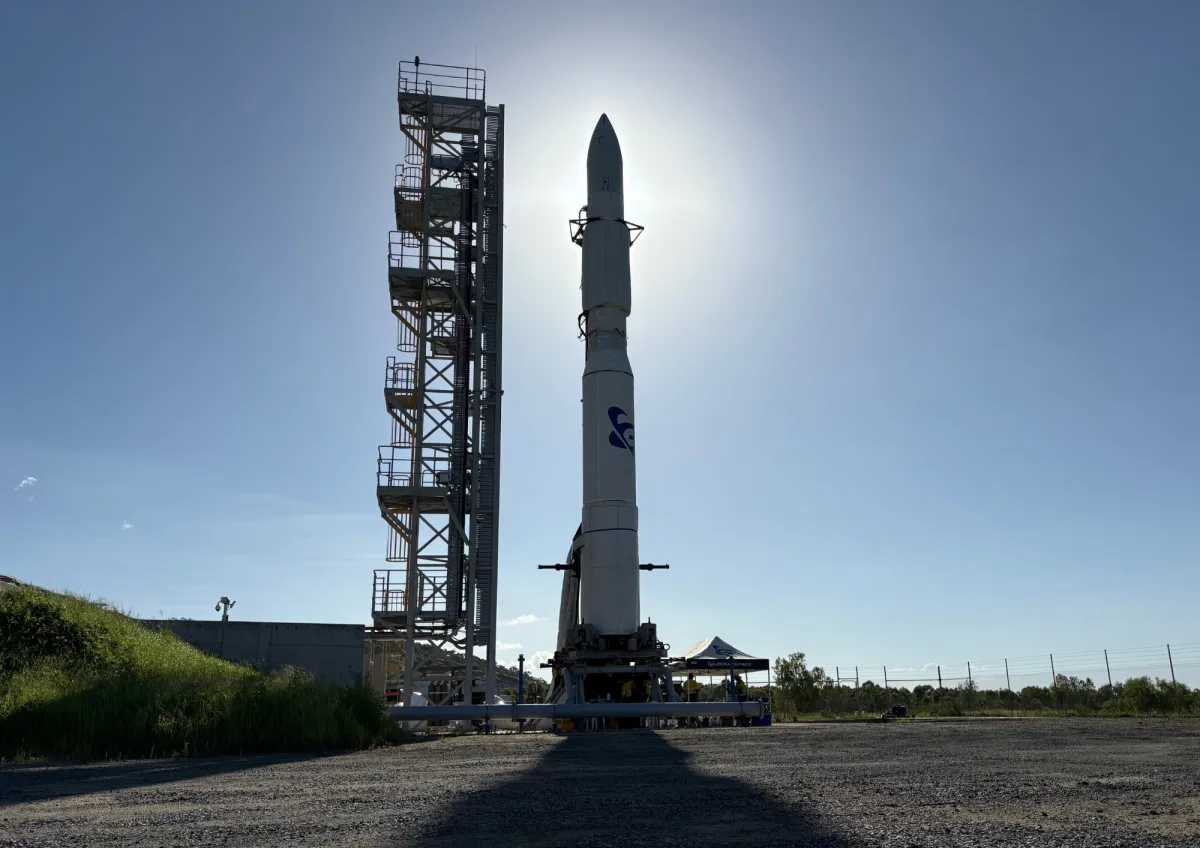
Gilmour Space Technologies Eris-1:
- Maiden Flight from Bowen Orbital Spaceport (00:00 UTC) Maiden flight of Gilmour Space’s orbital launch vehicle Eris.
-
SpaceX Falcon 9:
- GPS III SV08 from Cape Canaveral Space Force Station (00:00 UTC) Eighth of ten GPS III missions.
Note: Launch dates and times are subject to change due to technical or weather considerations.