📄Top Stories
Significant advancements and updates in space exploration and satellite technology mark today’s news. China has outlined ambitious plans for its Beidou satellite system, while European officials confirm a brief delay in the Vega C rocket’s return to flight. The escalating threats to GPS systems worldwide underscore the increasing importance of countering interference, and NASA’s VERITAS mission to Venus faces further uncertainty.
📰Detailed Coverage
China Sets 2027 for Next-Gen Beidou Satellites
China announced plans to launch the next generation of its Beidou satellite navigation system by 2027. This upgrade is part of a broader strategy to enhance global positioning and navigation systems by 2035. The improvements could influence various domains, given Beidou’s role in global communication and military positioning.
The new Beidou satellites are expected to offer better accuracy and reliability, positioning Beidou as a competitor to GPS and Galileo. For satellite tracking enthusiasts and professionals, these enhancements signal an opportunity to integrate new technologies into existing frameworks, highlighting the need for adaptable tracking solutions.
Read the full story: SpaceNews
Vega C’s Return to Flight Delayed
Europe’s Vega C rocket faces a slight delay, pushing its return to flight by 24 hours due to a minor technical issue. Officials remain confident in the rocket’s performance as it prepares to launch an Earth science satellite. This delay does not impact the broader schedule intended for Vega C’s mission deployments.
The Vega C, designed for a range of satellite launches, enhances Europe’s capacity in orbital deployments. Understanding these updates is essential for those utilizing our satellite tracking app, particularly as it relates to planning and monitoring future satellite launches and deployments.
Read the full story: SpaceNews
Growing Need for National GPS Jamming Detection
The reliability of GPS systems is coming under threat from an increasing number of interference attacks, predominantly affecting areas in Europe. Analysts emphasize the establishment of robust detection systems to counteract these assaults, which have implications for both civilian and military GPS reliability globally.
As GPS remains pivotal in navigation and timing for countless applications, satellite tracking systems and apps must evolve to detect and compensate for interference. These advancements are critical to ensuring the sustained reliability of satellite-dependent systems in volatile environments.
Read the full story: SpaceNews
VERITAS Mission to Venus Facing Further Delays
NASA’s VERITAS mission to Venus, already postponed due to institutional hurdles, may encounter an additional delay of nearly 18 months. The mission seeks to explore Venus’ geological evolution but is hindered by bureaucratic hurdles and budget constraints.
These delays spotlight the challenges of planetary missions in an era where resources are stretched thin. For space enthusiasts and those involved in interplanetary studies, tracking the progress and overcoming the delays of such missions remains a focal aspect of following modern-day planetary explorations.
Read the full story: SpaceNews
🛰️Satellite Spotlight
- Satellite Name: OUTPOST MISSION 1
- NORAD ID: 56226
- Launch Date: 2023-03-25
- Mission: The Outpost Mission 1 aims to demonstrate innovative technologies in autonomous operations and space logistics.
- Orbit: Inclination 97.5547°, Period 94.10 minutes, Eccentricity very low
- Operator: OUTP
- Fun Fact: Outpost Mission 1 is a part of a series of educational and experimental missions designed to test new satellite operation technologies in the low Earth orbit.
Current TLE Data:
1 56226U 23084BK  24318.32546744  .00027722  00000-0  94717-3 0 89992
2 56226  97.5547  78.9318 0006989 203.4567 156.6355 15.30240584 78902
Track this satellite in real-time on our web app: Track OUTPOST MISSION 1
🚀Upcoming Space Launches
November 29
- Russian Federal Space Agency (ROSCOSMOS) Soyuz 2.1a/Fregat-M:
- Kondor-FKA No.2 from Vostochny Cosmodrome, Siberia, Russian Federation (21:50 UTC) The Kondor-FKA is a small civilian radar Earth observation satellite with a synthetic aperture radar.
November 30
- SpaceX Falcon 9 Block 5:
- Starlink Group 6-65 from Cape Canaveral SFS, FL, USA (Time TBC) A batch of satellites for the Starlink mega-constellation for space-based Internet communication.
- SpaceX Falcon 9 Block 5:
- NROL-126 from Vandenberg SFB, CA, USA (08:08 UTC) Fifth batch of reconnaissance satellites for the National Reconnaissance Office.
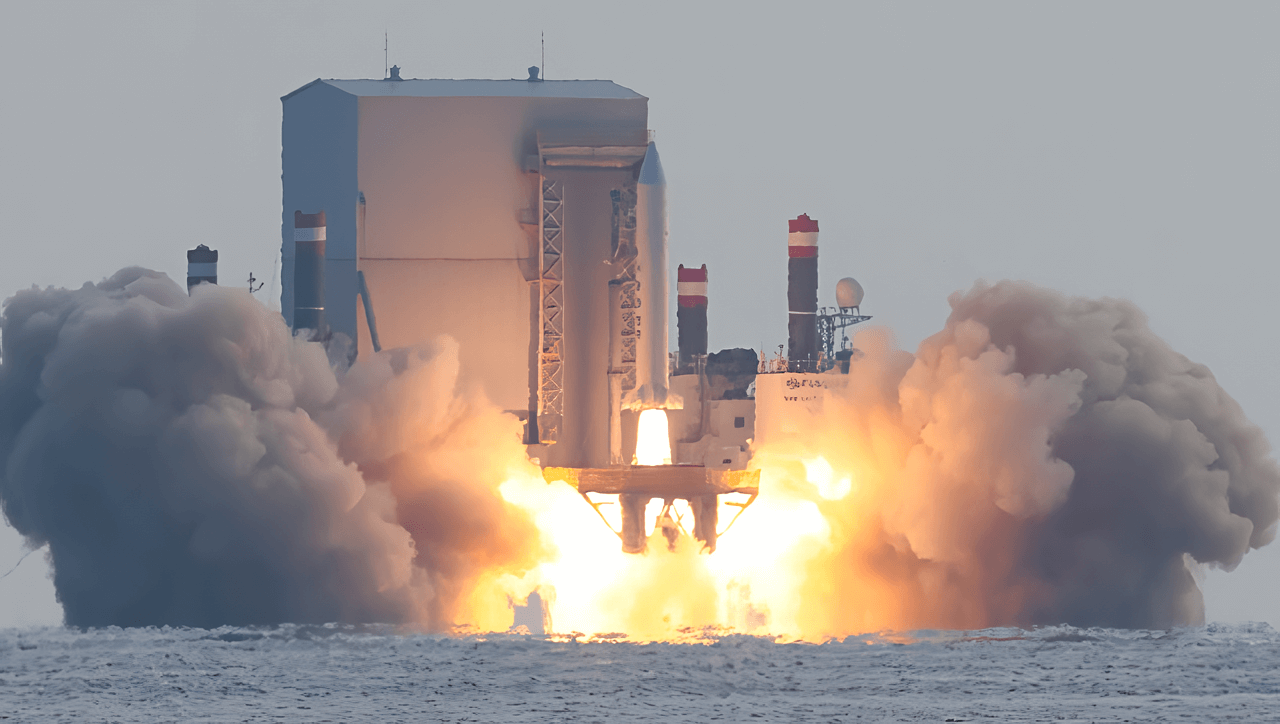
- China Aerospace Science and Technology Corporation Long March 12:
- Maiden Flight from Wenchang Space Launch Site, People’s Republic of China (14:17 UTC) First launch of the Long March 12 vehicle with TBD payload and orbit.
December 2
- China Aerospace Science and Technology Corporation Long March 6A:
- Unknown Payload from Taiyuan Satellite Launch Center, People’s Republic of China (04:45 UTC) Possibly a launch with G60 Low Earth Orbit communication constellation satellites.
December 3
- China Aerospace Science and Technology Corporation Long March 3B/E:
- Unknown Payload from Xichang Satellite Launch Center, People’s Republic of China (05:46 UTC)
- Russian Space Forces Soyuz 2.1b:
- Kosmos (Unknown Payload) from Plesetsk Cosmodrome, Russian Federation (16:00 UTC) Russian military satellite(s) of unknown variant.
December 4
- SpaceX Falcon 9 Block 5:
- Starlink Group 9-14 from Vandenberg SFB, CA, USA (00:29 UTC) A batch of satellites for the Starlink mega-constellation for space-based Internet communication.
- SpaceX Falcon 9 Block 5:
- Starlink Group 6-70 from Cape Canaveral SFS, FL, USA (08:29 UTC) Another batch of Starlink satellites for space-based Internet communication.
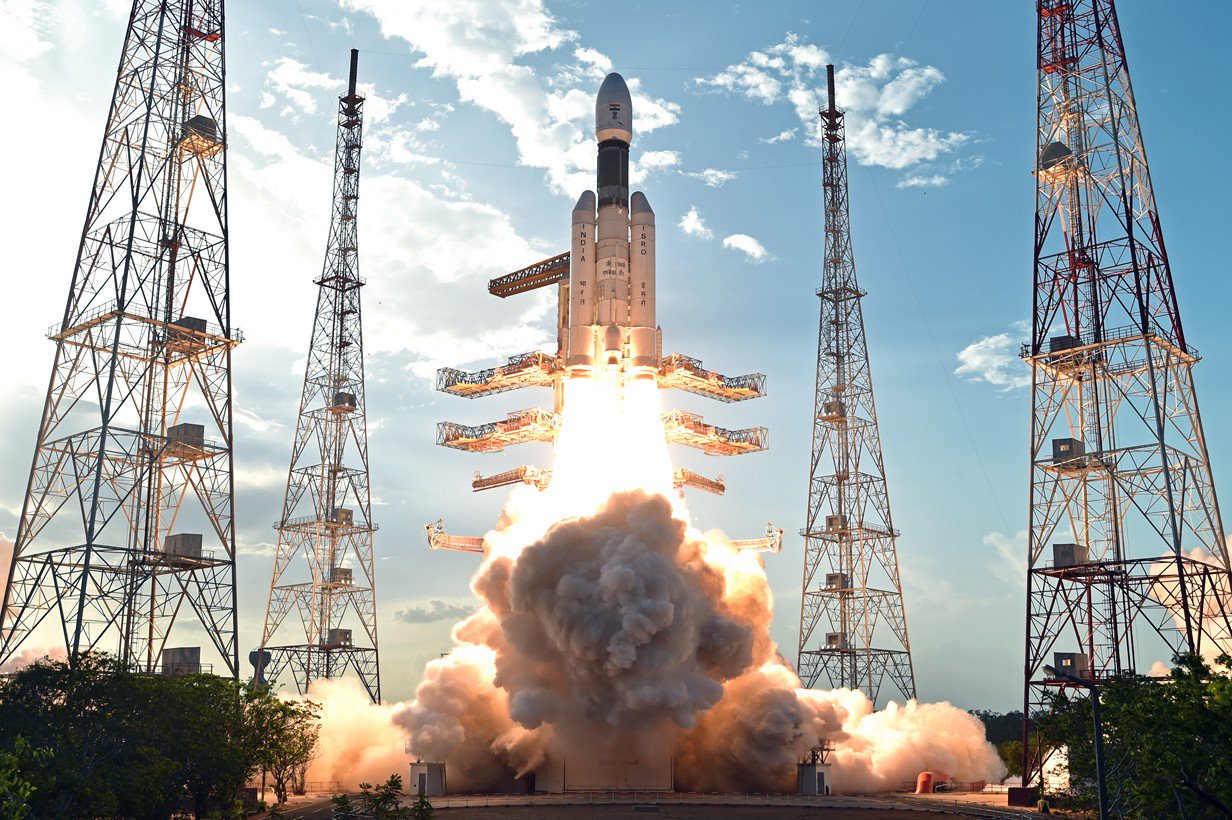
- Indian Space Research Organization PSLV-XL:
- Proba-3 from Satish Dhawan Space Centre, India (10:38 UTC) First close formation flying mission for the European Space Agency, creating an ″artificial solar eclipse″.
Note: Launch dates and times are subject to change due to technical or weather considerations.