
COSMOS 50 DEB (00995)

COSPAR: N/A | Alt Name: deb Kosmos-50
DECAYED

Image
COSMOS 50 DEB Satellite Image
Additional Sources
Launch Details

Launch Date

October 28, 1964

Launch Pad

Unknown

Launch Vehicle

Unknown

Orbital Elements

NORAD ID

00995

International Designator

N/A

Decay Date

11/11/1964

Basic Satellite Info

Name

COSMOS 50 DEB

Alternative Name

deb Kosmos-50

Type

Debris

Status

Space Junk

Owner

TSUKOS

Country

USSR

Constellation

N/A

Related Satellites

Major Events

N/A

Summary
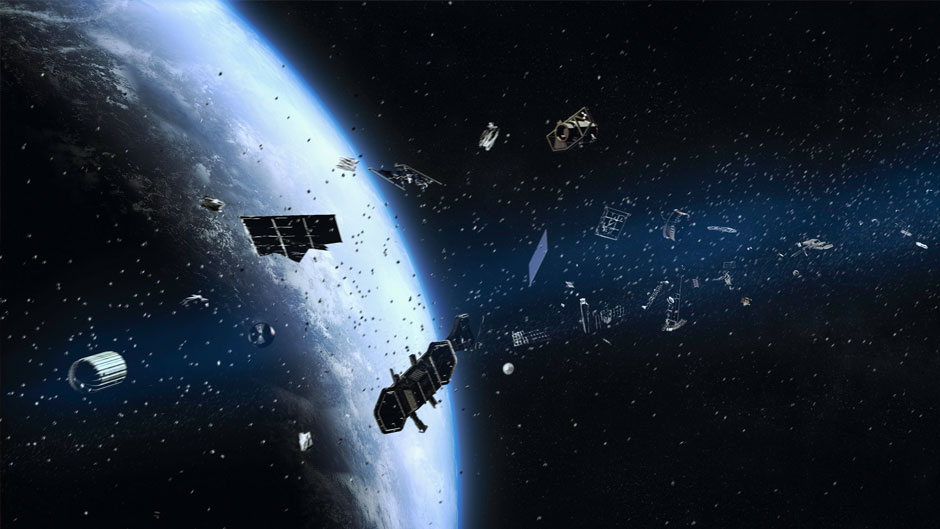
Space debris, also known as space junk, encompasses all non-functional objects orbiting Earth such as defunct satellites, spent rocket stages, and fragments from collisions or disintegrations. Over time, this debris can accumulate and create an increasingly hazardous environment in orbit. Even tiny fragments, traveling at extremely high velocities, can inflict significant damage on operational satellites and spacecraft. If left unmanaged, the density of debris raises the risk of catastrophic collisions and further fragmentation, compounding the problem and threatening the safety and sustainability of space activities.
Physical Characteristics

Length

0

Diameter

0

Span

0

Dry Mass

0

Launch Mass

0

Shape

N/A

Radar Cross Section

Unknown

Visual Magnitude

Unknown

Color

Unknown

Material Composition

Unknown

Technical Details

Payload

Unknown

Purpose

Unknown

Mission

Unknown

Manufacturer

Unknown

Life Expectancy

Unknown

Bus

Unknown

Configuration

Unknown

Motor

Unknown

Equipment

Unknown

Power System

Unknown

ADCS

Unknown

Transmitter Frequency

Unknown

Satellite Articles

View All Posts »

Learn more about satellites and other related topics.

Space Brief 12 Dec 2025

Space Brief 12 Dec 2025

Today's space brief highlights the U.S. Space Force's new satellite naming scheme, the Air Force Secretary's warnings on China's space advances, BAE Systems' DARPA award, strategies for future space defense, the importance of GEO satellite refueling, and Blue Origin's plans for Space Force certification.
Starlink Hits 10,000 Satellites in Orbit, X Report 17 Mar 2026

Starlink Hits 10,000 Satellites in Orbit, X Report 17 Mar 2026

How many Starlink satellites are in orbit in 2026? SpaceX passed 10,000 after the Starlink 17-24 launch, with 10,020 in orbit and 11,529 launched.

Starlink Debuts Super Bowl Ad, Falcon 9 Preps for Crew-12 | KeepTrack X Report

Starlink Debuts Super Bowl Ad, Falcon 9 Preps for Crew-12 | KeepTrack X Report

SpaceX airs Starlink's first-ever Super Bowl ad to millions. Falcon 9 completes static fire test for Crew-12 launch on Feb 11. Falcon 9 resumed flights after engine investigation.

SpaceX's Audacious Starship

SpaceX's Audacious Starship

As the largest and most powerful rocket ever built, it's designed for full reusability and rapid launch turnaround. SpaceX claims it could carry over 100 tons to low Earth orbit at a fraction of current costs.

SpaceX Wins $178.5M Space Force Missile Tracking Contract | KeepTrack Space Brief

SpaceX Wins $178.5M Space Force Missile Tracking Contract | KeepTrack Space Brief

SpaceX awarded $178.5M Space Force contract for missile tracking satellite launches beginning 2027. Pentagon also extends GPS modernization support with $45M Raytheon order.

Starcloud Files 88,000-Satellite Constellation Plan | KeepTrack Space Brief

Starcloud Files 88,000-Satellite Constellation Plan | KeepTrack Space Brief

Starcloud files FCC plans for 88,000-satellite orbital data center constellation, matching scale of Starlink and Amazon Kuiper expansions. Massive LEO conjunction risk implications.

Northrop Grumman Books $71M Charge on Vulcan Booster Anomaly | KeepTrack Space Brief

Northrop Grumman Books $71M Charge on Vulcan Booster Anomaly | KeepTrack Space Brief

Northrop Grumman takes $71M charge over Vulcan solid rocket booster anomaly, grounding ULA's vehicle. Vulcan manifest timelines now in holding pattern pending resolution.

LeoLabs and the Business of Watching Everything

LeoLabs and the Business of Watching Everything

A startup built on Cold War-era radar science now tracks 25,000 objects in orbit - and the Pentagon can't get enough of it. But can its radars really compete with the Space Surveillance Network?