SL-6 R/B(2) (09647)

COSPAR: 1976-127E | Alt Name: Blok-L
DECAYED

Image
SL-6 R/B(2) Satellite Image
Additional Sources
Launch Details

Launch Date

December 28, 1976

Launch Site

PLMSC

Launch Pad

LC43/4

Launch Vehicle

Molniya 8K78M

Orbital Elements

NORAD ID

09647

International Designator

1976-127E

Decay Date

12/18/1987

Basic Satellite Info

Name

SL-6 R/B(2)

Alternative Name

Blok-L

Type

Rocket Body

Status

Space Junk

Owner

RVSN

Country

USSR

Constellation

N/A

Related Satellites

Major Events

N/A

Summary
A rocket body, also commonly referred to as an upper stage or spent rocket stage, is the structural shell left behind after a rocket has delivered its payload to orbit. These large and often heavy pieces of space hardware can remain in orbit for years, posing significant collision hazards as part of the growing space debris problem. If left uncontrolled, rocket bodies have the potential to reenter Earth's atmosphere unpredictably, which can lead to falling debris in populated areas. Additionally, they risk colliding with operational satellites or the International Space Station, creating more debris and putting human life at risk.
Physical Characteristics

Length

2.7

Diameter

2.5

Span

2.7

Dry Mass

1000

Launch Mass

4500

Shape

Cyl

Radar Cross Section

9.07

Visual Magnitude

Unknown

Color

Unknown

Material Composition

Unknown

Technical Details

Payload

Blok-L

Purpose

Unknown

Mission

Unknown

Manufacturer

NPOE

Life Expectancy

Unknown

Bus

Blok-L

Configuration

Unknown

Motor

Unknown

Equipment

Unknown

Power System

Unknown

ADCS

Unknown

Transmitter Frequency

Unknown

Satellite Articles

View All Posts »

Learn more about satellites and other related topics.

Space Brief 8 Jun 2025

Space Brief 8 Jun 2025

A busy day in space as delays hit Boeing's Starliner launch, SpaceX continues its rapid launch cadence, new concerns arise with the discovery of bacteria on the Tiangong space station, and the European Space Agency supports a pivotal Moon mission.

X Report 20 Nov 2025

X Report 20 Nov 2025

SpaceX continues to make strides with its Starship program while successfully launching another batch of Starlink satellites into orbit, enhancing global internet coverage.

The Day a Giant Space Balloon United the Cold War

The Day a Giant Space Balloon United the Cold War

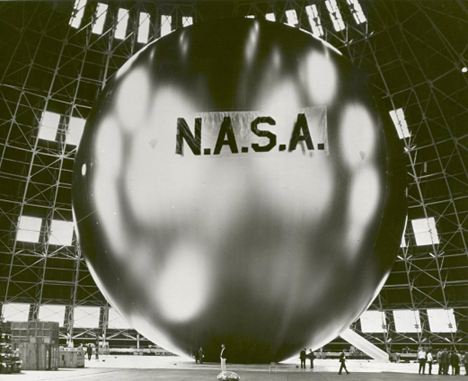
When a 135-foot inflatable mirror bounced a radio signal from England to Russia, it became the first joint US-Soviet space venture - and changed how we think about satellite communication.

Rocket Lab to Acquire Iridium for $8B, X Report 30 Jun 2026

Rocket Lab to Acquire Iridium for $8B, X Report 30 Jun 2026

Rocket Lab will acquire Iridium for $8B to challenge SpaceX, whose Starlink constellation holds 10,706 working satellites of 12,390 launched.

X Report 24 Aug 2025

X Report 24 Aug 2025

SpaceX successfully launched its CRS-33 Dragon cargo mission to the ISS, while preparations for the upcoming Starship Flight 10 continue, highlighting significant advancements in both cargo operations and test flight reliability.

10,374 Starlink Satellites in Orbit, X Report 6 May 2026

10,374 Starlink Satellites in Orbit, X Report 6 May 2026

Starlink satellites in orbit May 2026: 10,374, with 10,358 working. Mission 17-29 lifts 24 more from Vandenberg and a satellite films the Starlink train.

X Report 13 Nov 2025

X Report 13 Nov 2025

Today's report covers SpaceX's progress on Starship pad realignment and Rocket Lab's delay of its Neutron rocket debut, highlighting key advancements and competitive dynamics in the space industry.

Vulcan GEM 63XL Passes Static Fire; February Anomaly Still Under Investigation | KeepTrack Space Brief

Vulcan GEM 63XL Passes Static Fire; February Anomaly Still Under Investigation | KeepTrack Space Brief

Northrop Grumman's GEM 63XL solid rocket booster passed static fire testing, but ULA's investigation into a February 2026 Vulcan in-flight anomaly remains open. No RTF date set.