SL-4 R/B (08323)

COSPAR: 1975-088B | Alt Name: Voskhod 16-214 Blok-I
DECAYED

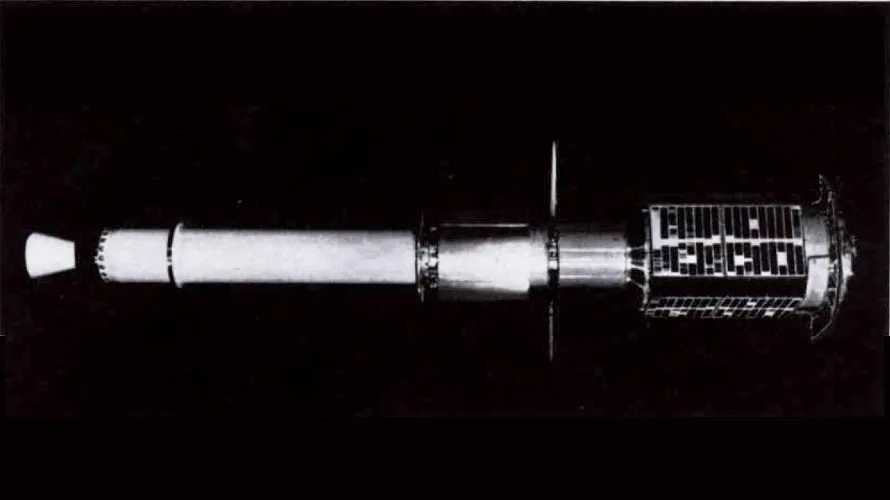
Image
SL-4 R/B Satellite Image
Additional Sources
Launch Details

Launch Date

September 23, 1975

Launch Site

PLMSC

Launch Pad

LC41/1

Launch Vehicle

Voskhod 11A57

Orbital Elements

NORAD ID

08323

International Designator

1975-088B

Decay Date

10/2/1975

Basic Satellite Info

Name

SL-4 R/B

Alternative Name

Voskhod 16-214 Blok-I

Type

Rocket Body

Status

Space Junk

Owner

RVSN

Country

USSR

Constellation

N/A

Related Satellites

Major Events

N/A

Summary
A rocket body, also commonly referred to as an upper stage or spent rocket stage, is the structural shell left behind after a rocket has delivered its payload to orbit. These large and often heavy pieces of space hardware can remain in orbit for years, posing significant collision hazards as part of the growing space debris problem. If left uncontrolled, rocket bodies have the potential to reenter Earth's atmosphere unpredictably, which can lead to falling debris in populated areas. Additionally, they risk colliding with operational satellites or the International Space Station, creating more debris and putting human life at risk.
Physical Characteristics

Length

6.7

Diameter

2.7

Span

6.7

Dry Mass

2350

Launch Mass

2350

Shape

Cyl

Radar Cross Section

Unknown

Visual Magnitude

Unknown

Color

Unknown

Material Composition

Unknown

Technical Details

Payload

11A57I

Purpose

Unknown

Mission

Unknown

Manufacturer

PROG

Life Expectancy

Unknown

Bus

Blok-I

Configuration

Unknown

Motor

Unknown

Equipment

Unknown

Power System

Unknown

ADCS

Unknown

Transmitter Frequency

Unknown

Satellite Articles

View All Posts »

Learn more about satellites and other related topics.

The End of Free Skies | FAA Starts Charging for Rocket Launches

The End of Free Skies | FAA Starts Charging for Rocket Launches

On April 22, 2026, the FAA published a final rule implementing per-launch user fees for commercial space transportation — the first time the U.S. government has charged payload-based fees for rocket launches. Starting at 25 cents per pound with a $30,000 cap, the fees are modest today. By 2033, they won't be.

The Satellites the Size of a Studio Apartment

The Satellites the Size of a Studio Apartment

AST SpaceMobile's BlueBird constellation is a bet that raw aperture size wins. Each satellite unfolds a 64-square-meter phased-array antenna in orbit, the largest commercial antenna ever deployed. The company claims a stock smartphone on the ground can connect directly to it. The competition says the physics doesn't support that. Seventeen satellites in and a contract with AT&T, Verizon, and Vodafone, somebody's math is wrong.

Space Force Cancels OCX GPS Ground System, Space Brief 21 Apr 2026

Space Force Cancels OCX GPS Ground System, Space Brief 21 Apr 2026

Space Force cancels the OCX GPS ground system after RTX failures and stands up a cislunar task force. SpaceX launches the 10th and final GPS III.

Space Brief 13 Nov 2025

Space Brief 13 Nov 2025

Delve into the latest on military AI leadership debates, Wedgetail funding increases, and the Army's Short Range Reconnaissance Program advancements. Explore how these developments influence satellite tracking and defense initiatives.

Space Brief 18 Nov 2024

Space Brief 18 Nov 2024

Today’s Space Brief covers the deployment of a new optical sensor for the Space Force, SpaceX's recent Starlink satellite launch, and significant investment in space cargo vehicles.

Space Brief 26 Jan 2025

Space Brief 26 Jan 2025

Spacewalks have resumed on the ISS, while Blue Origin prepares for a unique New Shepard mission. In other news, astronomers push for a ban on space ads and potential budget cuts threaten the JWST.

X Report 11 Dec 2025

X Report 11 Dec 2025

SpaceX has confirmed plans for an IPO and successfully launched multiple batches of Starlink satellites, advancing its mission for global internet coverage.

The Satellite That Found 22 Photons and Changed Astronomy

The Satellite That Found 22 Photons and Changed Astronomy

On April 27, 1961, a Scout rocket lifted a 37-kilogram NASA satellite into orbit from Wallops Island carrying the first serious instrument for detecting cosmic gamma rays. Explorer 11 operated for seven months before its tape recorder failed. In that time it registered 22 gamma-ray photons - a pitiful number by modern standards, but enough to launch an entire branch of astronomy.