OPS 2439 (07687)

COSPAR: 1975-017A | Alt Name: OPS 2439

Image
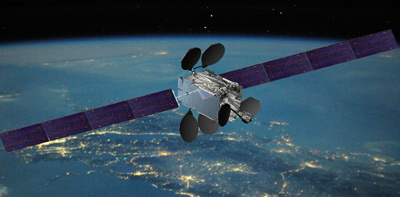
OPS 2439 Satellite Image
Additional Sources
Launch Details

Launch Date

March 10, 1975

Launch Site

AFWTR

Launch Pad

SLC4W

Launch Vehicle

Titan 34B

Orbital Elements

NORAD ID

07687

International Designator

1975-017A

Epoch

Thu, 20 Mar 1975 13:05:03 GMT

Apogee

Calculating...

Perigee

Calculating...

Inclination

63.45°

Right Ascension

316.40°

Eccentricity

Calculating...

Argument of Perigee

268.80°

Period

706.26 min

Mean Motion

2.04 rev/day

Latitude

Calculating...

Longitude

Calculating...

Altitude

Calculating...

Velocity

Calculating...

Polar Plot
3D Visualization
Basic Satellite Info

Name

OPS 2439

Alternative Name

OPS 2439

Type

Payload

Status

Unknown

Owner

NRO/SAFSP

Country

United States

Constellation

N/A

Related Satellites

Major Events

N/A

Latest TLEs
1 07687U 75017  A 75078.54518288  .00000000 +00000-0 +00000-0 0  9996
2 07687 063.4531 316.4023 7394436 268.8005 014.1907 02.03892316000204

Source: Celestrak

Summary

Apologies, there is no summary for this satellite yet. I am working to generate these for every object in the catalog, but it is going to take time.

Physical Characteristics

Length

5

Diameter

1.5

Span

10

Dry Mass

1000

Launch Mass

1000

Shape

Cyl + 2 Pan + Dish

Radar Cross Section

Unknown

Visual Magnitude

Unknown

Color

Unknown

Material Composition

Unknown

Technical Details

Payload

JUMPSEAT 4

Purpose

Unknown

Mission

Unknown

Manufacturer

HSES

Life Expectancy

Unknown

Bus

Jumpseat

Configuration

Unknown

Motor

Unknown

Equipment

Unknown

Power System

Unknown

ADCS

Unknown

Transmitter Frequency

Unknown

Map
This tool will help you track the satellite's position and predict its upcoming passes over your location. Simply input the coordinates or click the geolocation button to get started.
Next Pass
Azimuth Elevation Time (Local)
Start Azimuth
Max Elevation
Stop Azimuth
Time Until
Pass Duration

Satellite Articles

View All Posts »

Learn more about satellites and other related topics.

STS-30 | When Atlantis Sent a Radar to Venus

STS-30 | When Atlantis Sent a Radar to Venus

On May 4, 1989, Space Shuttle Atlantis lifted off from LC-39B carrying Magellan, NASA's first interplanetary mission since 1978. The eleven-year drought ended in a payload bay, and the radar that emerged would map ninety-eight percent of Venus through clouds that no camera could ever see through.
X Report 7 Apr 2025

X Report 7 Apr 2025

SpaceX prepares for another Starlink launch today, following a successful deployment over the weekend from Florida's Space Coast.

Space Brief 26 Nov 2025

Space Brief 26 Nov 2025

Today's update covers new military space initiatives, impacts of drone threats in Europe, and advancements in secure cloud technology for NATO and Ukraine.

Space Brief 1 Jan 2025

Space Brief 1 Jan 2025

Today's brief covers a record-breaking Starlink launch, FCC's allocation of additional spectrum for launches, and more. Plus, explore the intricacies of satellite Rassvet-2 No. 1 in our Satellite Spotlight.

Space Brief 29 Oct 2024

Space Brief 29 Oct 2024

Today's space brief covers an impressive SpaceX launch record, China's upcoming crew mission to its space station, an Intelsat 33e debris observation, and more. Key topics include SpaceX's Starship events, ESA's Hera mission updates, and Boeing's potential space division sale.

X Report 10 Jul 2025

X Report 10 Jul 2025

SpaceX continues to make strides with record-breaking Falcon launches while overcoming regulatory challenges for Starlink in India.

Space Brief 3 Dec 2025

Space Brief 3 Dec 2025

Today's brief covers the integration of commercial and military space capabilities, a notable change in Crew 12 mission, advancements in digital training for space operations, and more.

The End of Free Skies | FAA Starts Charging for Rocket Launches

The End of Free Skies | FAA Starts Charging for Rocket Launches

On April 22, 2026, the FAA published a final rule implementing per-launch user fees for commercial space transportation — the first time the U.S. government has charged payload-based fees for rocket launches. Starting at 25 cents per pound with a $30,000 cap, the fees are modest today. By 2033, they won't be.