COSMOS 554 DEB (06528)

COSPAR: 1973-021CM | Alt Name: deb Kosmos-554
DECAYED

Image
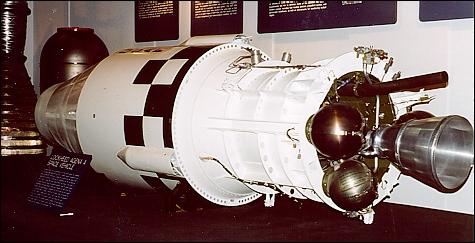
COSMOS 554 DEB Satellite Image
Additional Sources
Launch Details

Launch Date

April 19, 1973

Launch Site

PLMSC

Launch Pad

LC43/4

Launch Vehicle

Voskhod 11A57

Orbital Elements

NORAD ID

06528

International Designator

1973-021CM

Decay Date

5/26/1973

Basic Satellite Info

Name

COSMOS 554 DEB

Alternative Name

deb Kosmos-554

Type

Debris

Status

Space Junk

Owner

GUKOSR

Country

USSR

Constellation

N/A

Related Satellites

Major Events

N/A

Summary
Space debris, also known as space junk, encompasses all non-functional objects orbiting Earth such as defunct satellites, spent rocket stages, and fragments from collisions or disintegrations. Over time, this debris can accumulate and create an increasingly hazardous environment in orbit. Even tiny fragments, traveling at extremely high velocities, can inflict significant damage on operational satellites and spacecraft. If left unmanaged, the density of debris raises the risk of catastrophic collisions and further fragmentation, compounding the problem and threatening the safety and sustainability of space activities.
Physical Characteristics

Length

0

Diameter

0

Span

0

Dry Mass

0

Launch Mass

0

Shape

N/A

Radar Cross Section

Unknown

Visual Magnitude

Unknown

Color

Unknown

Material Composition

Unknown

Technical Details

Payload

Unknown

Purpose

Unknown

Mission

Unknown

Manufacturer

Unknown

Life Expectancy

Unknown

Bus

Unknown

Configuration

Unknown

Motor

Unknown

Equipment

Unknown

Power System

Unknown

ADCS

Unknown

Transmitter Frequency

Unknown

Satellite Articles

View All Posts »

Learn more about satellites and other related topics.

The Civilian Space Traffic System America Almost Didn't Build

The Civilian Space Traffic System America Almost Didn't Build

For nearly two decades, the U.S. Air Force and Space Force have been the world's unofficial civilian space traffic control system. The Department of Commerce's Traffic Coordination System for Space (TraCSS) is now taking over that job for commercial satellite operators - in stages, against persistent congressional pressure to kill the program, and with Department of Defense advocates pushing to make it happen before it is too late.
Space Brief 16 Nov 2024

Space Brief 16 Nov 2024

Today's highlights include ABL Space shifting its focus to missile defense, Intuitive Machines advocating for Artemis infrastructure reforms, and more updates from space and defense sectors.

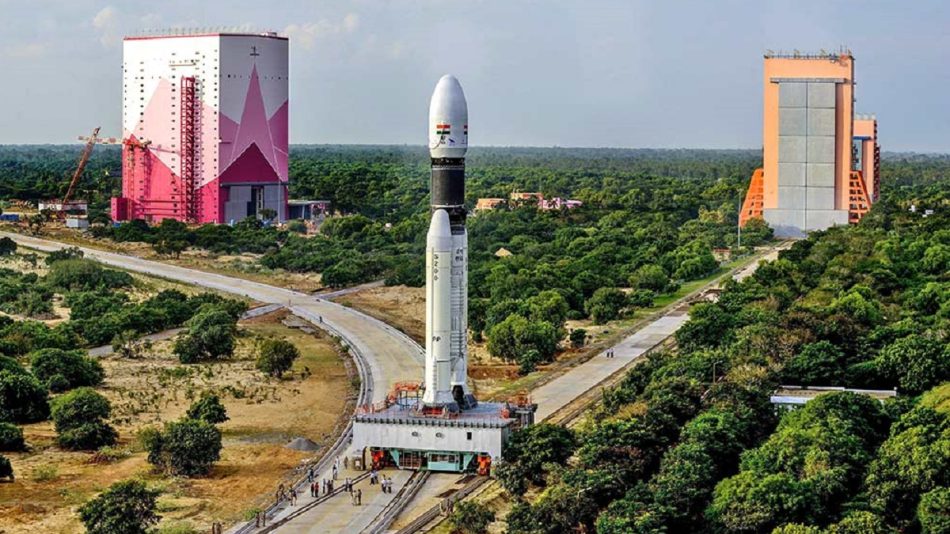
Kulasekarapattinam SSLV Launch Complex

Kulasekarapattinam SSLV Launch Complex

India's second spaceport solves a geometry problem. How ISRO is building a dedicated small satellite facility that eliminates the costly dogleg maneuvers plaguing polar launches from Sriharikota.

STS-51B | Three-Tenths of a Second from Disaster

STS-51B | Three-Tenths of a Second from Disaster

Forty years ago today, Challenger lifted off LC-39A on a science mission that nobody outside Morton-Thiokol would call dangerous. Years later, after the orbiter and seven other astronauts were gone, investigators looked at the recovered boosters from STS-51B and realized the crew had come within a fraction of a second of dying first. This is the story of the launch that should have been a warning.

China's 75 Unusual GEO Maneuvers Flagged by CSIS | KeepTrack Space Brief

China's 75 Unusual GEO Maneuvers Flagged by CSIS | KeepTrack Space Brief

CSIS analysis identifies 75 unusual orbital maneuvers by Chinese GEO satellites over 10 years, consistent with military reconnaissance. Track GEO objects via KeepTrack.

The Day America Pioneered Polar Orbits

The Day America Pioneered Polar Orbits

Sixty-six years ago, a Thor-Agena rocket thundered into the California sky carrying Discoverer 1, the first satellite attempt at polar orbit and the secret vanguard of Americas space reconnaissance program

Roman Space Telescope Arrives at KSC for August 30 Falcon Heavy Launch | KeepTrack Space Brief

Roman Space Telescope Arrives at KSC for August 30 Falcon Heavy Launch | KeepTrack Space Brief

NASA's $4.3B Nancy Grace Roman Space Telescope arrived at Kennedy Space Center for 70 days of prelaunch processing ahead of its August 30 Falcon Heavy launch.

The Day Humanity First Used a Planet to Navigate the Solar System

The Day Humanity First Used a Planet to Navigate the Solar System

Fifty-one years ago, Mariner 10 revolutionized space exploration by executing the first-ever planetary gravity assist at Venus, pioneering a technique that would transform how we explore the solar system