STARLINK-33569 (62769)

COSPAR: 2025-015M | Alt Name: Starlink 33569

Image
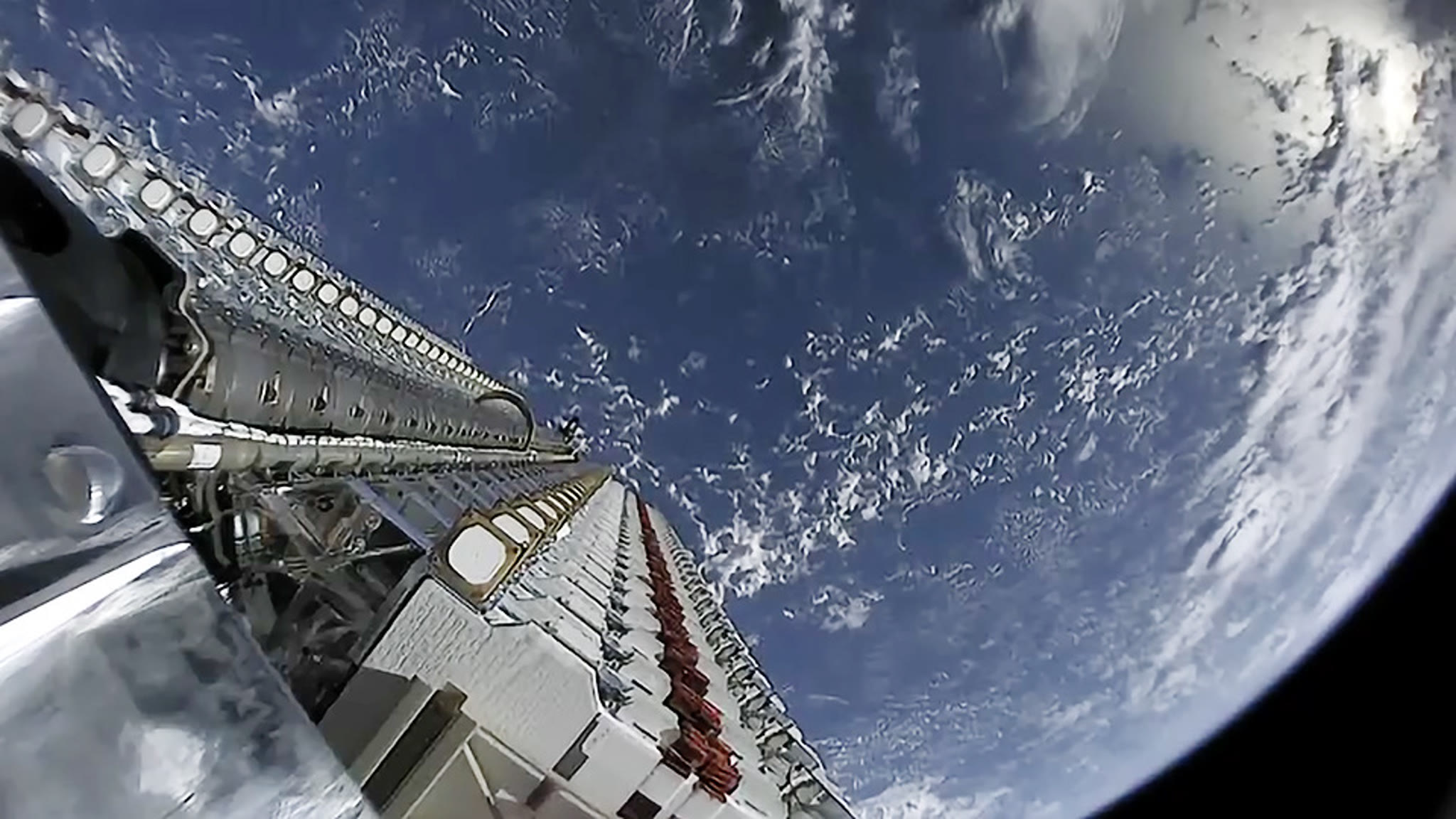
STARLINK-33569 Satellite Image
Additional Sources
Launch Details

Launch Date

January 21, 2025

Launch Site

AFWTR

Launch Pad

SLC4E

Launch Vehicle

Falcon 9

Orbital Elements

NORAD ID

62769

International Designator

2025-015M

Epoch

Sun, 19 Jul 2026 19:22:42 GMT

Apogee

Calculating...

Perigee

Calculating...

Inclination

53.16°

Right Ascension

67.04°

Eccentricity

Calculating...

Argument of Perigee

87.43°

Period

93.85 min

Mean Motion

15.34 rev/day

Latitude

Calculating...

Longitude

Calculating...

Altitude

Calculating...

Velocity

Calculating...

Polar Plot
3D Visualization
Basic Satellite Info

Name

STARLINK-33569

Alternative Name

Starlink 33569

Type

Payload

Status

Operational

Owner

SPXS

Country

United States

Constellation

N/A

Related Satellites

Major Events

N/A

Latest TLEs
1 62769U 25015M   26200.80744141  .00003888  00000+0  12615-3 0  9996
2 62769  53.1589  67.0356 0001293  87.4300 272.6850 15.34397969 84735

Source: Celestrak

Summary
The satellite named STARLINK-33569 (OBJECT_ID: 2025-015M) is a Starlink V2MO model, owned and manufactured by SpaceX (SPXS). It was launched on January 21, 2025, from Vandenberg Space Force Base (AFWTR), SLC4E launch pad using a Falcon 9 rocket. The satellite has dimensions of 0.3 meters in length, 4.1 meters in diameter, and a span of 29 meters. It weighs 575 kilograms at launch with a dry mass of 530 kilograms. Its shape is described as "Box + pan," indicating it likely consists of a box-like structure with additional components extending from its sides or top. The satellite's purpose is part of the Starlink Group 11-8-12 payload, contributing to SpaceX’s constellation for global internet coverage.

Starlink is a satellite constellation developed by SpaceX with the aim of providing global broadband internet coverage. Thousands of small satellites are deployed in low Earth orbit (LEO), enabling high-speed internet access even in remote areas. However, the rapid increase in satellites raises concerns about space debris and the potential for collisions, which can lead to further debris creation and endanger other spacecraft. Additionally, the sheer number of Starlink satellites can affect astronomical observations by increasing light pollution. Proper deorbiting plans and international coordination are essential to mitigate these challenges and ensure long-term sustainability in space.
Physical Characteristics

Length

0.3

Diameter

4.1

Span

29

Dry Mass

530

Launch Mass

575

Shape

Box + pan

Radar Cross Section

Unknown

Visual Magnitude

Unknown

Color

Unknown

Material Composition

Unknown

Technical Details

Payload

Starlink Group 11-8-12

Purpose

Unknown

Mission

Unknown

Manufacturer

SPXS

Life Expectancy

Unknown

Bus

Starlink V2MO

Configuration

Unknown

Motor

Unknown

Equipment

Unknown

Power System

Unknown

ADCS

Unknown

Transmitter Frequency

Unknown

Map
This tool will help you track the satellite's position and predict its upcoming passes over your location. Simply input the coordinates or click the geolocation button to get started.
Next Pass
Azimuth Elevation Time (Local)
Start Azimuth
Max Elevation
Stop Azimuth
Time Until
Pass Duration

Satellite Articles

View All Posts »

Learn more about satellites and other related topics.

STARLINK-4621 Faces Critical Conjunction as Eight Satellites Reenter | KeepTrack X Report

STARLINK-4621 Faces Critical Conjunction as Eight Satellites Reenter | KeepTrack X Report

A HIGH-risk conjunction between STARLINK-4621 and the defunct SL-18 rocket body leads the July 11 safety picture, with eight Starlink satellites set to reenter through July 14.

Space Brief 14 Dec 2024

Space Brief 14 Dec 2024

Today’s Space Brief covers significant developments such as SpaceX’s latest Starlink launch, the US Space Force testing modular satellite technology, and key long-range missile tests by the Pentagon.

X Report 30 Jul 2025

X Report 30 Jul 2025

SpaceX continues to push boundaries with the successful launch of 28 Starlink satellites and significant testing preparations for upcoming Crew-11 and Starship missions.

Missile Strikes SES Teleport in Israel; Anduril Buys ExoAnalytic | KeepTrack Space Brief

Missile Strikes SES Teleport in Israel; Anduril Buys ExoAnalytic | KeepTrack Space Brief

Missile strike damages SES teleport facility in Israel amid military operations. Anduril acquires ExoAnalytic's 130-person space tracking team, integrating satellite/missile surveillance into defense portfolio.

FCC Approves 7,500 More Starlink Satellites, SpaceX Wins $739M Launch Contract | KeepTrack X Report

FCC Approves 7,500 More Starlink Satellites, SpaceX Wins $739M Launch Contract | KeepTrack X Report

FCC approves 7,500 additional Starlink Gen2 satellites. Space Force awards SpaceX $739M for nine national security launches. NASA plans Crew-11 medical evacuation from ISS on January 14.

SpaceX Launches GPS Satellite in Third Mission Reassigned From ULA | KeepTrack Space Brief

SpaceX Launches GPS Satellite in Third Mission Reassigned From ULA | KeepTrack Space Brief

SpaceX launches GPS satellite for Space Force — third consecutive GPS mission reassigned from ULA. Space Force nears selection of next-gen GEO spy satellite contractors. Northwood Space lands $49M deal.

The 300,000 Swerves Keeping Low Earth Orbit From Crashing

The 300,000 Swerves Keeping Low Earth Orbit From Crashing

Starlink satellites fired their thrusters to dodge a collision roughly 300,000 times in 2025, about 822 times a day. Behind that number is a fragile, half-automated system of warnings, probabilities, and judgment calls that decides which close approaches are worth a maneuver and which are just noise.

The Day Humanity First Touched an Asteroid

The Day Humanity First Touched an Asteroid

Twenty-four years ago, a spacecraft designed only to orbit made history with an improvised landing on asteroid Eros, marking humanitys first controlled touchdown on a small celestial body