STARLINK-11498 [DTC] (62276)

COSPAR: 2024-237K | Alt Name: Starlink 11498

Image
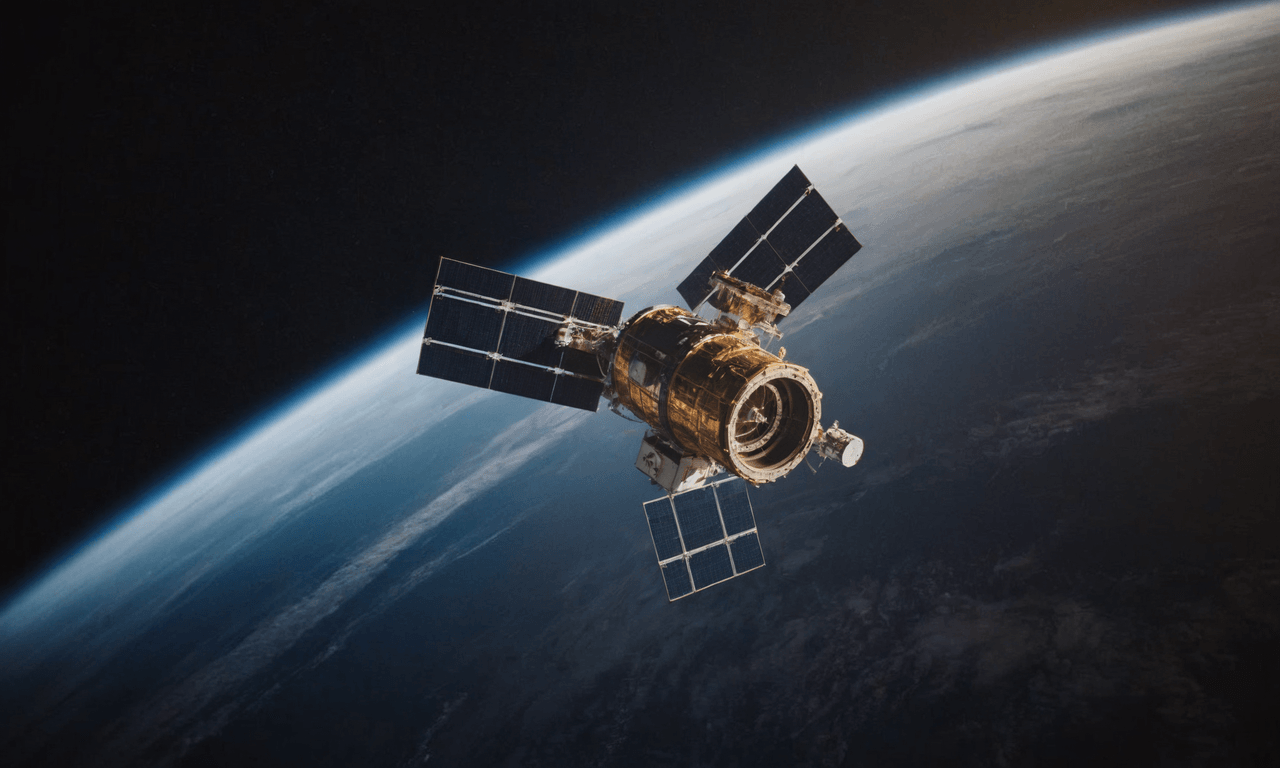
STARLINK-11498 [DTC] Satellite Image
Additional Sources
Launch Details

Launch Date

December 8, 2024

Launch Pad

LC40

Launch Vehicle

Falcon 9

Orbital Elements

NORAD ID

62276

International Designator

2024-237K

Epoch

Sun, 19 Jul 2026 16:40:18 GMT

Apogee

Calculating...

Perigee

Calculating...

Inclination

43.00°

Right Ascension

340.89°

Eccentricity

Calculating...

Argument of Perigee

283.77°

Period

91.67 min

Mean Motion

15.71 rev/day

Latitude

Calculating...

Longitude

Calculating...

Altitude

Calculating...

Velocity

Calculating...

Polar Plot
3D Visualization
Basic Satellite Info

Name

STARLINK-11498 [DTC]

Alternative Name

Starlink 11498

Type

Payload

Status

Operational

Owner

SPXS

Country

United States

Constellation

N/A

Related Satellites

Major Events

N/A

Latest TLEs
1 62276U 24237K   26200.69465709  .00103554  00000+0  80035-3 0  9993
2 62276  43.0013 340.8870 0002640 283.7717  76.2856 15.70842264 93817

Source: Celestrak

Summary
The satellite named STARLINK-11498 [DTC], also known as Starlink 11498, is a Starlink V2M model operated by SPXS (SpaceX). It was launched on December 8, 2024, from the Air Force Eastern Test Range LC40 using a Falcon 9 launch vehicle. The satellite has dimensions of 0.3 meters in length and 4.1 meters in diameter with a span of 29 meters, indicating the deployment of its solar panels or antennas. It weighs approximately 730 kilograms at launch and 700 kilograms dry mass. Its shape is described as "Box + pan," suggesting a box-like body with additional structures for power generation or communication. The satellite is part of the Starlink Group 12-5-10 payload constellation but lacks detailed information on its specific mission, purpose, and operational details beyond these basic parameters.

Starlink is a satellite constellation developed by SpaceX with the aim of providing global broadband internet coverage. Thousands of small satellites are deployed in low Earth orbit (LEO), enabling high-speed internet access even in remote areas. However, the rapid increase in satellites raises concerns about space debris and the potential for collisions, which can lead to further debris creation and endanger other spacecraft. Additionally, the sheer number of Starlink satellites can affect astronomical observations by increasing light pollution. Proper deorbiting plans and international coordination are essential to mitigate these challenges and ensure long-term sustainability in space.
Physical Characteristics

Length

0.3

Diameter

4.1

Span

29

Dry Mass

700

Launch Mass

730

Shape

Box + pan

Radar Cross Section

Unknown

Visual Magnitude

Unknown

Color

Unknown

Material Composition

Unknown

Technical Details

Payload

Starlink Group 12-5-10

Purpose

Unknown

Mission

Unknown

Manufacturer

SPXS

Life Expectancy

Unknown

Bus

Starlink V2M

Configuration

Unknown

Motor

Unknown

Equipment

Unknown

Power System

Unknown

ADCS

Unknown

Transmitter Frequency

Unknown

Map
This tool will help you track the satellite's position and predict its upcoming passes over your location. Simply input the coordinates or click the geolocation button to get started.
Next Pass
Azimuth Elevation Time (Local)
Start Azimuth
Max Elevation
Stop Azimuth
Time Until
Pass Duration

Satellite Articles

View All Posts »

Learn more about satellites and other related topics.

X Report 16 Sep 2025

X Report 16 Sep 2025

SpaceX continues to make headlines with successful launches and advancements in satellite technology. Notably, a Falcon 9 rocket delivered an upgraded Cygnus spacecraft to the ISS amid a busy launch schedule this week.

Space Brief 11 Aug 2025

Space Brief 11 Aug 2025

Today's briefing highlights major advancements in tactical satellite communications for military applications, the expansion of an IoT satellite constellation by China's Geespace, and significant developments in lunar communications and surveillance systems.

SpaceX Postpones Falcon Heavy Launch Carrying Secretive X-37B Spaceplane

SpaceX Postpones Falcon Heavy Launch Carrying Secretive X-37B Spaceplane

SpaceX delays the much-anticipated Falcon Heavy launch of the secretive X-37B military spaceplane, marking a significant moment in space exploration and military technology.

Space Brief 21 Oct 2024

Space Brief 21 Oct 2024

Today's Space Brief covers SpaceX's recent launch for OneWeb, advances in remote-control robots for lunar missions, the power loss of Intelsat 33e, and developments in inflatable space habitats.

Space Brief 2 Mar 2025

Space Brief 2 Mar 2025

Today's brief highlights the successful landing of a private moon mission by Firefly Aerospace, a new simulator for the Spanish Air and Space Force, and the anticipated launch by Europe's Ariane 6. Plus, our Satellite Spotlight features the COSMOS 2484.

10,374 Starlink Satellites in Orbit, X Report 6 May 2026

10,374 Starlink Satellites in Orbit, X Report 6 May 2026

Starlink satellites in orbit May 2026: 10,374, with 10,358 working. Mission 17-29 lifts 24 more from Vandenberg and a satellite films the Starlink train.

The Telescope That Needed Glasses

The Telescope That Needed Glasses

On April 25, 1990, the Space Shuttle Discovery's robotic arm lifted a 11,110-kilogram barrel of mirrors and instruments out of the payload bay and released it into orbit. Six weeks later, the first images came back badly out of focus. The Hubble Space Telescope had been ground to the wrong prescription, and America had just spent $2.5 billion on what the press was calling a 'technoturkey.'

Space Brief 31 Aug 2025

Space Brief 31 Aug 2025

SpaceX makes headlines with dual Starlink launches, Rocket Lab inaugurates new launch complex, while AI's impact on space missions and satellite technology continues to stir discussions.