



Space Brief 17 Sep 2024
Today's Space Brief covers crucial satellite events including upcoming launches, military space developments, and exceptional celestial sightings.



NORAD ID
62175
International Designator
2024-225N
Epoch
Sun, 19 Jul 2026 08:34:07 GMT
Apogee
Calculating...
Perigee
Calculating...
Inclination
70.00°
Right Ascension
192.63°
Eccentricity
Calculating...
Argument of Perigee
265.49°
Period
96.11 min
Mean Motion
14.98 rev/day
Latitude
Calculating...
Longitude
Calculating...
Altitude
Calculating...
Velocity
Calculating...
Name
STARLINK-32534
Alternative Name
Starlink 32534
Type
Status
Owner
SPXS
Country
United States
Constellation
N/A
Related Satellites
Major Events
N/A
1 62175U 24225N 26200.35702816 .00001512 00000+0 13444-3 0 9995
2 62175 70.0001 192.6283 0003809 265.4884 94.5840 14.98334156 89594
Source: Celestrak
Length
0.3
Diameter
4.1
Span
29
Dry Mass
700
Launch Mass
730
Shape
Box + pan
Radar Cross Section
Unknown
Visual Magnitude
Unknown
Color
Unknown
Material Composition
Unknown
Payload
Starlink Group N-01-11
Purpose
Communication
Mission
Communication
Manufacturer
SPXS
Life Expectancy
Unknown
Bus
Starlink V2M
Configuration
Starlink v2 Mini
Motor
Argon ion thrusters
Equipment
Ku/Ka/E-band payload, optical inter-satellite link
Power System
Solar arrays, batteries
ADCS
Unknown
Transmitter Frequency
Unknown
Learn more about satellites and other related topics.
Today's Space Brief covers crucial satellite events including upcoming launches, military space developments, and exceptional celestial sightings.

Today's highlights include SpaceX's rapid response GPS launch, Raytheon's new rocket motor test, and Starlink's revenue surge. Plus, the Space Force's modernization push.

Today's brief focuses on Blue Origin's scrubbed New Glenn launch, SpaceX's reusability milestone, and a warning from the US Air Force about China's advancements in space capabilities. We're also highlighting a key satellite in orbit.
Today's brief covers developments in space traffic management, the X-37B spaceplane's upcoming mission, and satellite interference with radio telescopes.
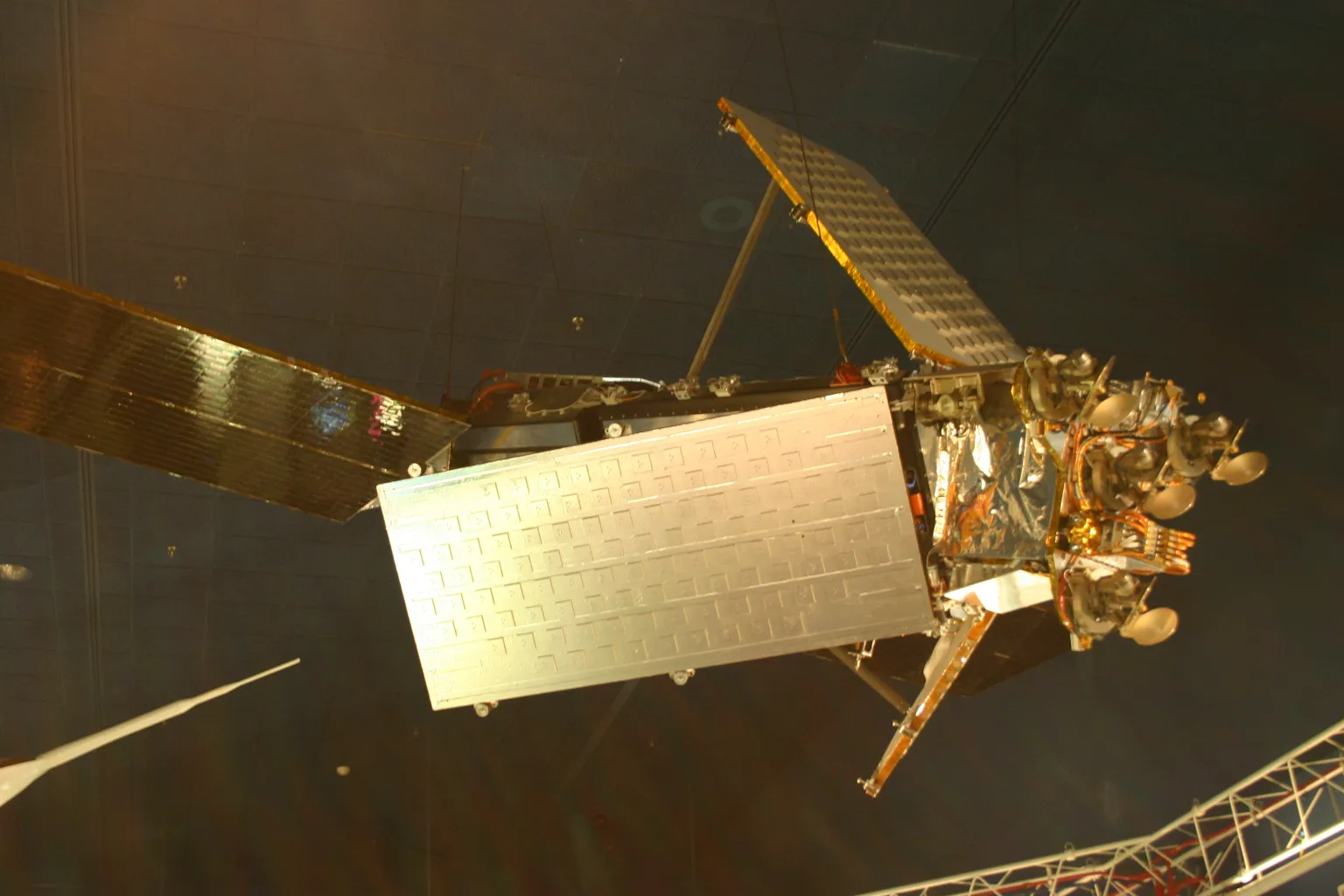
Seventeen years ago today, an operational American communications satellite and a dead Russian military relay crossed paths over Siberia. What happened next created more than 2,000 pieces of trackable debris - and fundamentally changed how the world thinks about space traffic.

Space Force contracts Viasat and SES for $437M Protected Tactical Satcom-Global program. Four new GEO satellites replace vulnerable single-satellite systems.
U.S. Space Force executes first tactical orbital intercept under Victus Haze mission using commercial spacecraft. Rendezvous and proximity operations now operationally demonstrated.

Space debris poses a mounting threat to both satellites and space missions. As we send more objects into orbit, the likelihood of collisions and subsequent breakups producing dangerous space debris increases. Recognizing the major events that have generated this dangerous space junk is pivotal in ensuring the safety of future space missions.