


Artemis 2 Crew Returns After 50-Year Lunar Flyby | KeepTrack Space Brief
Artemis 2 astronauts completed first crewed lunar flyby since Apollo 17, traveling 690,000 miles aboard Orion. Four crew validated deep-space systems.


Launch Date
September 2, 1972
Launch Site
AFWTR
Launch Pad
SLC5
Launch Vehicle
Scout B-1
NORAD ID
06173
International Designator
1972-069A
Epoch
Sat, 04 Jul 2026 01:39:32 GMT
Apogee
Calculating...
Perigee
Calculating...
Inclination
90.02°
Right Ascension
208.80°
Eccentricity
Calculating...
Argument of Perigee
340.50°
Period
99.13 min
Mean Motion
14.53 rev/day
Latitude
Calculating...
Longitude
Calculating...
Altitude
Calculating...
Velocity
Calculating...
Name
TRIAD 1
Alternative Name
Triad OI-1X
Type
Status
Owner
NAVAIR
Country
United States
Constellation
N/A
Related Satellites
Major Events
N/A
1 06173U 72069A 26185.06912515 .00000585 00000-0 13757-3 0 9996
2 06173 90.0189 208.7966 0048588 340.5044 43.7058 14.52671359833023
Source: Celestrak
Apologies, there is no summary for this satellite yet. I am working to generate these for every object in the catalog, but it is going to take time.
Length
7.5
Diameter
0.8
Span
7.5
Dry Mass
94
Launch Mass
94
Shape
3 Cyl + Ant
Radar Cross Section
0.6882
Visual Magnitude
Unknown
Color
Unknown
Material Composition
Unknown
Payload
Triad OI-1X
Purpose
Navigation
Mission
Navigation
Manufacturer
APL
Life Expectancy
1 year (design); 2.5 years reached
Bus
Triad
Configuration
Transit-Bus, three bodys connected by booms, gravity stabilized, RTG
Motor
Pulsed plasma thrusters
Equipment
?
Power System
Transit-RTG
ADCS
Unknown
Transmitter Frequency
Unknown
Learn more about satellites and other related topics.
Artemis 2 astronauts completed first crewed lunar flyby since Apollo 17, traveling 690,000 miles aboard Orion. Four crew validated deep-space systems.

Vietnam approves Starlink with up to 600,000 terminals and 4 gateway stations. SpaceX hits 600th Falcon 9 launch. NASA's Isaacman plans Roscosmos meeting and Soyuz visit.

Today's brief covers Blue Origin’s new defense launch contracts, the ISS launch of a Navy SEAL astronaut, Sierra Space’s GPS security advancements for the U.S. Space Force, and the Space Force's 'Orbital Watch' initiative.
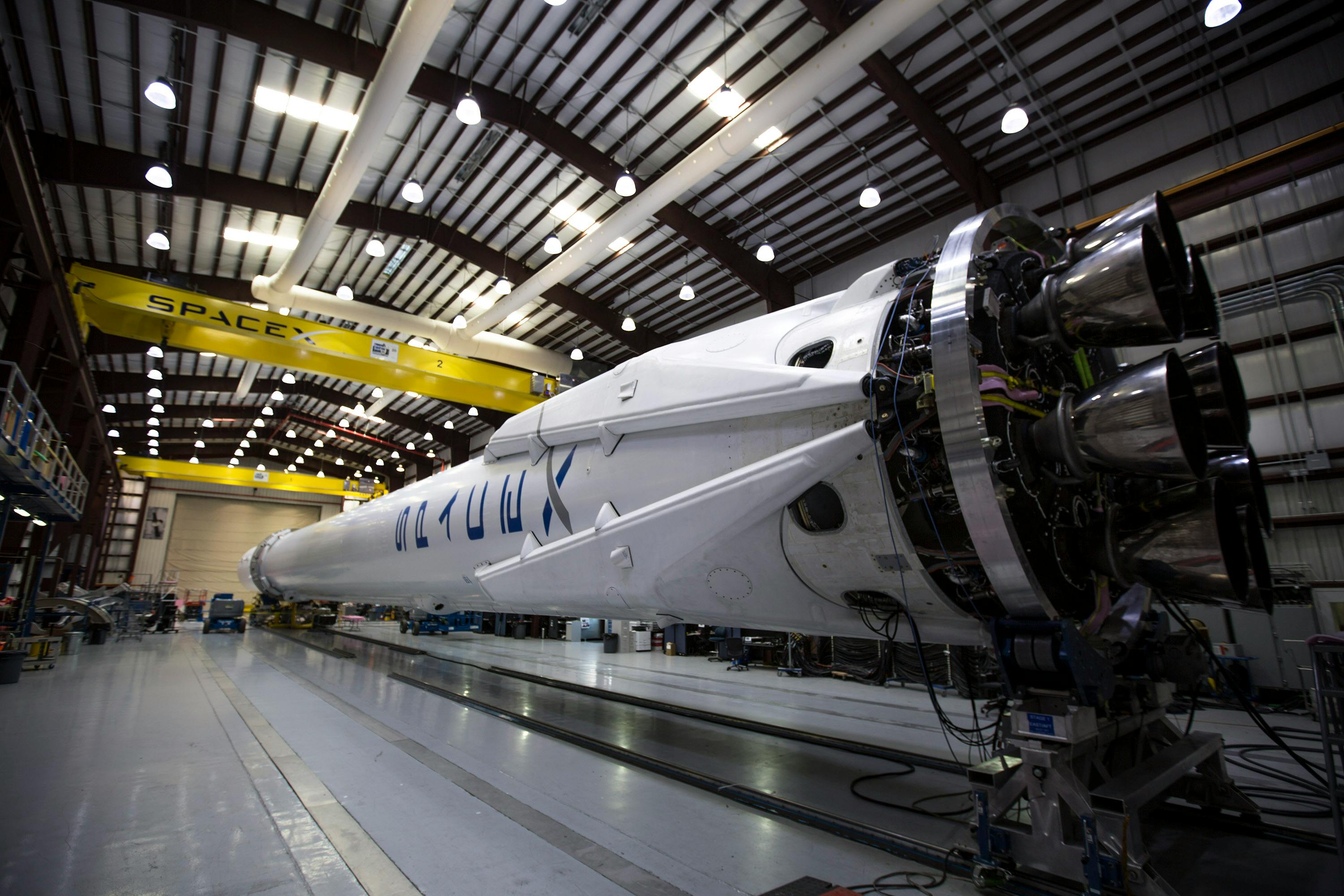
SpaceX continues to innovate as it nears peak Falcon 9 launch rates while refining technologies pivotal for future Mars missions.
Today's briefing covers the latest developments in satellite intelligence funding, new mandates affecting space launch and missile defense, and the early conclusion of a private astronaut mission. We also discuss Firefly Aerospace's plans to go public and stunning imagery from NASA's Parker Solar Probe.

Today's highlights include the destruction of ABL Space Systems' rocket due to engine leaks, Firefly Aerospace's lunar lander pre-launch tests, and insights on U.S. military's space domain awareness enhancements.

Today's brief covers a groundbreaking national security mission for ULA's Vulcan, NASA's collaboration with LeoLabs for enhanced collision avoidance, and SEOPS' new satellite tracking services, among other key developments.

MDA Space acquires Blue Canyon Technologies for $620 million, and NASA's 2028 Aeolus Mars orbiter goes to a California startup instead of SpaceX.