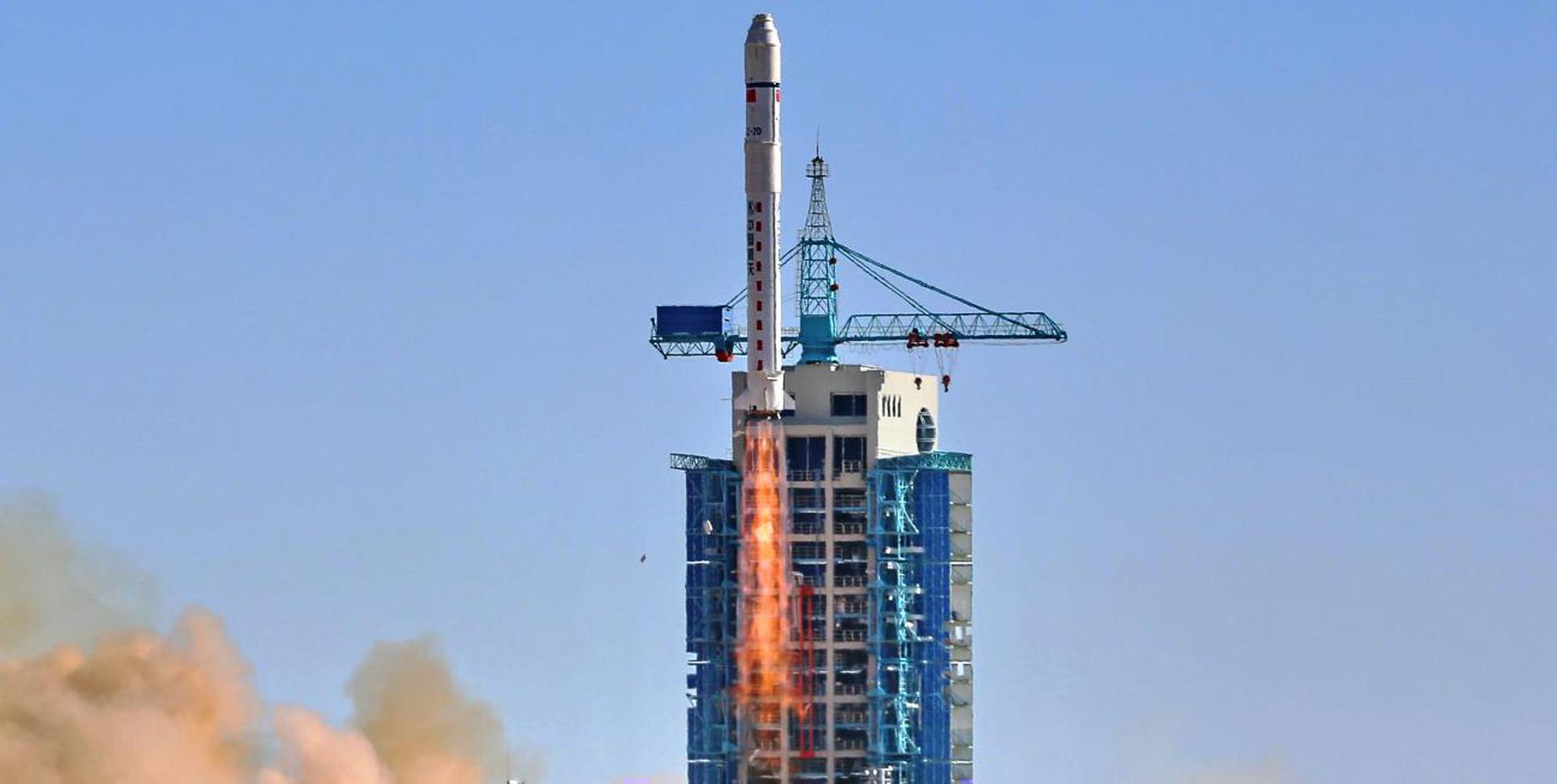
CZ-6A DEB (61088)

COSPAR: 2024-140NE | Alt Name: deb CZ-6A Y21

Image
CZ-6A DEB Satellite Image
Additional Sources
Launch Details

Launch Date

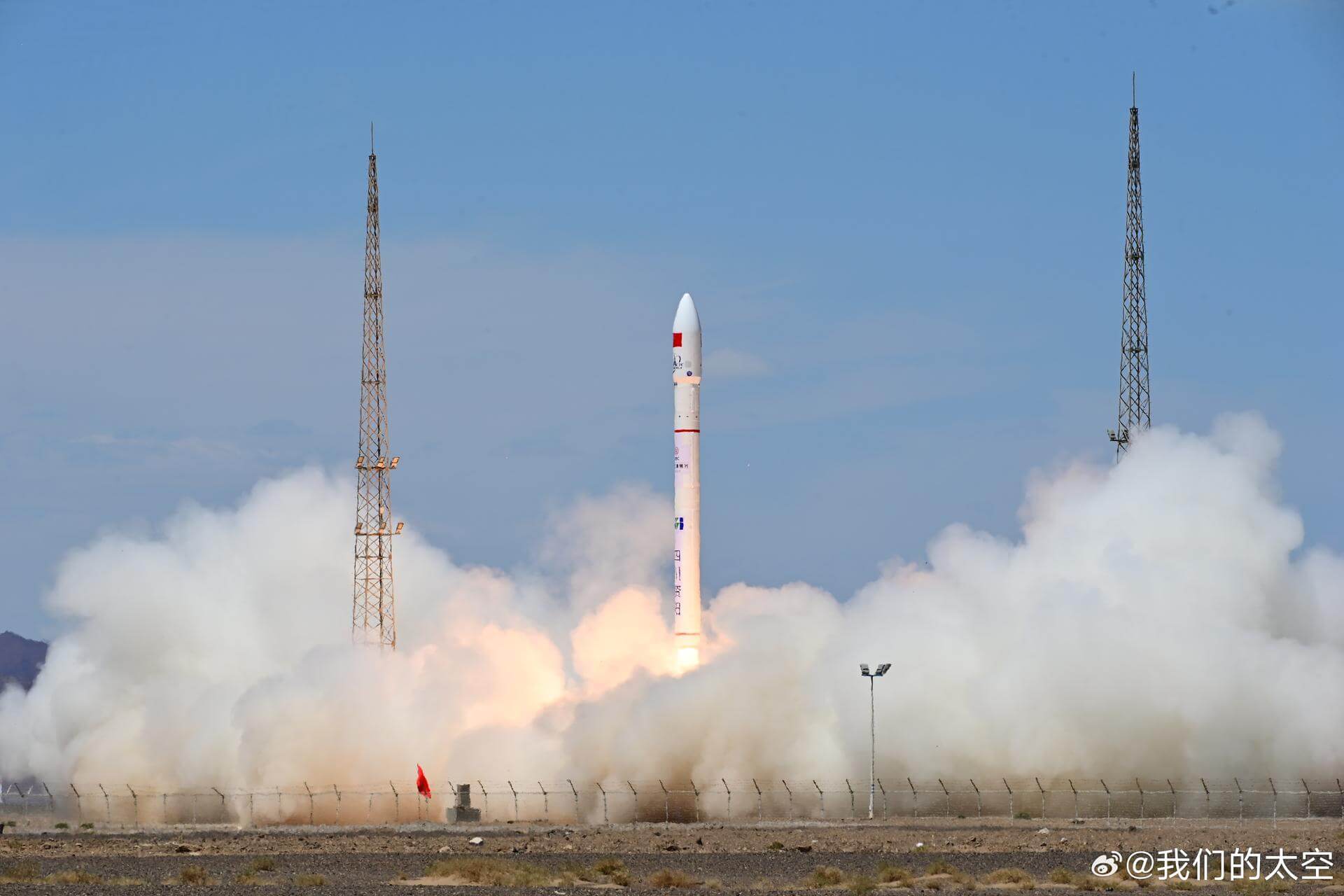
August 6, 2024

Launch Site

TAISC

Launch Pad

TYSC -

Launch Vehicle

Chang Zheng 6A

Orbital Elements

NORAD ID

61088

International Designator

2024-140NE

Epoch

Sun, 19 Jul 2026 17:18:24 GMT

Apogee

Calculating...

Perigee

Calculating...

Inclination

88.98°

Right Ascension

269.37°

Eccentricity

Calculating...

Argument of Perigee

70.07°

Period

101.25 min

Mean Motion

14.22 rev/day

Latitude

Calculating...

Longitude

Calculating...

Altitude

Calculating...

Velocity

Calculating...

Polar Plot
3D Visualization
Explore in the Catalog
Basic Satellite Info

Name

CZ-6A DEB

Alternative Name

deb CZ-6A Y21

Type

Debris

Status

Space Junk

Owner

CNSA

Country

China

Constellation

N/A

Related Satellites

Major Events

N/A

Latest TLEs
1 61088U 24140NE  26200.72111174  .00000419  00000+0  18057-3 0  9995
2 61088  88.9829 269.3658 0040832  70.0694 290.4889 14.22242230 98224

Source: Celestrak

Summary
Space debris, also known as space junk, encompasses all non-functional objects orbiting Earth such as defunct satellites, spent rocket stages, and fragments from collisions or disintegrations. Over time, this debris can accumulate and create an increasingly hazardous environment in orbit. Even tiny fragments, traveling at extremely high velocities, can inflict significant damage on operational satellites and spacecraft. If left unmanaged, the density of debris raises the risk of catastrophic collisions and further fragmentation, compounding the problem and threatening the safety and sustainability of space activities.
Physical Characteristics

Length

0

Diameter

0

Span

0

Dry Mass

0

Launch Mass

0

Shape

N/A

Radar Cross Section

Unknown

Visual Magnitude

Unknown

Color

Unknown

Material Composition

Unknown

Technical Details

Payload

Unknown

Purpose

Unknown

Mission

Unknown

Manufacturer

SAST

Life Expectancy

Unknown

Bus

Unknown

Configuration

Unknown

Motor

Unknown

Equipment

Unknown

Power System

Unknown

ADCS

Unknown

Transmitter Frequency

Unknown

Map
This tool will help you track the satellite's position and predict its upcoming passes over your location. Simply input the coordinates or click the geolocation button to get started.
Next Pass
Azimuth Elevation Time (Local)
Start Azimuth
Max Elevation
Stop Azimuth
Time Until
Pass Duration

Satellite Articles

View All Posts »

Learn more about satellites and other related topics.

FAA Approves Starship Launches from LC-39A, FCC Accepts Orbital Data Center Filing | KeepTrack X Report

FAA Approves Starship Launches from LC-39A, FCC Accepts Orbital Data Center Filing | KeepTrack X Report

FAA approves SpaceX Starship launches from Kennedy Space Center LC-39A. FCC accepts 1-million satellite orbital data center filing. Canada ranks as 5th largest Starlink market.

The Satellite That Found 22 Photons and Changed Astronomy

The Satellite That Found 22 Photons and Changed Astronomy

On April 27, 1961, a Scout rocket lifted a 37-kilogram NASA satellite into orbit from Wallops Island carrying the first serious instrument for detecting cosmic gamma rays. Explorer 11 operated for seven months before its tape recorder failed. In that time it registered 22 gamma-ray photons - a pitiful number by modern standards, but enough to launch an entire branch of astronomy.

Understanding Space Debris

Understanding Space Debris

From shattered satellites to exploded rocket stages, space debris poses a growing risk to satellites, space stations, and astronauts. Here's a deep dive into what causes space debris, notable generating events, and what we're doing about it.

Falcon 9 Lofts 5-Ton Cygnus XL to ISS | KeepTrack X Report

Falcon 9 Lofts 5-Ton Cygnus XL to ISS | KeepTrack X Report

SpaceX's Falcon 9 delivered Northrop Grumman's second Cygnus XL — carrying over 5 tons of cargo — to the ISS on April 11, 2026.

Space Brief 16 Dec 2025

Space Brief 16 Dec 2025

Today's briefing covers the Space Force's AI integration, new naming conventions for satellites, and updates on military and satellite acquisition strategies.

The Satellite That Taught Us What We Were Doing to the Planet

The Satellite That Taught Us What We Were Doing to the Planet

Landsat 7 launched on April 15, 1999, designed to last five years. It operated for twenty-five, survived a failure that destroyed a fifth of every image it took, and became part of the longest continuous record of Earth's surface ever assembled. Then they made the data free.

Space Brief 28 Aug 2024

Space Brief 28 Aug 2024

A Falcon 9 booster fails to land, increasing GPS and PNT significance for national security, and NASA's SLS mobile launch platform costs soar.

X Report 12 Dec 2025

X Report 12 Dec 2025

SpaceX makes headlines with record-breaking launch operations, while plans for an IPO signal major changes in the company's trajectory and could inspire industry-wide movements.