STARLINK-11281 [DTC] (60996)

COSPAR: 2024-158G | Alt Name: Starlink 11281

Image
STARLINK-11281 [DTC] Satellite Image
Additional Sources
Launch Details

Launch Date

September 5, 2024

Launch Pad

LC40

Launch Vehicle

Falcon 9

Orbital Elements

NORAD ID

60996

International Designator

2024-158G

Epoch

Sun, 19 Jul 2026 16:27:49 GMT

Apogee

Calculating...

Perigee

Calculating...

Inclination

53.16°

Right Ascension

350.76°

Eccentricity

Calculating...

Argument of Perigee

90.56°

Period

91.74 min

Mean Motion

15.70 rev/day

Latitude

Calculating...

Longitude

Calculating...

Altitude

Calculating...

Velocity

Calculating...

Polar Plot
3D Visualization
Basic Satellite Info

Name

STARLINK-11281 [DTC]

Alternative Name

Starlink 11281

Type

Payload

Status

Operational

Owner

SPXS

Country

United States

Constellation

N/A

Related Satellites

Major Events

N/A

Latest TLEs
1 60996U 24158G   26200.68598593  .00000876  00000+0  12087-4 0  9995
2 60996  53.1595 350.7555 0001044  90.5610 269.5528 15.69709347108311

Source: Celestrak

Summary
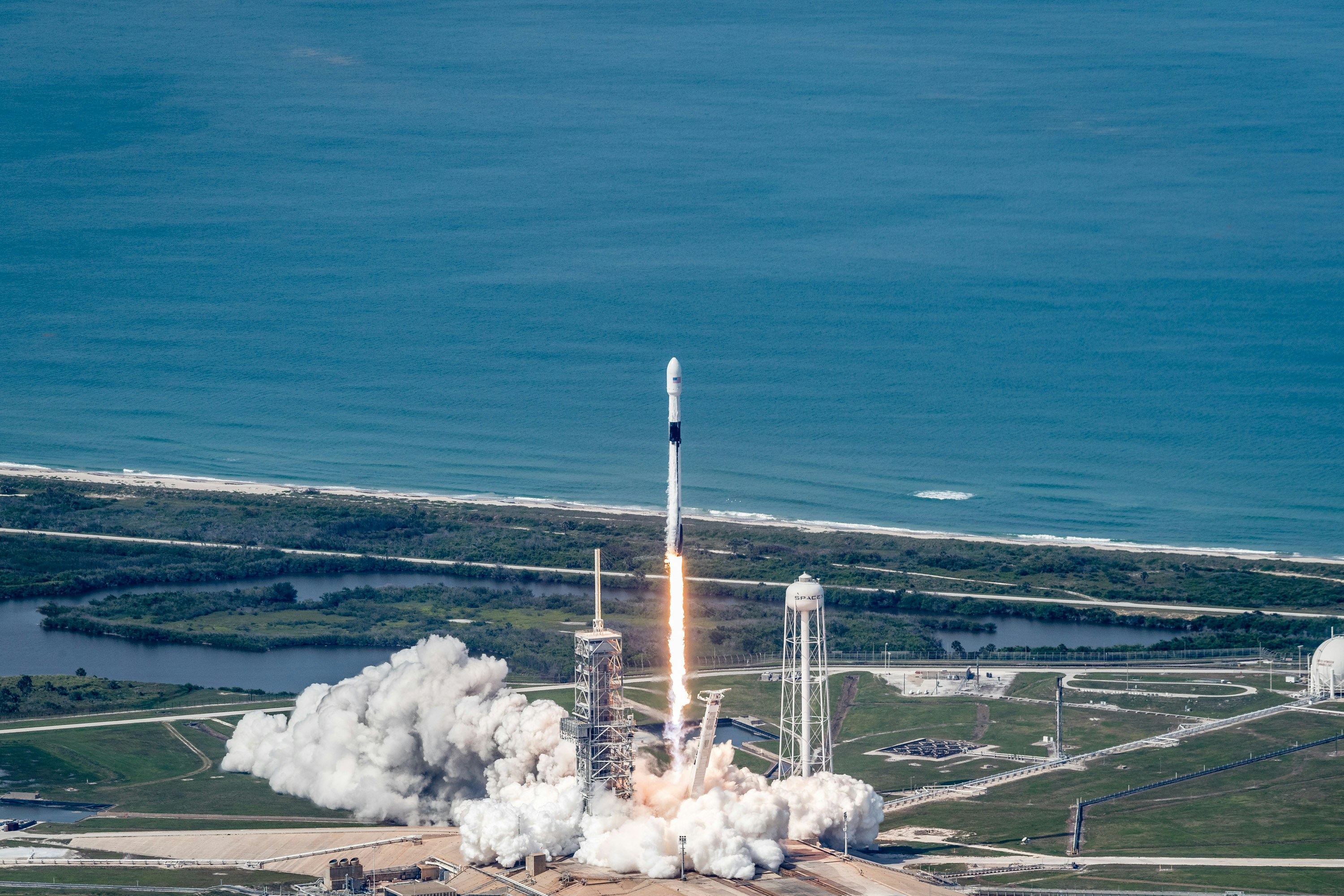
The satellite STARLINK-11281 [DTC], also known as Starlink 11281, is a communication spacecraft belonging to the Starlink v2 Mini configuration and part of the Starlink Group 8-11-07 payload. It was launched on September 5, 2024, from Launch Complex 40 at Cape Canaveral Space Force Station using a Falcon 9 launch vehicle. The satellite measures 0.3 meters in length with a diameter of 4.1 meters and a span of 29 meters. Its dry mass is 700 kg, and its launch mass was 730 kg. It is equipped with D2C payload and an optical inter-satellite link for communication purposes. Power is provided by solar arrays and batteries, and it uses Argon ion thrusters as motors. The satellite was manufactured by SpaceX (SPXS) and operates in a Box + pan shape configuration for its mission.

Starlink is a satellite constellation developed by SpaceX with the aim of providing global broadband internet coverage. Thousands of small satellites are deployed in low Earth orbit (LEO), enabling high-speed internet access even in remote areas. However, the rapid increase in satellites raises concerns about space debris and the potential for collisions, which can lead to further debris creation and endanger other spacecraft. Additionally, the sheer number of Starlink satellites can affect astronomical observations by increasing light pollution. Proper deorbiting plans and international coordination are essential to mitigate these challenges and ensure long-term sustainability in space.
Physical Characteristics

Length

0.3

Diameter

4.1

Span

29

Dry Mass

700

Launch Mass

730

Shape

Box + pan

Radar Cross Section

Unknown

Visual Magnitude

Unknown

Color

Unknown

Material Composition

Unknown

Technical Details

Payload

Starlink Group 8-11-07

Purpose

Communication

Mission

Communication

Manufacturer

SPXS

Life Expectancy

Unknown

Bus

Starlink V2M

Configuration

Starlink v2 Mini

Motor

Argon ion thrusters

Equipment

D2C payload, optical inter-satellite link

Power System

Solar arrays, batteries

ADCS

Unknown

Transmitter Frequency

Unknown

Map
This tool will help you track the satellite's position and predict its upcoming passes over your location. Simply input the coordinates or click the geolocation button to get started.
Next Pass
Azimuth Elevation Time (Local)
Start Azimuth
Max Elevation
Stop Azimuth
Time Until
Pass Duration

Satellite Articles

View All Posts »

Learn more about satellites and other related topics.

Space Brief 3 Aug 2025

Space Brief 3 Aug 2025

Today's brief covers NASA's collaboration with India for a new Earth-tracking satellite, China's expansion of its satellite internet network, and a groundbreaking cosmic shield for solar cells. Also highlighted are EchoStar's ambitious satellite order and Roscosmos' recent diplomatic moves.
LeoLabs and the Business of Watching Everything

LeoLabs and the Business of Watching Everything

A startup built on Cold War-era radar science now tracks 25,000 objects in orbit - and the Pentagon can't get enough of it. But can its radars really compete with the Space Surveillance Network?

X Report 25 Nov 2024

X Report 25 Nov 2024

SpaceX launches multiple Starlink batches, FAA updates for Starship, and NASA plans lunar cargo deliveries involving SpaceX and Blue Origin.

The Day We First Landed on Venus

The Day We First Landed on Venus

On December 15, 1970, a battered Soviet probe accomplished something no spacecraft had done before - it survived landing on another world and lived to tell about it.

Space Brief 15 Jul 2025

Space Brief 15 Jul 2025

Today's brief covers new military space funding, intriguing scientific discoveries, and defense contracts impacting global military strategies.

SpaceX Eyes Confidential IPO at $1.75T Valuation, Launches 54 Starlinks in One Day | KeepTrack X Report

SpaceX Eyes Confidential IPO at $1.75T Valuation, Launches 54 Starlinks in One Day | KeepTrack X Report

SpaceX reportedly eyes a confidential March IPO filing that could value the company at $1.75 trillion. Dual Falcon 9 launches deploy 54 Starlink satellites, pushing total on-orbit past 9,900.

SpaceX Launches First Block 2 BlueBirds for AST SpaceMobile | KeepTrack X Report

SpaceX Launches First Block 2 BlueBirds for AST SpaceMobile | KeepTrack X Report

SpaceX delivered 3 Block 2 BlueBird satellites for AST SpaceMobile from Pad 40, advancing direct-to-cell broadband with 10,650 Starlink craft now active.

Starlink Crosses 10,000 Active Satellites, X Report 18 Mar 2026

Starlink Crosses 10,000 Active Satellites, X Report 18 Mar 2026

Starlink satellite count 2026: SpaceX tops 10,000 active satellites, 10,037 working of 11,558 launched, under seven years after first launch.