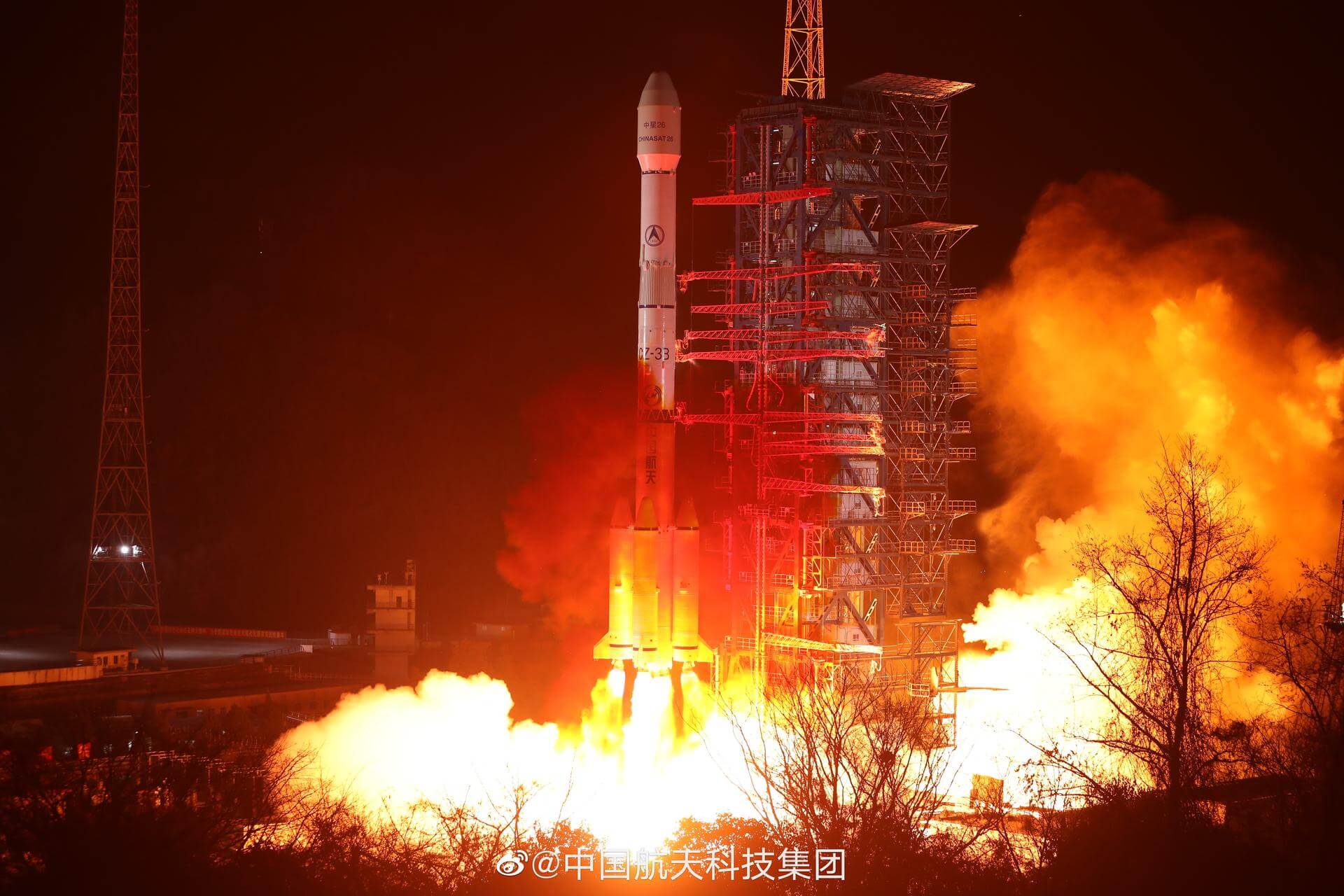
STARLINK-32108 (59682)

COSPAR: 2024-086A | Alt Name: Starlink 32108

Image
STARLINK-32108 Satellite Image
Additional Sources
Launch Details

Launch Date

May 8, 2024

Launch Pad

LC39A

Launch Vehicle

Falcon 9

Orbital Elements

NORAD ID

59682

International Designator

2024-086A

Epoch

Sun, 19 Jul 2026 12:46:30 GMT

Apogee

Calculating...

Perigee

Calculating...

Inclination

43.00°

Right Ascension

38.93°

Eccentricity

Calculating...

Argument of Perigee

257.87°

Period

94.27 min

Mean Motion

15.28 rev/day

Latitude

Calculating...

Longitude

Calculating...

Altitude

Calculating...

Velocity

Calculating...

Polar Plot
3D Visualization
Basic Satellite Info

Name

STARLINK-32108

Alternative Name

Starlink 32108

Type

Payload

Status

Operational

Owner

SPXS

Country

United States

Constellation

N/A

Related Satellites

Major Events

N/A

Latest TLEs
1 59682U 24086A   26200.53230003 -.00000129  00000+0  48456-5 0  9990
2 59682  43.0044  38.9266 0001245 257.8668 102.2045 15.27578754124221

Source: Celestrak

Summary
The STARLINK-32108 satellite, also known as Starlink 32108, is a communication satellite manufactured by SpaceX and part of the Starlink v2 Mini configuration under the BUS type Starlink V2M. It was launched on May 8, 2024, from Launch Pad LC39A at AFETR using a Falcon 9 launch vehicle. The spacecraft has dimensions of 0.3 meters in length and 4.1 meters in diameter with a span of 29 meters, featuring solar arrays and batteries for power generation. Its dry mass is recorded as 700 kilograms with a launch mass of 730 kilograms. Equipped with a Ku/Ka/E-band payload and optical inter-satellite link, the satellite employs Argon ion thrusters for propulsion. The satellite's shape is described as box with panels and it was successfully deployed on the same day as its launch date.

Starlink is a satellite constellation developed by SpaceX with the aim of providing global broadband internet coverage. Thousands of small satellites are deployed in low Earth orbit (LEO), enabling high-speed internet access even in remote areas. However, the rapid increase in satellites raises concerns about space debris and the potential for collisions, which can lead to further debris creation and endanger other spacecraft. Additionally, the sheer number of Starlink satellites can affect astronomical observations by increasing light pollution. Proper deorbiting plans and international coordination are essential to mitigate these challenges and ensure long-term sustainability in space.
Physical Characteristics

Length

0.3

Diameter

4.1

Span

29

Dry Mass

700

Launch Mass

730

Shape

Box + pan

Radar Cross Section

Unknown

Visual Magnitude

Unknown

Color

Unknown

Material Composition

Unknown

Technical Details

Payload

Starlink Group 6-56-01

Purpose

Communication

Mission

Communication

Manufacturer

SPXS

Life Expectancy

Unknown

Bus

Starlink V2M

Configuration

Starlink v2 Mini

Motor

Argon ion thrusters

Equipment

Ku/Ka/E-band payload, optical inter-satellite link

Power System

Solar arrays, batteries

ADCS

Unknown

Transmitter Frequency

Unknown

Map
This tool will help you track the satellite's position and predict its upcoming passes over your location. Simply input the coordinates or click the geolocation button to get started.
Next Pass
Azimuth Elevation Time (Local)
Start Azimuth
Max Elevation
Stop Azimuth
Time Until
Pass Duration

Satellite Articles

View All Posts »

Learn more about satellites and other related topics.

X Report 27 Mar 2025

X Report 27 Mar 2025

SpaceX successfully launches 27 Starlink satellites and gains approval for internet services in Vietnam.

House Backs $55.5B Space Force Budget, Excludes $350B Reconciliation | KeepTrack Space Brief

House Backs $55.5B Space Force Budget, Excludes $350B Reconciliation | KeepTrack Space Brief

House appropriators approved $55.5 billion for Space Force but omitted $350 billion reconciliation funds, threatening Golden Dome and large-scale space programs' acquisition timelines.

Space Brief 15 Feb 2025

Space Brief 15 Feb 2025

Today's highlights include SpaceX's record-setting Starlink launch, Redwire's contract for USSF, and military satellite developments.
Starlink V2: 100x Faster, 5G Direct-to-Phone for Europe | KeepTrack X Report

Starlink V2: 100x Faster, 5G Direct-to-Phone for Europe | KeepTrack X Report

SpaceX's Starlink V2 promises 100x data density for 5G direct-to-phone service. Deutsche Telekom targets 10 European countries by 2028.

The Satellites the Size of a Studio Apartment

The Satellites the Size of a Studio Apartment

AST SpaceMobile's BlueBird constellation is a bet that raw aperture size wins. Each satellite unfolds a 64-square-meter phased-array antenna in orbit, the largest commercial antenna ever deployed. The company claims a stock smartphone on the ground can connect directly to it. The competition says the physics doesn't support that. Seventeen satellites in and a contract with AT&T, Verizon, and Vodafone, somebody's math is wrong.
Who Owns the Most Satellites Orbiting Earth?

Who Owns the Most Satellites Orbiting Earth?

Uncover the top companies dominating the satellite industry. From SpaceX to One Web, learn who's leading in space assets. Full list inside.
SpaceX Unveils Space Traffic Management System, Bahamas Landings Resume | KeepTrack X Report

SpaceX Unveils Space Traffic Management System, Bahamas Landings Resume | KeepTrack X Report

SpaceX unveils new space traffic management system for orbital coordination. Bahamas grants permission for rocket landings after Starship debris pause. Musk proposes lunar satellite catapult.
Artemis 2 Crew Returns After 50-Year Lunar Flyby | KeepTrack Space Brief

Artemis 2 Crew Returns After 50-Year Lunar Flyby | KeepTrack Space Brief

Artemis 2 astronauts completed first crewed lunar flyby since Apollo 17, traveling 690,000 miles aboard Orion. Four crew validated deep-space systems.