



Space Brief 8 Oct 2025
Today's brief covers key developments in satellite launches, missile defense strategies, advanced IoT satellite connectivity, and the projected growth of the satellite market driven by defense needs.


Launch Date
January 1, 45405
Launch Site
Rocket Lab Launch Complex 1, Mahia, New Zealand
Launch Pad
LC1B
Launch Vehicle
Electron
NORAD ID
59587
International Designator
2024-077A
Epoch
Sun, 19 Jul 2026 20:22:05 GMT
Apogee
Calculating...
Perigee
Calculating...
Inclination
97.35°
Right Ascension
284.96°
Eccentricity
Calculating...
Argument of Perigee
271.48°
Period
93.55 min
Mean Motion
15.39 rev/day
Latitude
Calculating...
Longitude
Calculating...
Altitude
Calculating...
Velocity
Calculating...
Name
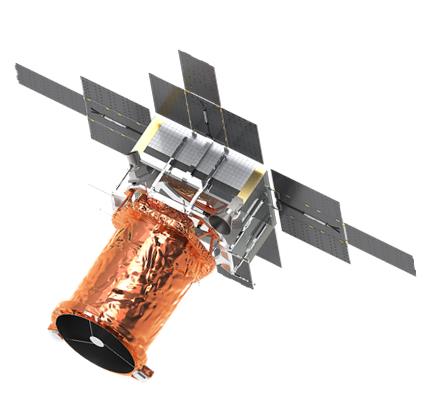
NEONSAT-1
Alternative Name
New-space Earth Observation Satellite-1
Type
Status
Owner
Korea Advanced Institute of Science and Technology (KAIST)
Country
South Korea
Constellation
NEONSAT Constellation
Related Satellites
Major Events
Successfully launched on April 23, 2024, and established communication with ground stations shortly after deployment.
1 59587U 24077A 26200.84867213 .00006793 00000+0 17634-3 0 9991
2 59587 97.3480 284.9558 0006459 271.4783 88.5723 15.39288950124756
Source: Celestrak
Length
1
Diameter
0.5
Span
1
Dry Mass
100
Launch Mass
100
Shape
Box-shaped with deployable solar panels.
Radar Cross Section
Unknown
Visual Magnitude
Unknown
Color
Predominantly metallic with solar panel arrays.
Material Composition
Constructed using lightweight aerospace-grade materials.
Payload
High-resolution optical imaging system.
Purpose
To enhance surveillance capabilities and improve responses to natural disasters by providing high-resolution imagery.
Mission
Earth observation with a focus on monitoring natural disasters on the Korean Peninsula.
Manufacturer
KAIST Satellite Technology Research Center (SaTReC)
Life Expectancy
Designed for a mission duration of approximately 2 years.
Bus
Neonsat
Configuration
Nanosatellite
Motor
Unknown
Equipment
High-resolution optical camera capable of capturing black-and-white images with a ground resolution of up to 1 meter and color images up to 4 meters.
Power System
Equipped with deployable solar arrays and batteries to power its systems.
ADCS
3-axis stabilization system.
Transmitter Frequency
S-band for telemetry and X-band for payload data transmission.
Learn more about satellites and other related topics.
Today's brief covers key developments in satellite launches, missile defense strategies, advanced IoT satellite connectivity, and the projected growth of the satellite market driven by defense needs.

SpaceX wins a $4.16B US Space Force contract for an airborne threat tracking satellite network. Starlink holds 10,413 satellites in orbit, 10,397 working.
Artemis 2's four astronauts entered lunar sphere of influence April 6, first crewed arrival since Apollo 17. NASA simultaneously proposed 25% budget cut for FY2027.

SpaceX celebrates 300 successful booster landings, further solidifying its dominance in reusable rocket technology.
SpaceX filed an FCC complaint against Amazon over orbital debris violations as Starship V3 gets a maiden voyage date and a $178.5M Space Force deal lands.
Highlights of today's Space Brief include advancements in missile defense systems, a historic lunar project by NASA, and strategic military investments in satellite technology.

Crew-11 launch preparations ramp up, Starship propellant production begins, and a global launch roundup highlights upcoming missions.

SpaceX launched Starlink batches from Vandenberg and Cape Canaveral within 48 hours, pushing the active constellation toward 10,000 operational satellites.