STARLINK-31579 (59267)

COSPAR: 2024-050P | Alt Name: Starlink 31579

Image
STARLINK-31579 Satellite Image
Additional Sources
Launch Details

Launch Date

March 19, 2024

Launch Site

AFWTR

Launch Pad

SLC4E

Launch Vehicle

Falcon 9

Orbital Elements

NORAD ID

59267

International Designator

2024-050P

Epoch

Mon, 20 Jul 2026 06:06:09 GMT

Apogee

Calculating...

Perigee

Calculating...

Inclination

53.16°

Right Ascension

285.33°

Eccentricity

Calculating...

Argument of Perigee

84.05°

Period

94.11 min

Mean Motion

15.30 rev/day

Latitude

Calculating...

Longitude

Calculating...

Altitude

Calculating...

Velocity

Calculating...

Polar Plot
3D Visualization
Basic Satellite Info

Name

STARLINK-31579

Alternative Name

Starlink 31579

Type

Payload

Status

Operational

Owner

SPXS

Country

United States

Constellation

N/A

Related Satellites

Major Events

N/A

Latest TLEs
1 59267U 24050P   26201.25427324  .00001768  00000+0  71816-4 0  9998
2 59267  53.1598 285.3277 0000743  84.0467 276.0619 15.30195614130841

Source: Celestrak

Summary
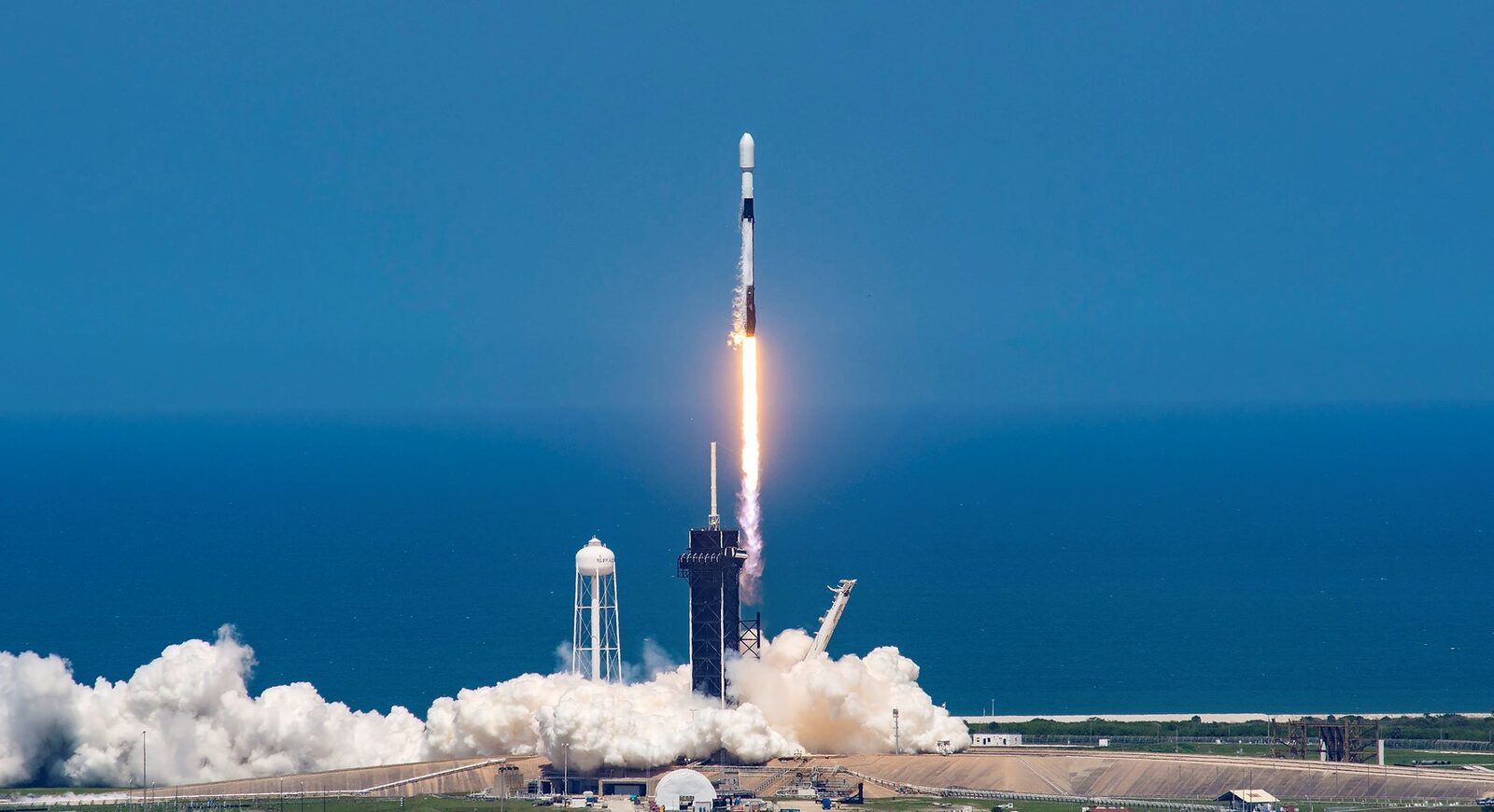
The satellite STARLINK-31579, also known as Starlink 31579, is a communication satellite belonging to SpaceX (SPXS). It was launched on March 19, 2024, from Space Launch Complex 4E at Vandenberg Space Force Station using a Falcon 9 launch vehicle. The satellite is part of the Starlink Group 7-16-14 and has dimensions of 0.3 meters in length, 4.1 meters in diameter, and a span of 29 meters. It weighs 730 kg at launch with a dry mass of 700 kg and is equipped with solar arrays and batteries for power supply. The satellite features a Ku/Ka/E-band payload and an optical inter-satellite link, along with Argon ion thrusters for propulsion.

Starlink is a satellite constellation developed by SpaceX with the aim of providing global broadband internet coverage. Thousands of small satellites are deployed in low Earth orbit (LEO), enabling high-speed internet access even in remote areas. However, the rapid increase in satellites raises concerns about space debris and the potential for collisions, which can lead to further debris creation and endanger other spacecraft. Additionally, the sheer number of Starlink satellites can affect astronomical observations by increasing light pollution. Proper deorbiting plans and international coordination are essential to mitigate these challenges and ensure long-term sustainability in space.
Physical Characteristics

Length

0.3

Diameter

4.1

Span

29

Dry Mass

700

Launch Mass

730

Shape

Box + pan

Radar Cross Section

Unknown

Visual Magnitude

Unknown

Color

Unknown

Material Composition

Unknown

Technical Details

Payload

Starlink Group 7-16-14

Purpose

Communication

Mission

Communication

Manufacturer

SPXS

Life Expectancy

Unknown

Bus

Starlink V2M

Configuration

Starlink v2 Mini

Motor

Argon ion thrusters

Equipment

Ku/Ka/E-band payload, optical inter-satellite link

Power System

Solar arrays, batteries

ADCS

Unknown

Transmitter Frequency

Unknown

Map
This tool will help you track the satellite's position and predict its upcoming passes over your location. Simply input the coordinates or click the geolocation button to get started.
Next Pass
Azimuth Elevation Time (Local)
Start Azimuth
Max Elevation
Stop Azimuth
Time Until
Pass Duration

Satellite Articles

View All Posts »

Learn more about satellites and other related topics.

Falcon Heavy Returns | A Six-Ton Bet on Geostationary Broadband

Falcon Heavy Returns | A Six-Ton Bet on Geostationary Broadband

Falcon Heavy flew for the first time in eighteen months on April 29, 2026, expending its center core to push Viasat's final ViaSat-3 satellite toward geostationary orbit. The mission is a flagship rocket doing what only it can still do, for an operator betting six tons of high-throughput hardware on a market Starlink is rapidly redefining.
SpaceX Eyes Confidential IPO at $1.75T Valuation, Launches 54 Starlinks in One Day | KeepTrack X Report

SpaceX Eyes Confidential IPO at $1.75T Valuation, Launches 54 Starlinks in One Day | KeepTrack X Report

SpaceX reportedly eyes a confidential March IPO filing that could value the company at $1.75 trillion. Dual Falcon 9 launches deploy 54 Starlink satellites, pushing total on-orbit past 9,900.

Space Brief 18 Jan 2025

Space Brief 18 Jan 2025

In today's brief: high-profile personnel changes in the Space Force, the inclusion of Space Force in historical political events, and strategic shifts in defense highlighted with a focus on satellite applications.

X Report 6 May 2025

X Report 6 May 2025

SpaceX prepares for its 250th mission from SLC-40, while Starlink experiences a surge during a crisis in Spain and Portugal. Additionally, SpaceX celebrates the official designation of Starbase City, aiming to boost launch capabilities.

Artemis 2 Crew Returns After 50-Year Lunar Milestone | KeepTrack Space Brief

Artemis 2 Crew Returns After 50-Year Lunar Milestone | KeepTrack Space Brief

Artemis 2 splashdown marks first crewed lunar flyby since Apollo 17 in 1972. Four astronauts completed historic mission, validating systems for Artemis 3 landing attempt.

Space Brief 27 Mar 2025

Space Brief 27 Mar 2025

Today's highlights include the certification of ULA's Vulcan rocket for national security missions, developments in nuclear timekeeping for GPS systems, and updates on the Space Force's new warfighting framework.

Skyroot's Vikram-1 Reaches Orbit, Breaks Indian Launch Monopoly, Space Brief 18 Jul 2026

Skyroot's Vikram-1 Reaches Orbit, Breaks Indian Launch Monopoly, Space Brief 18 Jul 2026

Skyroot Aerospace's Vikram-1 rocket achieved orbit on July 18, becoming the first Indian commercial rocket to do so and breaking ISRO's launch monopoly.

Starcloud Files 88,000-Satellite Constellation Plan | KeepTrack Space Brief

Starcloud Files 88,000-Satellite Constellation Plan | KeepTrack Space Brief

Starcloud files FCC plans for 88,000-satellite orbital data center constellation, matching scale of Starlink and Amazon Kuiper expansions. Massive LEO conjunction risk implications.