STARLINK-30792 (58220)

COSPAR: 2023-170Q | Alt Name: Starlink 30792

Image
STARLINK-30792 Satellite Image
Additional Sources
Launch Details

Launch Date

November 3, 2023

Launch Pad

LC40

Launch Vehicle

Falcon 9

Orbital Elements

NORAD ID

58220

International Designator

2023-170Q

Epoch

Mon, 20 Jul 2026 00:21:54 GMT

Apogee

Calculating...

Perigee

Calculating...

Inclination

43.00°

Right Ascension

191.88°

Eccentricity

Calculating...

Argument of Perigee

83.95°

Period

95.43 min

Mean Motion

15.09 rev/day

Latitude

Calculating...

Longitude

Calculating...

Altitude

Calculating...

Velocity

Calculating...

Polar Plot
3D Visualization
Basic Satellite Info

Name

STARLINK-30792

Alternative Name

Starlink 30792

Type

Payload

Status

Operational

Owner

SPXS

Country

United States

Constellation

N/A

Related Satellites

Major Events

N/A

Latest TLEs
1 58220U 23170Q   26201.01521175  .00010105  00000+0  64077-3 0  9996
2 58220  42.9986 191.8813 0006918  83.9533 276.2100 15.08996125150249

Source: Celestrak

Summary
STARLINK-30792, also known as Starlink 30792, is a communication satellite with the OBJECT_ID 2023-170Q and part of the Starlink v2 Mini configuration manufactured by SPXS (SpaceX). Launched on November 3, 2023, from LC40 at AFETR using a Falcon 9 launch vehicle, this satellite measures 0.3 meters in length with a diameter of 4.1 meters and a span of 29 meters. It has a dry mass of 700 kg and a launch mass of 730 kg. Equipped with a Ku/Ka/E-band payload, optical inter-satellite link, and Argon ion thrusters for propulsion, the satellite is powered by solar arrays and batteries. Its mission is to provide communication services as part of the Starlink Group 6-26-15 constellation. The spacecraft has a box + pan shape and was stabilized in its orbit on November 4, 2023.

Starlink is a satellite constellation developed by SpaceX with the aim of providing global broadband internet coverage. Thousands of small satellites are deployed in low Earth orbit (LEO), enabling high-speed internet access even in remote areas. However, the rapid increase in satellites raises concerns about space debris and the potential for collisions, which can lead to further debris creation and endanger other spacecraft. Additionally, the sheer number of Starlink satellites can affect astronomical observations by increasing light pollution. Proper deorbiting plans and international coordination are essential to mitigate these challenges and ensure long-term sustainability in space.
Physical Characteristics

Length

0.3

Diameter

4.1

Span

29

Dry Mass

700

Launch Mass

730

Shape

Box + pan

Radar Cross Section

Unknown

Visual Magnitude

Unknown

Color

Unknown

Material Composition

Unknown

Technical Details

Payload

Starlink Group 6-26-15

Purpose

Communication

Mission

Communication

Manufacturer

SPXS

Life Expectancy

Unknown

Bus

Starlink V2M

Configuration

Starlink v2 Mini

Motor

Argon ion thrusters

Equipment

Ku/Ka/E-band payload, optical inter-satellite link

Power System

Solar arrays, batteries

ADCS

Unknown

Transmitter Frequency

Unknown

Map
This tool will help you track the satellite's position and predict its upcoming passes over your location. Simply input the coordinates or click the geolocation button to get started.
Next Pass
Azimuth Elevation Time (Local)
Start Azimuth
Max Elevation
Stop Azimuth
Time Until
Pass Duration

Satellite Articles

View All Posts »

Learn more about satellites and other related topics.

STS-51B | Three-Tenths of a Second from Disaster

STS-51B | Three-Tenths of a Second from Disaster

Forty years ago today, Challenger lifted off LC-39A on a science mission that nobody outside Morton-Thiokol would call dangerous. Years later, after the orbiter and seven other astronauts were gone, investigators looked at the recovered boosters from STS-51B and realized the crew had come within a fraction of a second of dying first. This is the story of the launch that should have been a warning.
Starship All 6 Engines Fire for 60 Seconds Before Flight 13 | KeepTrack X Report

Starship All 6 Engines Fire for 60 Seconds Before Flight 13 | KeepTrack X Report

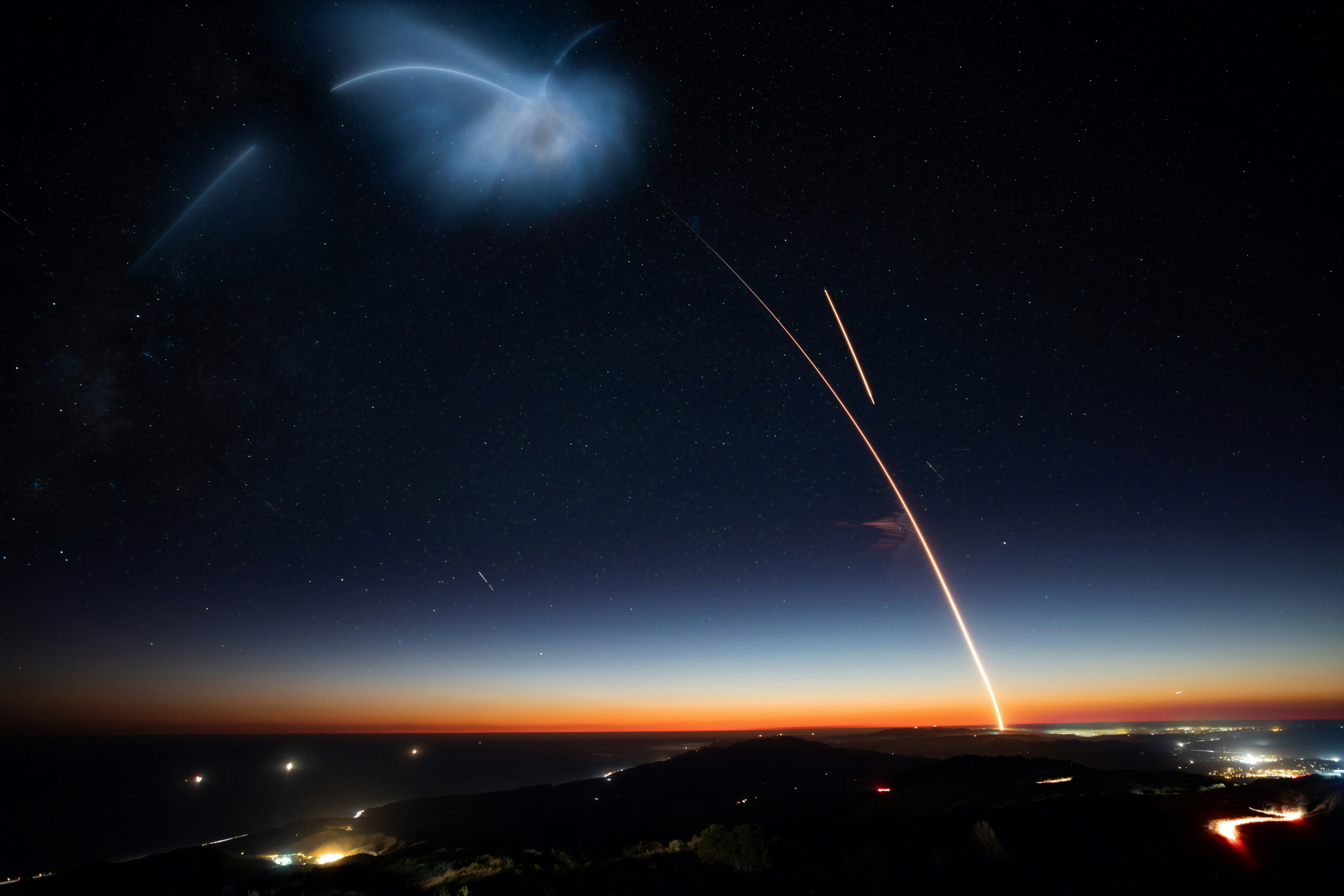
SpaceX ignited all 6 Starship engines for a full minute at Starbase, while a Falcon 9 added 24 more Starlinks from Vandenberg on July 1.

Space Force Awards $437M for Military Satcom; New Glenn Clears Return | KeepTrack Space Brief

Space Force Awards $437M for Military Satcom; New Glenn Clears Return | KeepTrack Space Brief

Space Force contracts Viasat and SES for $437M Protected Tactical Satcom-Global program. Blue Origin clears New Glenn for flights after Flight 3 investigation.

X Report 5 Aug 2025

X Report 5 Aug 2025

SpaceX successfully launched 28 Starlink satellites while returning to form with Starship testing at Starbase. Meanwhile, preparations for upcoming launches are underway.

X Report 11 Mar 2025

X Report 11 Mar 2025

A week of highs and lows for SpaceX, including weather-related delays and a return to Falcon launches.

Vulcan Grounding Threatens WGS-11 and OPIR Launches | KeepTrack Space Brief

Vulcan Grounding Threatens WGS-11 and OPIR Launches | KeepTrack Space Brief

ULA's Vulcan rocket grounded, imperiling Space Force WGS-11 communications satellite and Next-Gen OPIR missile warning payload. Both missions lack backup launch options.

Rheinmetall Weighs Bid for Mynaric Amid Rocket Lab Acquisition | KeepTrack Space Brief

Rheinmetall Weighs Bid for Mynaric Amid Rocket Lab Acquisition | KeepTrack Space Brief

German defense giant Rheinmetall may bid for laser-comm firm Mynaric, challenging Rocket Lab's plans. SpaceX sets Falcon 9 reuse record. Juno reveals Europa ice sheet data.

ESA-China SMILE Mission Reaches Orbit After 10-Year Push | KeepTrack Space Brief

ESA-China SMILE Mission Reaches Orbit After 10-Year Push | KeepTrack Space Brief

ESA-China SMILE spacecraft successfully launched from Kourou to image Earth's magnetosphere. First continuous global views of solar wind interaction now in orbit.