STARLINK-30556 (58031)

COSPAR: 2023-156D | Alt Name: Starlink 30556

Image
STARLINK-30556 Satellite Image
Additional Sources
Launch Details

Launch Date

October 9, 2023

Launch Site

AFWTR

Launch Pad

SLC4E

Launch Vehicle

Falcon 9

Orbital Elements

NORAD ID

58031

International Designator

2023-156D

Epoch

Sun, 19 Jul 2026 16:45:50 GMT

Apogee

Calculating...

Perigee

Calculating...

Inclination

53.16°

Right Ascension

192.97°

Eccentricity

Calculating...

Argument of Perigee

92.45°

Period

93.85 min

Mean Motion

15.34 rev/day

Latitude

Calculating...

Longitude

Calculating...

Altitude

Calculating...

Velocity

Calculating...

Polar Plot
3D Visualization
Basic Satellite Info

Name

STARLINK-30556

Alternative Name

Starlink 30556

Type

Payload

Status

Operational

Owner

SPXS

Country

United States

Constellation

N/A

Related Satellites

Major Events

N/A

Latest TLEs
1 58031U 23156D   26200.69850270  .00002018  00000+0  70867-4 0  9993
2 58031  53.1582 192.9714 0001260  92.4483 267.6664 15.34383021156408

Source: Celestrak

Summary
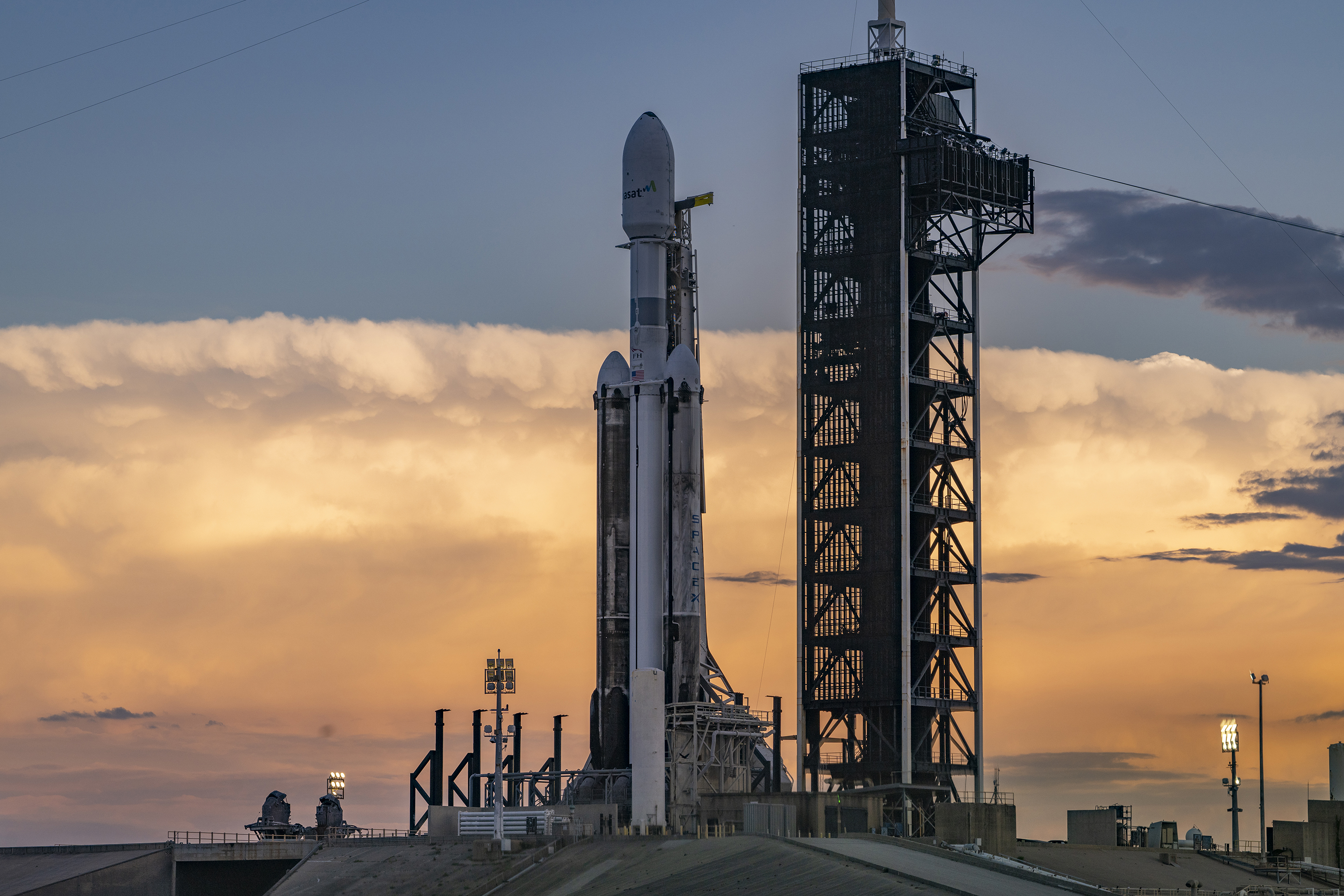
The satellite named STARLINK-30556, also known as Starlink 30556, is a communication satellite belonging to the Starlink v2 Mini configuration and part of the Starlink Group 7-4-04 payload. It was launched on October 9, 2023, from SLC4E at AFWTR using a Falcon 9 launch vehicle. Manufactured by SPXS (SpaceX), this satellite features an Argon ion thruster motor and is equipped with Ku/Ka/E-band payload systems along with optical inter-satellite links for communication. The spacecraft measures approximately 0.3 meters in length, has a diameter of 4.1 meters, and spans 29 meters. It has a dry mass of 700 kilograms and a launch mass of 730 kilograms. Power is provided by solar arrays and batteries. The satellite's shape consists of a box with an extended pan configuration.

Starlink is a satellite constellation developed by SpaceX with the aim of providing global broadband internet coverage. Thousands of small satellites are deployed in low Earth orbit (LEO), enabling high-speed internet access even in remote areas. However, the rapid increase in satellites raises concerns about space debris and the potential for collisions, which can lead to further debris creation and endanger other spacecraft. Additionally, the sheer number of Starlink satellites can affect astronomical observations by increasing light pollution. Proper deorbiting plans and international coordination are essential to mitigate these challenges and ensure long-term sustainability in space.
Physical Characteristics

Length

0.3

Diameter

4.1

Span

29

Dry Mass

700

Launch Mass

730

Shape

Box + pan

Radar Cross Section

Unknown

Visual Magnitude

Unknown

Color

Unknown

Material Composition

Unknown

Technical Details

Payload

Starlink Group 7-4-04

Purpose

Communication

Mission

Communication

Manufacturer

SPXS

Life Expectancy

Unknown

Bus

Starlink V2M

Configuration

Starlink v2 Mini

Motor

Argon ion thrusters

Equipment

Ku/Ka/E-band payload, optical inter-satellite link

Power System

Solar arrays, batteries

ADCS

Unknown

Transmitter Frequency

Unknown

Map
This tool will help you track the satellite's position and predict its upcoming passes over your location. Simply input the coordinates or click the geolocation button to get started.
Next Pass
Azimuth Elevation Time (Local)
Start Azimuth
Max Elevation
Stop Azimuth
Time Until
Pass Duration

Satellite Articles

View All Posts »

Learn more about satellites and other related topics.

X Report 9 Jun 2025

X Report 9 Jun 2025

Tensions between SpaceX and the U.S. government escalate as President Trump's threats could have significant implications on the company's operations and future plans. Meanwhile, India takes a significant step in its space endeavors with a historic astronaut launch.

Tianlong-3 Fails on Debut; SpaceX Wins $178.5M Space Force Contract | KeepTrack Space Brief

Tianlong-3 Fails on Debut; SpaceX Wins $178.5M Space Force Contract | KeepTrack Space Brief

China's Tianlong-3 rocket failed during ascent on debut launch Friday. SpaceX secured $178.5M Space Force contract for missile tracking satellite launches beginning 2027.

GAO Warns Space Force Satellite Costs Rising, Workforce Cuts Add Risk | KeepTrack Space Brief

GAO Warns Space Force Satellite Costs Rising, Workforce Cuts Add Risk | KeepTrack Space Brief

GAO flags growing cost problems across Space Force satellite portfolio with workforce reductions compounding risks to missile-warning constellations like NGG and SWAT.

X Report 30 Aug 2025

X Report 30 Aug 2025

SpaceX impresses with the successful launch of 24 Starlink satellites and shares stunning visuals from the recent Starship Flight 10, which demonstrated remarkable landing precision.

108 Minutes That Changed Everything - and the 20-Year Echo That Followed

108 Minutes That Changed Everything - and the 20-Year Echo That Followed

On April 12, 1961, a 27-year-old Soviet pilot rode a modified ICBM into orbit and came back alive after 108 minutes. Exactly twenty years later, two Americans climbed aboard an untested spacecraft covered in 31,000 ceramic tiles and bet their lives that the math was right.

The End of Free Skies | FAA Starts Charging for Rocket Launches

The End of Free Skies | FAA Starts Charging for Rocket Launches

On April 22, 2026, the FAA published a final rule implementing per-launch user fees for commercial space transportation — the first time the U.S. government has charged payload-based fees for rocket launches. Starting at 25 cents per pound with a $30,000 cap, the fees are modest today. By 2033, they won't be.

Shimizu's Luna Ring - The Plan to Wrap the Moon in Solar Panels

Shimizu's Luna Ring - The Plan to Wrap the Moon in Solar Panels

A 220-year-old Japanese construction company wants to build an 11,000-kilometer belt of solar cells around the lunar equator and beam the power back to Earth. The physics checks out. Everything else is another story.

Artemis 2 Tracker - Follow Orion's Flight Path in 3D

Artemis 2 Tracker - Follow Orion's Flight Path in 3D

Follow the complete Artemis II mission in KeepTrack's 3D tracker. Replay Orion's full flight path from launch through the lunar flyby to Pacific splashdown, and scrub to any moment of the ten-day mission.