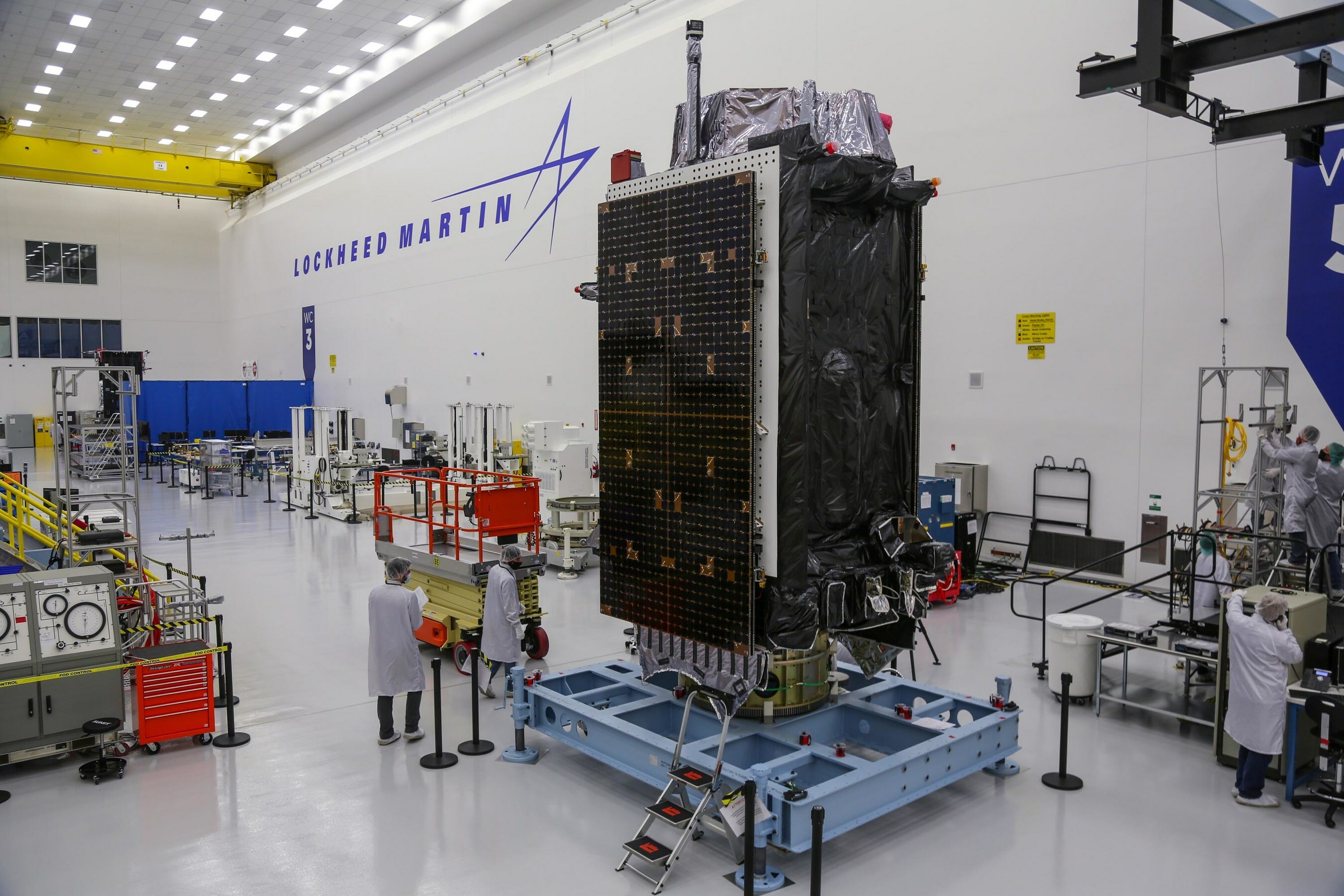
STARLINK-30538 (57994)

COSPAR: 2023-153D | Alt Name: Starlink 30538

Image
STARLINK-30538 Satellite Image
Additional Sources
Launch Details

Launch Date

October 5, 2023

Launch Pad

LC40

Launch Vehicle

Falcon 9

Orbital Elements

NORAD ID

57994

International Designator

2023-153D

Epoch

Sat, 18 Jul 2026 23:20:54 GMT

Apogee

Calculating...

Perigee

Calculating...

Inclination

43.00°

Right Ascension

45.70°

Eccentricity

Calculating...

Argument of Perigee

271.39°

Period

94.27 min

Mean Motion

15.28 rev/day

Latitude

Calculating...

Longitude

Calculating...

Altitude

Calculating...

Velocity

Calculating...

Polar Plot
3D Visualization
Basic Satellite Info

Name

STARLINK-30538

Alternative Name

Starlink 30538

Type

Payload

Status

Operational

Owner

SPXS

Country

United States

Constellation

N/A

Related Satellites

Major Events

N/A

Latest TLEs
1 57994U 23153D   26199.97285028  .00000311  00000+0  20825-4 0  9991
2 57994  43.0043  45.7023 0001374 271.3910  88.6784 15.27583878154879

Source: Celestrak

Summary
The satellite identified by NORAD catalog number 57994 and object ID 2023-153D is a Starlink V2M variant, part of the Starlink v2 Mini configuration series. Launched from Cape Canaveral Air Force Station (AFETR) on October 5, 2023, using SpaceX's Falcon 9 launch vehicle from LC40 pad, it has a dry mass of 700 kg and a launch mass of 730 kg. Its dimensions include a length of 0.3 meters, diameter of 4.1 meters, and span of 29 meters. The satellite is equipped with Ku/Ka/E-band payload and optical inter-satellite link for communication purposes. It uses Argon ion thrusters as its propulsion system and solar arrays along with batteries for power supply. The shape of the spacecraft can be described as a box with a pan configuration, owned by SpaceX (SPXS).

Starlink is a satellite constellation developed by SpaceX with the aim of providing global broadband internet coverage. Thousands of small satellites are deployed in low Earth orbit (LEO), enabling high-speed internet access even in remote areas. However, the rapid increase in satellites raises concerns about space debris and the potential for collisions, which can lead to further debris creation and endanger other spacecraft. Additionally, the sheer number of Starlink satellites can affect astronomical observations by increasing light pollution. Proper deorbiting plans and international coordination are essential to mitigate these challenges and ensure long-term sustainability in space.
Physical Characteristics

Length

0.3

Diameter

4.1

Span

29

Dry Mass

700

Launch Mass

730

Shape

Box + pan

Radar Cross Section

Unknown

Visual Magnitude

Unknown

Color

Unknown

Material Composition

Unknown

Technical Details

Payload

Starlink Group 6-21-04

Purpose

Communication

Mission

Communication

Manufacturer

SPXS

Life Expectancy

Unknown

Bus

Starlink V2M

Configuration

Starlink v2 Mini

Motor

Argon ion thrusters

Equipment

Ku/Ka/E-band payload, optical inter-satellite link

Power System

Solar arrays, batteries

ADCS

Unknown

Transmitter Frequency

Unknown

Map
This tool will help you track the satellite's position and predict its upcoming passes over your location. Simply input the coordinates or click the geolocation button to get started.
Next Pass
Azimuth Elevation Time (Local)
Start Azimuth
Max Elevation
Stop Azimuth
Time Until
Pass Duration

Satellite Articles

View All Posts »

Learn more about satellites and other related topics.

Trump Nominates Lt. Gen. Schiess as 3rd Space Force Chief | KeepTrack Space Brief

Trump Nominates Lt. Gen. Schiess as 3rd Space Force Chief | KeepTrack Space Brief

Lt. Gen. Doug Schiess nominated to lead Space Force, becoming the third Chief of Operations since the service's 2019 founding. Pentagon clears 8 firms for classified AI access.
X Report 27 Jun 2025

X Report 27 Jun 2025

SpaceX successfully launched 27 Starlink satellites while facing new competition for its satellite programs, including potential alternatives for the Space Force.

EUTELSAT 172B

EUTELSAT 172B

Europe's first high-power all-electric telecom satellite doesn't just sit above the Pacific - it got there on robotic arms and plasma thrusters, broke records doing it, and now keeps your airplane Wi-Fi running between LA and Tokyo.

The Day a Rocket Changed Space Policy Forever

The Day a Rocket Changed Space Policy Forever

Thirty years ago, a Chinese rocket veered off course two seconds after liftoff, destroyed a village, and triggered a political scandal that reshaped how the United States controls space technology to this day

X Report 18 Dec 2025

X Report 18 Dec 2025

SpaceX carried out a double-header Starlink launch from both coasts while milestones from Max Space and Lux Aeterna signal growth in the commercial space sector.

Vulcan Grounding Threatens WGS-11 and OPIR Launches | KeepTrack Space Brief

Vulcan Grounding Threatens WGS-11 and OPIR Launches | KeepTrack Space Brief

ULA's Vulcan rocket grounded, imperiling Space Force WGS-11 communications satellite and Next-Gen OPIR missile warning payload. Both missions lack backup launch options.

Space Brief 12 Jun 2025

Space Brief 12 Jun 2025

Today's Space Brief covers major developments including the public debut of Voyager Technologies, advancements in defense by Sierra Space, and Pentagon's mega-constellation challenges. Also featured are new software selections by the Space Force and legislative actions on acquisition pilots.

GPS III SV10 | The Last of Its Kind, and the First of What Comes Next

GPS III SV10 | The Last of Its Kind, and the First of What Comes Next

On April 21, 2026, the tenth and final GPS Block III satellite reached medium Earth orbit aboard a SpaceX Falcon 9. Named for Hedy Lamarr, the actress whose 1942 frequency-hopping patent underpins modern GPS, SV10 closes a procurement that took eight years to deliver hardware and opens the optical-crosslink era that will define the constellation's next decade.