

Space Brief 24 Apr 2025
Today's brief covers South Korea's fourth spy satellite launch, potential changes in drone deployment strategies by the US Air Force, and the largest-ever spectrum-sharing demonstration set by the Pentagon.


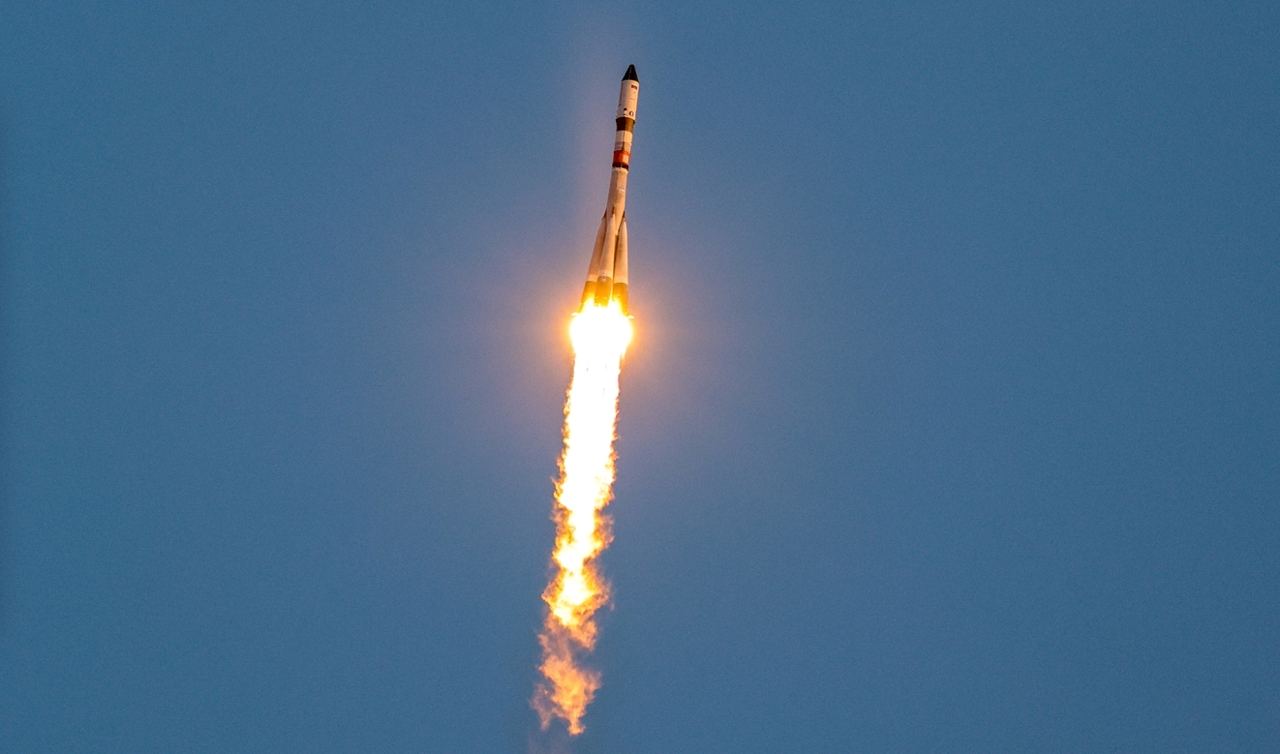
Launch Date
August 23, 2023
Launch Site
Launch Pad
LC31
Launch Vehicle
Soyuz-2-1A
NORAD ID
57691
International Designator
2023-125A
Decay Date
2/13/2024
Name
PROGRESS-MS 24
Alternative Name
Progress MS-24
Type
Status
Owner
RKKE
Country
Russia
Constellation
N/A
Related Satellites
Major Events
N/A
Length
7.9
Diameter
2.7
Span
7.9
Dry Mass
4325
Launch Mass
4887
Shape
Cyl + Sphere + Cone + 2 Pan
Radar Cross Section
Unknown
Visual Magnitude
Unknown
Color
Unknown
Material Composition
Unknown
Payload
Progress 7K-TGM No. 454
Purpose
Cargo
Mission
Cargo
Manufacturer
PROGT
Life Expectancy
Unknown
Bus
7K-TGM
Configuration
Unknown
Motor
11D428A
Equipment
Unknown
Power System
2 deployable fixed solar arrays, batteries
ADCS
Unknown
Transmitter Frequency
Unknown
Learn more about satellites and other related topics.
Today's brief covers South Korea's fourth spy satellite launch, potential changes in drone deployment strategies by the US Air Force, and the largest-ever spectrum-sharing demonstration set by the Pentagon.

NRO awards three commercial satellite contracts, expanding scope to dynamic military target tracking. Former NASA chief Bridenstine joins Quantum Space for cislunar operations.

MDA Space and Hanwha target South Korea's K-LEO defense satellite network. House passes $839B defense bill. Pentagon picks 25 vendors for $150M drone competition.

SpaceX launches its 32nd cargo mission to the ISS, and NRO marks a milestone with over 200 satellites deployed.
Discover the latest developments in hypersonic missile production, defense innovation strategies, and satellite infrastructure resilience impacting military operations.

Today's brief covers China's latest classified satellite launch, breakups in orbital refueling experiments, exciting advancements in microsatellites, and SpaceX's remarkable strides in spaceflight.

Today’s Space Brief covers a rescued lunar orbiter, a thorough pre-launch check for a Jupiter-bound mission, and leadership changes in a satellite communication company. We also spotlight a recently launched CubeSat and an innovative act of deorbiting.

SpaceX engineers are overhauling Starbase launch infrastructure for Block 3 Starships as Falcon 9 prepares another Starlink batch run.