SCOOB-II (57484)

COSPAR: 2023-109D | Alt Name: SCOOBII

Image
SCOOB-II Satellite Image
Launch Details

Launch Date

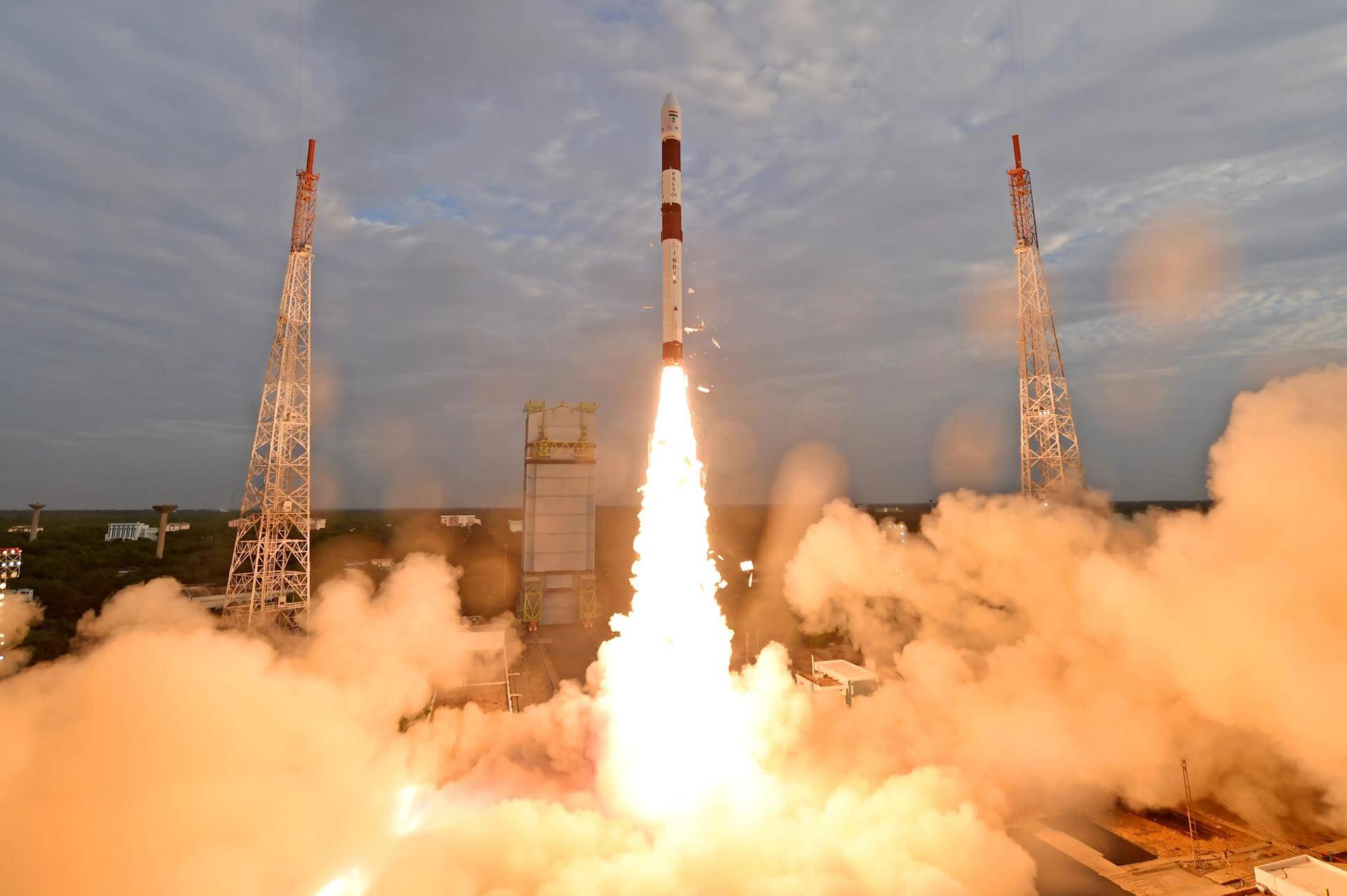
July 30, 2023

Launch Site

Satish Dhawan Space Centre, Sriharikota, India

Launch Pad

First Launch Pad (FLP)

Launch Vehicle

PSLV-C56

Orbital Elements

NORAD ID

57484

International Designator

2023-109D

Epoch

Sat, 06 Jan 2024 11:40:09 GMT

Apogee

Calculating...

Perigee

Calculating...

Inclination

4.95°

Right Ascension

145.75°

Eccentricity

Calculating...

Argument of Perigee

219.02°

Period

95.13 min

Mean Motion

15.14 rev/day

Latitude

Calculating...

Longitude

Calculating...

Altitude

Calculating...

Velocity

Calculating...

Polar Plot
3D Visualization
Basic Satellite Info

Name

SCOOB-II

Alternative Name

SCOOBII

Type

Payload

Status

Operational

Owner

Nanyang Technological University (NTU)

Country

Singapore

Constellation

N/A

Related Satellites

Major Events

Launch on 30 July 2023; Deployment of solar panels; Initiation of payload operations.

Latest TLEs
1 57484U 23109D   24006.48621912  .00017746  00000+0  90245-3 0  9995
2 57484   4.9510 145.7547 0005430 219.0242 140.9473 15.13763583 24325

Source: Celestrak

Summary
SCOOB-II is a 3U CubeSat satellite designed by the Satellite Research Centre (SaRC) at Nanyang Technological University (NTU). It was launched on July 30, 2023, from Satish Dhawan Space Centre in Sriharikota, India, aboard the PSLV-C56 launch vehicle. The spacecraft measures approximately 34 cm in length and has a diameter of 10 cm with a span of 39.3 cm when solar panels are deployed. SCOOB-II weighs 4.1 kg both at launch and dry mass. It is equipped with an advanced electronics payload for testing operations in space, supported by an improved attitude determination and control system (ADCS) for sun-pointing capabilities and two deployable solar panels to enhance power generation, providing up to 20W of power stored in a 44.4 Wh Li-Po battery at 7.4V. The satellite's ADCS includes Fine Sun Sensors (FSS), Coarse Sun Sensors (CSS), a magnetometer, magnetorquers, and reaction wheels for accurate positioning. SCOOB-II is silver in color, rectangular in shape with deployable solar panels, and transmits data via UHF frequencies at 9600 bps using 2GFSK modulation. It aims to provide real-world satellite learning opportunities for engineering students and conduct advanced electronics test operations in space over a mission duration of up to one year.
Physical Characteristics

Length

0.34

Diameter

0.1

Span

0.393

Dry Mass

4.1

Launch Mass

4.1

Shape

Rectangular box with deployable solar panels

Radar Cross Section

Unknown

Visual Magnitude

Unknown

Color

Silver

Material Composition

Aluminum structure with solar panel assemblies.

Technical Details

Payload

The satellite's payload includes advanced electronics for testing operations in space, supported by an improved ADCS and deployable solar panels for enhanced power generation.

Purpose

Technology

Mission

SCOOB-II is the second satellite in NTU's Student Satellite Series, aiming to provide real-world satellite learning opportunities for engineering undergraduates. It carries a high-power electronic payload to demonstrate advanced electronics test operations in space.

Manufacturer

Satellite Research Centre (SaRC), Nanyang Technological University (NTU)

Life Expectancy

SCOOB-II is designed for a mission duration of 6 months to 1 year in Low Earth Orbit (LEO).

Bus

CubeSat 3U

Configuration

CubeSat (3U)

Motor

None

Equipment

SCOOB-II is equipped with an advanced electronics payload for testing operations in space, an improved attitude determination and control system (ADCS) for sun-pointing capabilities, and two deployable solar panels to enhance power generation.

Power System

SCOOB-II utilizes one body-mounted 3U solar panel and two deployable 3U solar panels, generating approximately 20W of power, stored in a 44.4 Wh Li-Po battery at 7.4V.

ADCS

The satellite's ADCS includes two Fine Sun Sensors (FSS), two Coarse Sun Sensors (CSS), a 3-axis magnetometer, three magnetorquers (MTQ), and three reaction wheels (RW), achieving a determination accuracy of less than 5 degrees.

Transmitter Frequency

UHF 9600 bps 2GFSK

Map
This tool will help you track the satellite's position and predict its upcoming passes over your location. Simply input the coordinates or click the geolocation button to get started.
Next Pass
Azimuth Elevation Time (Local)
Start Azimuth
Max Elevation
Stop Azimuth
Time Until
Pass Duration

Satellite Articles

View All Posts »

Learn more about satellites and other related topics.

Space Brief 6 Oct 2025

Space Brief 6 Oct 2025

Today's highlights include Firefly's acquisition of SciTec, DARPA's vision for a moon economy, and ESA's new deep space antenna in Australia. Stay updated on the latest in space intelligence and defense technology transformations, plus noteworthy rogue planet phenomena.

X Report 23 Oct 2025

X Report 23 Oct 2025

SpaceX continues to break records with its Falcon 9 missions while facing public scrutiny from Elon Musk regarding NASA's leadership. Meanwhile, satellite spectrum battles heat up as Lynk Global and Omnispace prepare to merge.

China's Rocket Factory Finds a Second Gear

China's Rocket Factory Finds a Second Gear

In 2024, China launched 68 orbital missions. In 2025, the number jumped to 97. In 2026, state media and Western analysts agree the target is 140 or more. Most of that growth is being driven by two state-backed mega-constellations, a half-dozen private launch companies hitting stride, and a deliberate national pivot toward commercial space. Beijing is no longer trying to catch SpaceX. It is trying to build an industrial base that outlasts one.

Space Brief 9 Aug 2025

Space Brief 9 Aug 2025

Today's briefing covers SpaceX's latest Starlink launch, Rocket Lab's upcoming Neutron rocket launch, NASA's lunar nuclear reactor project, and more.

X Report 19 Feb 2025

X Report 19 Feb 2025

SpaceX achieves a new milestone with a Falcon 9 landing near The Bahamas, closely following Rocket Lab's successful satellite launch.

Space Force Acquisition Workforce Shortfall Threatens Modernization | KeepTrack Space Brief

Space Force Acquisition Workforce Shortfall Threatens Modernization | KeepTrack Space Brief

Space Force modernization stalls over workforce gaps. Deutsche Telekom targets 2028 for Starlink Mobile V2 across 10 EU nations. Iran ops strain US munition stocks.

Space Brief 29 Oct 2025

Space Brief 29 Oct 2025

Today's brief covers closer military and intelligence space integration, new satellite servicing advancements, and more insightful defense and space news.

Space Brief 10 Apr 2025

Space Brief 10 Apr 2025

Key topics today include the US Space Force's new international strategy, China's partnership with Pakistan for astronaut training, and conservation concerns over SpaceX landing proposals.