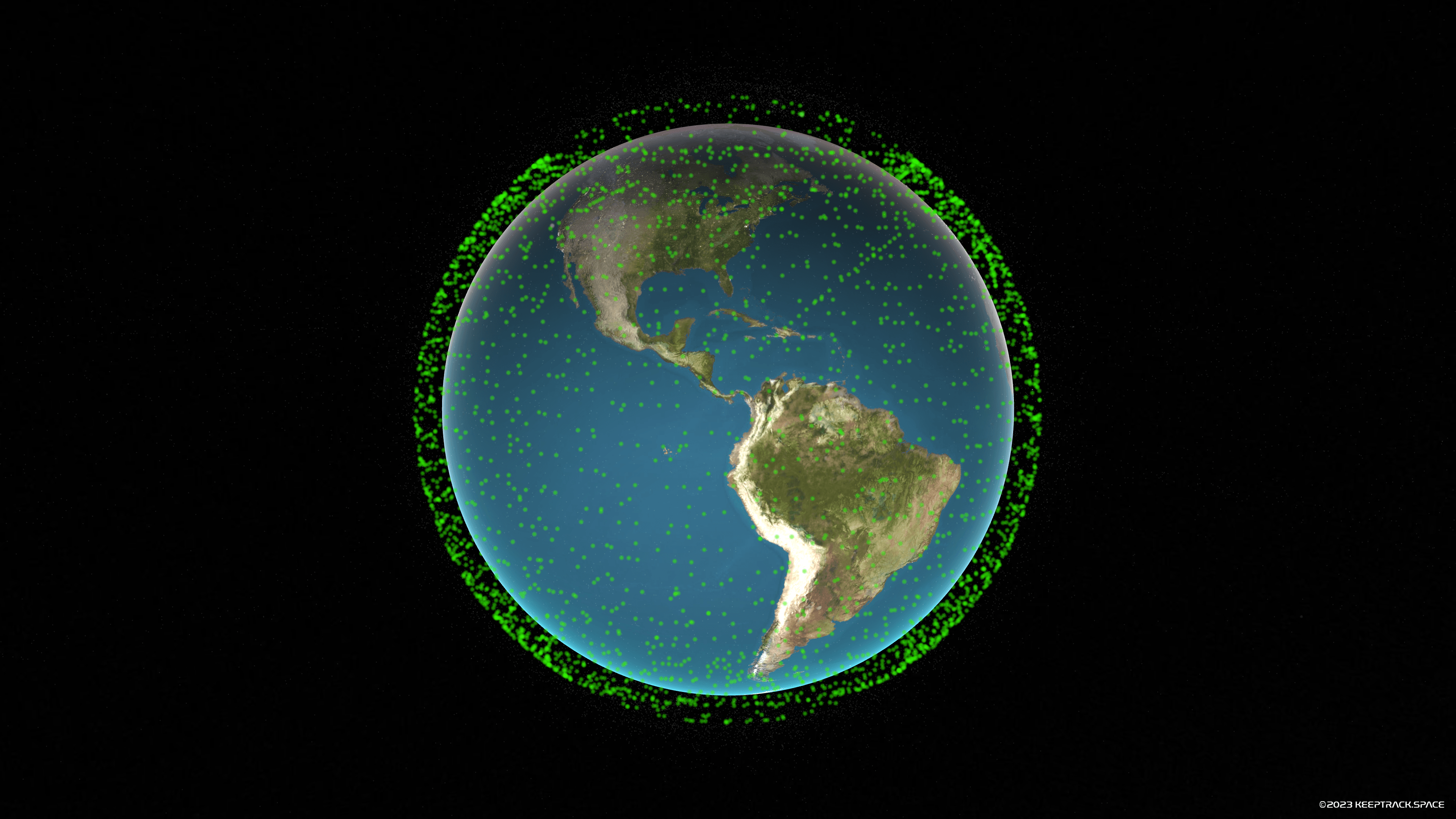
STARLINK-6106 (57154)

COSPAR: 2023-090BF | Alt Name: Starlink 6106

Image
STARLINK-6106 Satellite Image
Additional Sources
Launch Details

Launch Date

June 23, 2023

Launch Pad

LC40

Launch Vehicle

Falcon 9

Orbital Elements

NORAD ID

57154

International Designator

2023-090BF

Epoch

Sun, 19 Jul 2026 11:02:18 GMT

Apogee

Calculating...

Perigee

Calculating...

Inclination

43.00°

Right Ascension

239.36°

Eccentricity

Calculating...

Argument of Perigee

272.89°

Period

94.27 min

Mean Motion

15.28 rev/day

Latitude

Calculating...

Longitude

Calculating...

Altitude

Calculating...

Velocity

Calculating...

Polar Plot
3D Visualization
Basic Satellite Info

Name

STARLINK-6106

Alternative Name

Starlink 6106

Type

Payload

Status

Operational

Owner

SPXS

Country

United States

Constellation

N/A

Related Satellites

Major Events

N/A

Latest TLEs
1 57154U 23090BF  26200.45993759  .00000481  00000+0  27014-4 0  9997
2 57154  43.0010 239.3632 0001285 272.8916  87.1789 15.27576983170697

Source: Celestrak

Summary
The STARLINK-6106 satellite, also known as Starlink 6106, is a communication satellite belonging to SpaceX's (SPXS) Starlink constellation. Launched on June 23, 2023, from Launch Complex 40 at the Cape Canaveral Space Force Station using a Falcon 9 launch vehicle, it serves as part of the Starlink Group 5-12-54 payload. The satellite measures 0.2 meters in length and has a diameter of 2.8 meters with a span of 9 meters due to its solar arrays or deployable structures. It weighs approximately 305 kilograms at launch, including propellant for krypton ion thrusters used for orbit maintenance and maneuvering. Its dry mass is around 290 kilograms. The satellite is equipped with Ku/Ka-band payload capabilities for high-speed data transmission and an optical inter-satellite link system for enhanced communication within the constellation. Power generation comes from solar arrays, complemented by batteries for continuous operation.

Starlink is a satellite constellation developed by SpaceX with the aim of providing global broadband internet coverage. Thousands of small satellites are deployed in low Earth orbit (LEO), enabling high-speed internet access even in remote areas. However, the rapid increase in satellites raises concerns about space debris and the potential for collisions, which can lead to further debris creation and endanger other spacecraft. Additionally, the sheer number of Starlink satellites can affect astronomical observations by increasing light pollution. Proper deorbiting plans and international coordination are essential to mitigate these challenges and ensure long-term sustainability in space.
Physical Characteristics

Length

0.2

Diameter

2.8

Span

9

Dry Mass

290

Launch Mass

305

Shape

Box + pan

Radar Cross Section

Unknown

Visual Magnitude

Unknown

Color

Unknown

Material Composition

Unknown

Technical Details

Payload

Starlink Group 5-12-54

Purpose

Communication

Mission

Communication

Manufacturer

SPXS

Life Expectancy

Unknown

Bus

Starlink

Configuration

Unknown

Motor

Krypton ion thrusters

Equipment

Ku/Ka-band payload, optical inter-satellite link

Power System

Solar arrays, batteries

ADCS

Unknown

Transmitter Frequency

Unknown

Map
This tool will help you track the satellite's position and predict its upcoming passes over your location. Simply input the coordinates or click the geolocation button to get started.
Next Pass
Azimuth Elevation Time (Local)
Start Azimuth
Max Elevation
Stop Azimuth
Time Until
Pass Duration

Satellite Articles

View All Posts »

Learn more about satellites and other related topics.

The Satellite That Taught Us What We Were Doing to the Planet

The Satellite That Taught Us What We Were Doing to the Planet

Landsat 7 launched on April 15, 1999, designed to last five years. It operated for twenty-five, survived a failure that destroyed a fifth of every image it took, and became part of the longest continuous record of Earth's surface ever assembled. Then they made the data free.

Earthquake Sensors Repurposed to Track Space Debris Reentry | KeepTrack Space Brief

Earthquake Sensors Repurposed to Track Space Debris Reentry | KeepTrack Space Brief

Scientists use earthquake sensors to track space debris reentry via sonic boom detection. SpaceX launches 25 Starlink satellites in seventh mission of 2026. NASA and DOE partner for lunar nuclear power.

X Report 10 Jun 2025

X Report 10 Jun 2025

Exciting advancements from SpaceX include the debut of a new Dragon capsule for Axiom Space, continued Starlink deployments, and significant shifts in U.S. rural broadband funding that could benefit Starlink.

1 Million AI Data Centers in Orbit Threaten Astronomy | KeepTrack X Report

1 Million AI Data Centers in Orbit Threaten Astronomy | KeepTrack X Report

SpaceX's proposed 1-million-satellite AI data center constellation alarms astronomers as Falcon 9 logs its 25th Starlink launch of 2026.

Space Brief 23 Aug 2024

Space Brief 23 Aug 2024

Sentinel-2C sealed in Vega rocket fairing, ULA sale tidbit, Polaris Dawn mission updates, Norway's Andøya Spaceport ready for action, Harris commits to space leadership, NASA's latest smallsat launch partners, new members join NASA composite initiative, Mynaric's manufacturing hiccups, Rocket Factory Augsburg's turbopump snag, and Amazon boosts satellite deployment infrastructure.

Falcon Heavy Returns After 18-Month Hiatus for ViaSat-3 | KeepTrack X Report

Falcon Heavy Returns After 18-Month Hiatus for ViaSat-3 | KeepTrack X Report

SpaceX's Falcon Heavy lifts off for the 12th time after 18 months grounded, delivering the final ViaSat-3 satellite from LC-39A at 10:21 a.m. EDT.

Space Brief 21 Dec 2025

Space Brief 21 Dec 2025

Today's briefing highlights the SDA's significant satellite award, Blue Origin's groundbreaking flight, and NASA's call for an Artemis review.

US Agency Will Not Reinstate $900 Mln Subsidy for SpaceX Starlink Unit

US Agency Will Not Reinstate $900 Mln Subsidy for SpaceX Starlink Unit

The U.S. Federal Communications Commission reaffirms its decision to deny SpaceX's Starlink unit $885.5 million in rural broadband subsidies, impacting the company's plans for expanding internet access.