DELTA 1 R/B (00565)

COSPAR: 1963-009B | Alt Name: Delta 17 Stage 3
DECAYED

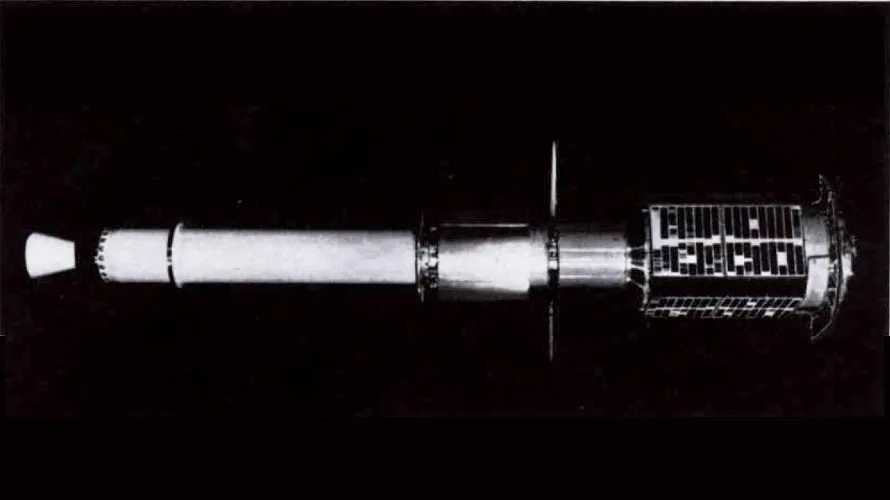
Image
DELTA 1 R/B Satellite Image
Additional Sources
Launch Details

Launch Date

April 3, 1963

Launch Pad

LC17A

Launch Vehicle

Thor Delta B

Orbital Elements

NORAD ID

00565

International Designator

1963-009B

Decay Date

11/24/1963

Basic Satellite Info

Name

DELTA 1 R/B

Alternative Name

Delta 17 Stage 3

Type

Rocket Body

Status

Space Junk

Owner

GSFC

Country

United States

Constellation

N/A

Related Satellites

Major Events

N/A

Summary
A rocket body, also commonly referred to as an upper stage or spent rocket stage, is the structural shell left behind after a rocket has delivered its payload to orbit. These large and often heavy pieces of space hardware can remain in orbit for years, posing significant collision hazards as part of the growing space debris problem. If left uncontrolled, rocket bodies have the potential to reenter Earth's atmosphere unpredictably, which can lead to falling debris in populated areas. Additionally, they risk colliding with operational satellites or the International Space Station, creating more debris and putting human life at risk.
Physical Characteristics

Length

1.5

Diameter

0.5

Span

1.5

Dry Mass

24

Launch Mass

24

Shape

Cyl

Radar Cross Section

Unknown

Visual Magnitude

Unknown

Color

Unknown

Material Composition

Unknown

Technical Details

Payload

Altair X-248-A5DM SU-338

Purpose

Unknown

Mission

Unknown

Manufacturer

ABL

Life Expectancy

Unknown

Bus

Altair

Configuration

Unknown

Motor

Unknown

Equipment

Unknown

Power System

Unknown

ADCS

Unknown

Transmitter Frequency

Unknown

Satellite Articles

View All Posts »

Learn more about satellites and other related topics.

The Satellite That Found 22 Photons and Changed Astronomy

The Satellite That Found 22 Photons and Changed Astronomy

On April 27, 1961, a Scout rocket lifted a 37-kilogram NASA satellite into orbit from Wallops Island carrying the first serious instrument for detecting cosmic gamma rays. Explorer 11 operated for seven months before its tape recorder failed. In that time it registered 22 gamma-ray photons - a pitiful number by modern standards, but enough to launch an entire branch of astronomy.

Space Force Forecasts 25 Extra Heavy-Lift Missions Through 2029 | KeepTrack Space Brief

Space Force Forecasts 25 Extra Heavy-Lift Missions Through 2029 | KeepTrack Space Brief

Space Force projects 25 additional high-energy missions in 2027–2029 window, straining capacity at Vulcan and Falcon Heavy. Capacity constraints will drive military-NASA prioritization debates.

Space Brief 7 Aug 2025

Space Brief 7 Aug 2025

Today's brief covers significant developments in missile defense, military space operations, and upcoming rocket launches. Keep an eye on the evolving Golden Dome program and the advanced capabilities it brings.

X Report 31 Mar 2025

X Report 31 Mar 2025

New experiments in space agriculture begin with Fram2 mission, a historic polar orbit flight, and a Starlink launch postponement.

Space Brief 16 May 2025

Space Brief 16 May 2025

Today's brief covers challenges in Space Force procurement, promising developments in tracking technologies, and significant budget cuts affecting military aerospace projects.

Space Force Plans to Double Active-Duty Force by 2030 | KeepTrack Space Brief

Space Force Plans to Double Active-Duty Force by 2030 | KeepTrack Space Brief

Space Force confirms plan to double active-duty Guardians by 2030, targeting faster response to satellite anomalies and adversary maneuvers in space domain awareness operations.

Space Brief 3 Nov 2025

Space Brief 3 Nov 2025

Highlighting India's significant military satellite launch, real-time satellite tracking developments in Europe, SpaceX's new rideshare mission, and more space industry news.

STARLINK-4621 Faces Critical Conjunction as Eight Satellites Reenter | KeepTrack X Report

STARLINK-4621 Faces Critical Conjunction as Eight Satellites Reenter | KeepTrack X Report

A HIGH-risk conjunction between STARLINK-4621 and the defunct SL-18 rocket body leads the July 11 safety picture, with eight Starlink satellites set to reenter through July 14.