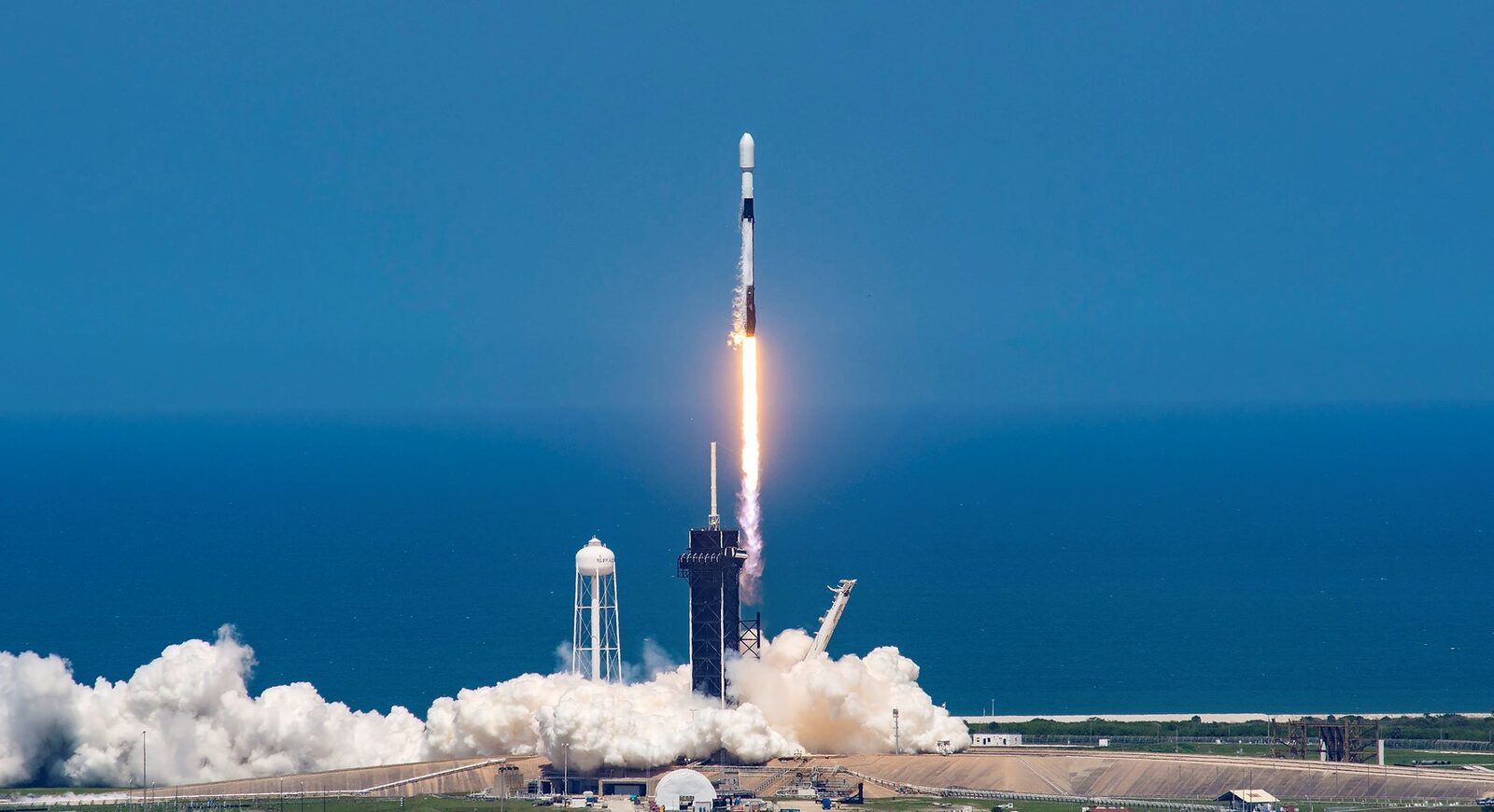
STARLINK-5837 (56346)

COSPAR: 2023-058AF | Alt Name: Starlink 5837

Image
STARLINK-5837 Satellite Image
Additional Sources
Launch Details

Launch Date

April 27, 2023

Launch Site

AFWTR

Launch Pad

SLC4E

Launch Vehicle

Falcon 9

Orbital Elements

NORAD ID

56346

International Designator

2023-058AF

Epoch

Sun, 19 Jul 2026 23:32:50 GMT

Apogee

Calculating...

Perigee

Calculating...

Inclination

97.28°

Right Ascension

198.30°

Eccentricity

Calculating...

Argument of Perigee

94.87°

Period

95.64 min

Mean Motion

15.06 rev/day

Latitude

Calculating...

Longitude

Calculating...

Altitude

Calculating...

Velocity

Calculating...

Polar Plot
3D Visualization
Basic Satellite Info

Name

STARLINK-5837

Alternative Name

Starlink 5837

Type

Payload

Status

Operational

Owner

SPXS

Country

United States

Constellation

N/A

Related Satellites

Major Events

N/A

Latest TLEs
1 56346U 23058AF  26200.98114468 -.00000541  00000+0 -33608-4 0  9998
2 56346  97.2846 198.2957 0002010  94.8682 265.2776 15.05651525178032

Source: Celestrak

Summary
STARLINK-5837 is a Starlink satellite, launched on April 27, 2023, from AFWTR using a Falcon 9 launch vehicle from SLC4E pad. It has dimensions of 0.2 meters in length, 2.8 meters in diameter, and spans 9 meters with its solar arrays. The satellite weighs 300 kilograms at launch and 260 kilograms dry mass. It is equipped with a Ku/Ka-band payload for communication purposes and features optical inter-satellite links. Its propulsion system uses Krypton ion thrusters and it has solar arrays and batteries to provide power. The satellite's shape consists of a box with pan configuration and its mission is to support global communication services.

Starlink is a satellite constellation developed by SpaceX with the aim of providing global broadband internet coverage. Thousands of small satellites are deployed in low Earth orbit (LEO), enabling high-speed internet access even in remote areas. However, the rapid increase in satellites raises concerns about space debris and the potential for collisions, which can lead to further debris creation and endanger other spacecraft. Additionally, the sheer number of Starlink satellites can affect astronomical observations by increasing light pollution. Proper deorbiting plans and international coordination are essential to mitigate these challenges and ensure long-term sustainability in space.
Physical Characteristics

Length

0.2

Diameter

2.8

Span

9

Dry Mass

260

Launch Mass

300

Shape

Box + pan

Radar Cross Section

Unknown

Visual Magnitude

Unknown

Color

Unknown

Material Composition

Unknown

Technical Details

Payload

Starlink Group 3-5-30

Purpose

Communication

Mission

Communication

Manufacturer

SPXS

Life Expectancy

Unknown

Bus

Starlink

Configuration

Unknown

Motor

Krypton ion thrusters

Equipment

Ku/Ka-band payload, optical inter-satellite link

Power System

Solar arrays, batteries

ADCS

Unknown

Transmitter Frequency

Unknown

Map
This tool will help you track the satellite's position and predict its upcoming passes over your location. Simply input the coordinates or click the geolocation button to get started.
Next Pass
Azimuth Elevation Time (Local)
Start Azimuth
Max Elevation
Stop Azimuth
Time Until
Pass Duration

Satellite Articles

View All Posts »

Learn more about satellites and other related topics.

The Satellite That Taught Us What We Were Doing to the Planet

The Satellite That Taught Us What We Were Doing to the Planet

Landsat 7 launched on April 15, 1999, designed to last five years. It operated for twenty-five, survived a failure that destroyed a fifth of every image it took, and became part of the longest continuous record of Earth's surface ever assembled. Then they made the data free.

The Day Humanity Gained New Eyes on the Sun

The Day Humanity Gained New Eyes on the Sun

Fifteen years ago, NASA launched its most advanced solar observatory, revolutionizing our understanding of our star and transforming space weather prediction

Space Brief 21 Jul 2025

Space Brief 21 Jul 2025

Today's brief covers SpaceX's latest Starlink launch, fascinating exoplanet discoveries, and strategic lunar developments by China and South Korea.

GOES-G | The Day a Weather Satellite Exploded Over the Atlantic

GOES-G | The Day a Weather Satellite Exploded Over the Atlantic

Forty years ago today, a Delta 3914 lifted off Cape Canaveral with a weather satellite the country could not afford to lose. Seventy-one seconds later, its main engine cut off. Ninety-one seconds in, the range safety officer pressed his button. The third domino of a brutal 1986 had fallen.

The Dog They Never Planned to Bring Home

The Dog They Never Planned to Bring Home

On April 14, 1958, Sputnik 2 burned up over the North Atlantic, carrying the remains of a stray dog from Moscow who had been dead for five months. The Soviet Union told the world she survived for days. It took forty-five years for the truth to come out.

Booster 20 Fires All 33 Engines in Record Test | KeepTrack Space Brief

Booster 20 Fires All 33 Engines in Record Test | KeepTrack Space Brief

SpaceX completed a full 33-engine static fire on Booster 20, the longest duration test to date. The milestone clears a major hurdle before the next Starship flight attempt.

NASA Declares MAVEN Dead; Eastern Range Damage Assessment Underway | KeepTrack Space Brief

NASA Declares MAVEN Dead; Eastern Range Damage Assessment Underway | KeepTrack Space Brief

NASA officially ended the MAVEN Mars orbiter mission after months of radio silence following an anomaly. Space Force assessing Eastern Range damage from separate incident affecting launch cadence.

South Korea Plans Defense Satellite Constellation With Hanwha Systems | KeepTrack Space Brief

South Korea Plans Defense Satellite Constellation With Hanwha Systems | KeepTrack Space Brief

Hanwha Systems in talks with MDA Space and Telesat for South Korean defense satellite constellation. SpaceX preps GPS satellite launch for Space Force. Seismic networks now track space junk reentry.