STARLINK-5091 (54873)

COSPAR: 2022-177BF | Alt Name: Starlink 5091

Image
STARLINK-5091 Satellite Image
Additional Sources
Launch Details

Launch Date

December 28, 2022

Launch Pad

LC40

Launch Vehicle

Falcon 9

Orbital Elements

NORAD ID

54873

International Designator

2022-177BF

Epoch

Sun, 19 Jul 2026 17:37:00 GMT

Apogee

Calculating...

Perigee

Calculating...

Inclination

43.00°

Right Ascension

95.97°

Eccentricity

Calculating...

Argument of Perigee

261.67°

Period

94.27 min

Mean Motion

15.28 rev/day

Latitude

Calculating...

Longitude

Calculating...

Altitude

Calculating...

Velocity

Calculating...

Polar Plot
3D Visualization
Basic Satellite Info

Name

STARLINK-5091

Alternative Name

Starlink 5091

Type

Payload

Status

Operational

Owner

SPXS

Country

United States

Constellation

N/A

Related Satellites

Major Events

N/A

Latest TLEs
1 54873U 22177BF  26200.73402919  .00000267  00000+0  19224-4 0  9997
2 54873  43.0018  95.9711 0001454 261.6698  98.3989 15.27573740197283

Source: Celestrak

Summary
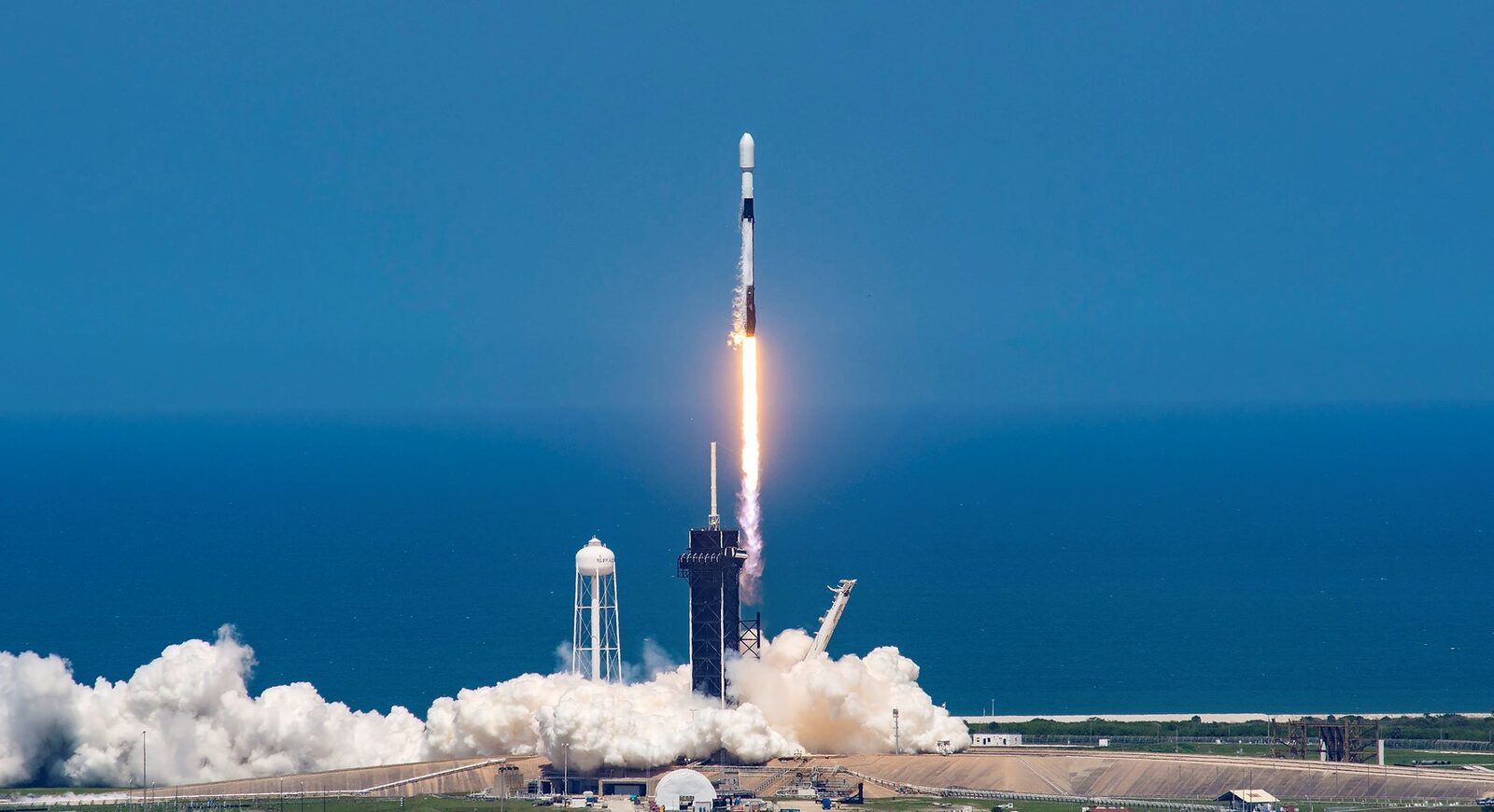
The Starlink-5091 satellite, also known as Starlink 5091, is a communication satellite launched by SpaceX on December 28, 2022, from Cape Canaveral Air Force Station's Launch Complex 40 using a Falcon 9 launch vehicle. The spacecraft has dimensions of 0.2 meters in length and 2.8 meters in diameter with a span of 9 meters, featuring a box-shaped body plus an antenna pan configuration. It weighs 305 kilograms at launch and has a dry mass of 290 kilograms. Equipped with Ku/Ka-band payload capabilities and optical inter-satellite links for data transmission, the satellite uses krypton ion thrusters for propulsion and solar arrays along with batteries for power generation. The mission is part of SpaceX's broader Starlink Group 5-1-54 constellation aimed at providing global internet coverage.

Starlink is a satellite constellation developed by SpaceX with the aim of providing global broadband internet coverage. Thousands of small satellites are deployed in low Earth orbit (LEO), enabling high-speed internet access even in remote areas. However, the rapid increase in satellites raises concerns about space debris and the potential for collisions, which can lead to further debris creation and endanger other spacecraft. Additionally, the sheer number of Starlink satellites can affect astronomical observations by increasing light pollution. Proper deorbiting plans and international coordination are essential to mitigate these challenges and ensure long-term sustainability in space.
Physical Characteristics

Length

0.2

Diameter

2.8

Span

9

Dry Mass

290

Launch Mass

305

Shape

Box + pan

Radar Cross Section

Unknown

Visual Magnitude

Unknown

Color

Unknown

Material Composition

Unknown

Technical Details

Payload

Starlink Group 5-1-54

Purpose

Communication

Mission

Communication

Manufacturer

SPXS

Life Expectancy

Unknown

Bus

Starlink

Configuration

Unknown

Motor

Krypton ion thrusters

Equipment

Ku/Ka-band payload, optical inter-satellite link

Power System

Solar arrays, batteries

ADCS

Unknown

Transmitter Frequency

Unknown

Map
This tool will help you track the satellite's position and predict its upcoming passes over your location. Simply input the coordinates or click the geolocation button to get started.
Next Pass
Azimuth Elevation Time (Local)
Start Azimuth
Max Elevation
Stop Azimuth
Time Until
Pass Duration

Satellite Articles

View All Posts »

Learn more about satellites and other related topics.

The Satellite That Taught Us What We Were Doing to the Planet

The Satellite That Taught Us What We Were Doing to the Planet

Landsat 7 launched on April 15, 1999, designed to last five years. It operated for twenty-five, survived a failure that destroyed a fifth of every image it took, and became part of the longest continuous record of Earth's surface ever assembled. Then they made the data free.

Space Brief 22 Oct 2024

Space Brief 22 Oct 2024

Today's Space Brief highlights SpaceX's 99th operational launch, China's calibration satellite launch, and Space Force's role in a commercial space age. Special spotlight on the satellite YAOGAN 1!

Space Force Modernizes Networks Across 14 Bases, SDA Expands $3.5B Satellite Program | KeepTrack Space Brief

Space Force Modernizes Networks Across 14 Bases, SDA Expands $3.5B Satellite Program | KeepTrack Space Brief

Space Force initiates cybersecurity network upgrades across 14 bases. SDA expands $3.5B Tracking Layer with 72 new satellites. SpaceX and China drive record orbital launches in 2025.

X Report 29 Jun 2025

X Report 29 Jun 2025

SpaceX secures a significant military contract while successfully launching multiple batches of Starlink satellites. Furthermore, milestones aboard the ISS highlight ongoing space missions.

The Day Discovery Took Her Final Flight

The Day Discovery Took Her Final Flight

Fourteen years ago, Space Shuttle Discovery thundered into orbit one last time, carrying a robot astronaut and capping a remarkable 27-year career that revolutionized space exploration

Musk Denies SpaceX AI Phone Report; EchoStar Bankruptcy | KeepTrack X Report

Musk Denies SpaceX AI Phone Report; EchoStar Bankruptcy | KeepTrack X Report

SpaceX hits 77 Falcon 9 launches in 2026 as EchoStar subsidiaries file Chapter 11 and Musk disputes WSJ AI phone claims.

Skyroot's Vikram-1 Reaches Orbit, Breaks Indian Launch Monopoly, Space Brief 18 Jul 2026

Skyroot's Vikram-1 Reaches Orbit, Breaks Indian Launch Monopoly, Space Brief 18 Jul 2026

Skyroot Aerospace's Vikram-1 rocket achieved orbit on July 18, becoming the first Indian commercial rocket to do so and breaking ISRO's launch monopoly.

GPS III SV10 Launches on Falcon 9, X Report 20 Apr 2026

GPS III SV10 Launches on Falcon 9, X Report 20 Apr 2026

GPS III SV10 launched April 21 on a SpaceX Falcon 9 with 3x better accuracy and 8x anti-jamming. Starlink stands at 10,263 working satellites.