STARLINK-5281 (54190)

COSPAR: 2022-141AK | Alt Name: Starlink 5281

Image
STARLINK-5281 Satellite Image
Additional Sources
Launch Details

Launch Date

October 28, 2022

Launch Site

AFWTR

Launch Pad

SLC4E

Launch Vehicle

Falcon 9

Orbital Elements

NORAD ID

54190

International Designator

2022-141AK

Epoch

Sun, 19 Jul 2026 20:00:01 GMT

Apogee

Calculating...

Perigee

Calculating...

Inclination

53.16°

Right Ascension

120.71°

Eccentricity

Calculating...

Argument of Perigee

81.13°

Period

95.28 min

Mean Motion

15.11 rev/day

Latitude

Calculating...

Longitude

Calculating...

Altitude

Calculating...

Velocity

Calculating...

Polar Plot
3D Visualization
Basic Satellite Info

Name

STARLINK-5281

Alternative Name

Starlink 5281

Type

Payload

Status

Operational

Owner

SPXS

Country

United States

Constellation

N/A

Related Satellites

Major Events

N/A

Latest TLEs
1 54190U 22141AK  26200.83335647  .00032654  00000+0  19254-2 0  9990
2 54190  53.1592 120.7132 0003200  81.1292 351.3977 15.11302796  5780

Source: Celestrak

Summary
STARLINK-5281 is a communication satellite belonging to SpaceX's Starlink constellation. Launched on October 28, 2022, from SLC4E at AFWTR using a Falcon 9 launch vehicle, the satellite has dimensions of 0.2 meters in length and 2.8 meters in diameter with a span of 9 meters. It carries a Ku/Ka-band payload and an optical inter-satellite link for communication purposes. The dry mass is 290 kg, while its launch mass was 305 kg. Equipped with solar arrays and batteries for power generation, the satellite uses Krypton ion thrusters as its propulsion system. It operates under SpaceX's ownership as part of the Starlink Group 4-31-34 mission to provide global internet coverage.

Starlink is a satellite constellation developed by SpaceX with the aim of providing global broadband internet coverage. Thousands of small satellites are deployed in low Earth orbit (LEO), enabling high-speed internet access even in remote areas. However, the rapid increase in satellites raises concerns about space debris and the potential for collisions, which can lead to further debris creation and endanger other spacecraft. Additionally, the sheer number of Starlink satellites can affect astronomical observations by increasing light pollution. Proper deorbiting plans and international coordination are essential to mitigate these challenges and ensure long-term sustainability in space.
Physical Characteristics

Length

0.2

Diameter

2.8

Span

9

Dry Mass

290

Launch Mass

305

Shape

Box + pan

Radar Cross Section

Unknown

Visual Magnitude

Unknown

Color

Unknown

Material Composition

Unknown

Technical Details

Payload

Starlink Group 4-31-34

Purpose

Communication

Mission

Communication

Manufacturer

SPXS

Life Expectancy

Unknown

Bus

Starlink

Configuration

Unknown

Motor

Krypton ion thrusters

Equipment

Ku/Ka-band payload, optical inter-satellite link

Power System

Solar arrays, batteries

ADCS

Unknown

Transmitter Frequency

Unknown

Map
This tool will help you track the satellite's position and predict its upcoming passes over your location. Simply input the coordinates or click the geolocation button to get started.
Next Pass
Azimuth Elevation Time (Local)
Start Azimuth
Max Elevation
Stop Azimuth
Time Until
Pass Duration

Satellite Articles

View All Posts »

Learn more about satellites and other related topics.

SpaceX Hits 600th Falcon 9 Launch, NASA SLS Leak Tests Struggle | KeepTrack Space Brief

SpaceX Hits 600th Falcon 9 Launch, NASA SLS Leak Tests Struggle | KeepTrack Space Brief

SpaceX reaches 600th Falcon 9 launch with Starlink 17-13 from Vandenberg. NASA SLS hydrogen leak repairs only partially successful. New book explores forces shaping space.

Space Force Requests $1.6B for New LEO Relay Network | KeepTrack Space Brief

Space Force Requests $1.6B for New LEO Relay Network | KeepTrack Space Brief

Space Force scraps SDA transport layer, requests $1.6 billion for proliferated LEO SATCOM constellation. Roger Mason nominated to lead NRO.

FCC Approves Reflect Orbital Sunlight Satellite | KeepTrack Space Brief

FCC Approves Reflect Orbital Sunlight Satellite | KeepTrack Space Brief

FCC clears Reflect Orbital's first satellite to bounce sunlight into nighttime zones, despite pushback from astronomers concerned about orbital streaking and wildlife impacts.

Space Brief 28 Nov 2024

Space Brief 28 Nov 2024

Today's briefing covers China's announcement of the Beidou system upgrade, launch updates for Vega C, challenges to global GPS reliability, and delays in the VERITAS Venus mission.

The Day Two Satellites Hit Each Other at 26,000 MPH

The Day Two Satellites Hit Each Other at 26,000 MPH

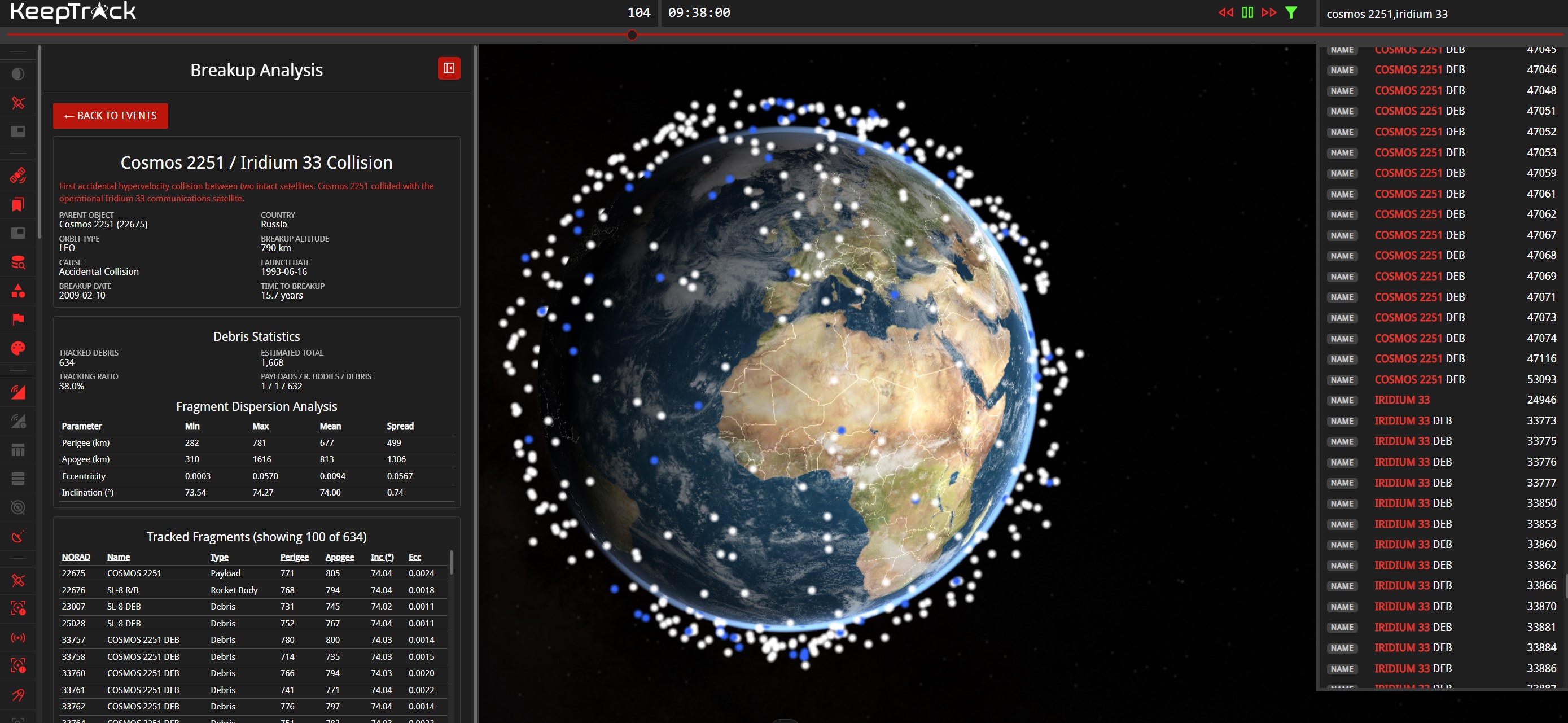
On February 10, 2009, an active Iridium communications satellite and a derelict Soviet military spacecraft slammed into each other 789 kilometers above Siberia. The collision produced more than 2,300 pieces of trackable debris that are still up there. Seventeen years later, the Iridium-Cosmos collision remains the event that made space debris a policy problem the world could no longer ignore.

Rocket Lab Neutron Targets Q4 2026 Debut, Space Brief 9 May 2026

Rocket Lab Neutron Targets Q4 2026 Debut, Space Brief 9 May 2026

Rocket Lab Neutron's first launch is targeted for Q4 2026 after a tank test failure, backed by a new 5-launch deal. Plus Globalstar's 1,410 km refresh.

X Report 27 Sep 2025

X Report 27 Sep 2025

SpaceX continues to make strides in both its Starship program and Starlink satellite deployments, with a successful launch of 24 Starlink satellites and preparations for upcoming missions.

Space Brief 12 Dec 2024

Space Brief 12 Dec 2024

U.S. Space Force's Europe operations amidst Ukraine conflict, Maxar's new partnership, integration of military and commercial tech, and the Pentagon's new AI initiatives shape today's space discourse.