STARLINK-4641 (53730)

COSPAR: 2022-107AG | Alt Name: Starlink 4641

Image
STARLINK-4641 Satellite Image
Additional Sources
Launch Details

Launch Date

September 5, 2022

Launch Pad

LC40

Launch Vehicle

Falcon 9

Orbital Elements

NORAD ID

53730

International Designator

2022-107AG

Epoch

Sun, 19 Jul 2026 22:14:24 GMT

Apogee

Calculating...

Perigee

Calculating...

Inclination

53.16°

Right Ascension

16.22°

Eccentricity

Calculating...

Argument of Perigee

95.65°

Period

93.79 min

Mean Motion

15.35 rev/day

Latitude

Calculating...

Longitude

Calculating...

Altitude

Calculating...

Velocity

Calculating...

Polar Plot
3D Visualization
Basic Satellite Info

Name

STARLINK-4641

Alternative Name

Starlink 4641

Type

Payload

Status

Operational

Owner

SPXS

Country

United States

Constellation

N/A

Related Satellites

Major Events

N/A

Latest TLEs
1 53730U 22107AG  26200.92666719  .00000708  00000+0  31207-4 0  9997
2 53730  53.1612  16.2207 0001135  95.6481 264.4651 15.35400287214571

Source: Celestrak

Summary
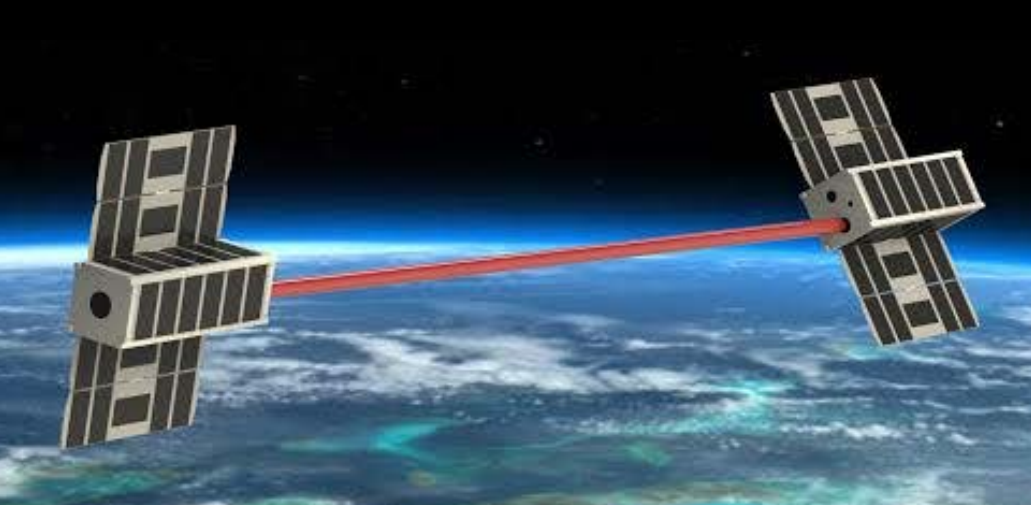
The STARLINK-4641 satellite, also known as Starlink 4641, is part of the Starlink constellation and was launched on September 5, 2022, from Cape Canaveral Air Force Station's LC40 launch pad aboard a Falcon 9 rocket. It has dimensions of 0.2 meters in length, 2.8 meters in diameter, and spans up to 9 meters. The satellite has a dry mass of 290 kilograms and a launch mass of 305 kilograms. Its payload includes Ku/Ka-band communication equipment and an optical inter-satellite link for data transmission. It is equipped with solar arrays and batteries for power generation, along with Krypton ion thrusters for maneuvering. The satellite's mission is to provide communication services as part of the Starlink Group 4-20-31 constellation.

Starlink is a satellite constellation developed by SpaceX with the aim of providing global broadband internet coverage. Thousands of small satellites are deployed in low Earth orbit (LEO), enabling high-speed internet access even in remote areas. However, the rapid increase in satellites raises concerns about space debris and the potential for collisions, which can lead to further debris creation and endanger other spacecraft. Additionally, the sheer number of Starlink satellites can affect astronomical observations by increasing light pollution. Proper deorbiting plans and international coordination are essential to mitigate these challenges and ensure long-term sustainability in space.
Physical Characteristics

Length

0.2

Diameter

2.8

Span

9

Dry Mass

290

Launch Mass

305

Shape

Box + pan

Radar Cross Section

Unknown

Visual Magnitude

Unknown

Color

Unknown

Material Composition

Unknown

Technical Details

Payload

Starlink Group 4-20-31

Purpose

Communication

Mission

Communication

Manufacturer

SPXS

Life Expectancy

Unknown

Bus

Starlink

Configuration

Unknown

Motor

Krypton ion thrusters

Equipment

Ku/Ka-band payload, optical inter-satellite link

Power System

Solar arrays, batteries

ADCS

Unknown

Transmitter Frequency

Unknown

Map
This tool will help you track the satellite's position and predict its upcoming passes over your location. Simply input the coordinates or click the geolocation button to get started.
Next Pass
Azimuth Elevation Time (Local)
Start Azimuth
Max Elevation
Stop Azimuth
Time Until
Pass Duration

Satellite Articles

View All Posts »

Learn more about satellites and other related topics.

The Multi-Orbit Myth? Why One Startup Thinks the Satellite Industry Got It Wrong

The Multi-Orbit Myth? Why One Startup Thinks the Satellite Industry Got It Wrong

The satellite industry's biggest operators are betting on multi-orbit architectures that combine LEO, MEO, and GEO into unified networks. A San Francisco startup called Contrivian thinks they've overcomplicated the problem, and the physics might be on its side.
X Report 12 Feb 2025

X Report 12 Feb 2025

SpaceX swaps Crew Dragon capsules with NASA to accelerate Crew-10 launch, and successfully launches multiple Starlink satellites into orbit.

Space Force Awards Counter-Surveillance Payload Contracts | KeepTrack Space Brief

Space Force Awards Counter-Surveillance Payload Contracts | KeepTrack Space Brief

Space Force RCO awarded SBIR contracts for radar-detection payloads to counter adversary surveillance of U.S. satellites. Follow-on miniaturization effort already planned.

Why Nobody Can See What Is Happening Near the Moon

Why Nobody Can See What Is Happening Near the Moon

The volume of space between Earth and the Moon is roughly a thousand times larger than the orbit we actually watch, and almost none of it is under surveillance. As the U.S. and China race to build lunar outposts, the Space Force is scrambling to put eyes on a region it has been effectively blind to.

X Report 23 Sep 2025

X Report 23 Sep 2025

SpaceX successfully launched the NROL-48 mission, growing the National Reconnaissance Office's satellite fleet. Additionally, NASA introduced ten new astronaut candidates, increasing female representation in its ranks.

X Report 30 Nov 2024

X Report 30 Nov 2024

SpaceX executes dual Starlink launches and secures Dragonfly mission contract while managing NRO satellite deployment.

Artemis 2 Crew Returns After 50-Year Lunar Milestone | KeepTrack Space Brief

Artemis 2 Crew Returns After 50-Year Lunar Milestone | KeepTrack Space Brief

Artemis 2 splashdown marks first crewed lunar flyby since Apollo 17 in 1972. Four astronauts completed historic mission, validating systems for Artemis 3 landing attempt.

X Report 30 Jun 2025

X Report 30 Jun 2025

SpaceX is exploring alternative options for static fire tests amid infrastructure setbacks, emphasizing their adaptability in operations.