


Artemis II
Four astronauts, a patched-together heat shield, and a $50 billion question: whether NASA can still send humans beyond low Earth orbit. Tomorrow, we find out.



NORAD ID
53659
International Designator
2022-105M
Decay Date
2/7/2026
Name
STARLINK-4463
Alternative Name
Starlink 4463
Type
Status
Owner
SPXS
Country
United States
Constellation
N/A
Related Satellites
Major Events
N/A
Length
0.2
Diameter
2.8
Span
9
Dry Mass
290
Launch Mass
300
Shape
Box + pan
Radar Cross Section
Unknown
Visual Magnitude
Unknown
Color
Unknown
Material Composition
Unknown
Payload
Starlink Group 3-4-12
Purpose
Communication
Mission
Communication
Manufacturer
SPXS
Life Expectancy
Unknown
Bus
Starlink
Configuration
Unknown
Motor
Krypton ion thrusters
Equipment
Ku/Ka-band payload, optical inter-satellite link
Power System
Solar arrays, batteries
ADCS
Unknown
Transmitter Frequency
Unknown
Learn more about satellites and other related topics.
Four astronauts, a patched-together heat shield, and a $50 billion question: whether NASA can still send humans beyond low Earth orbit. Tomorrow, we find out.

SpaceX postpones Starship Flight 8, successfully launches Starlink satellites and two lunar missions.

Today's briefing focuses on key developments in military space activities, technological advancements, and strategic challenges faced by the U.S. in space dominance. Notably, the Space Force is expanding its missile warning capabilities, and significant funding discussions are underway.
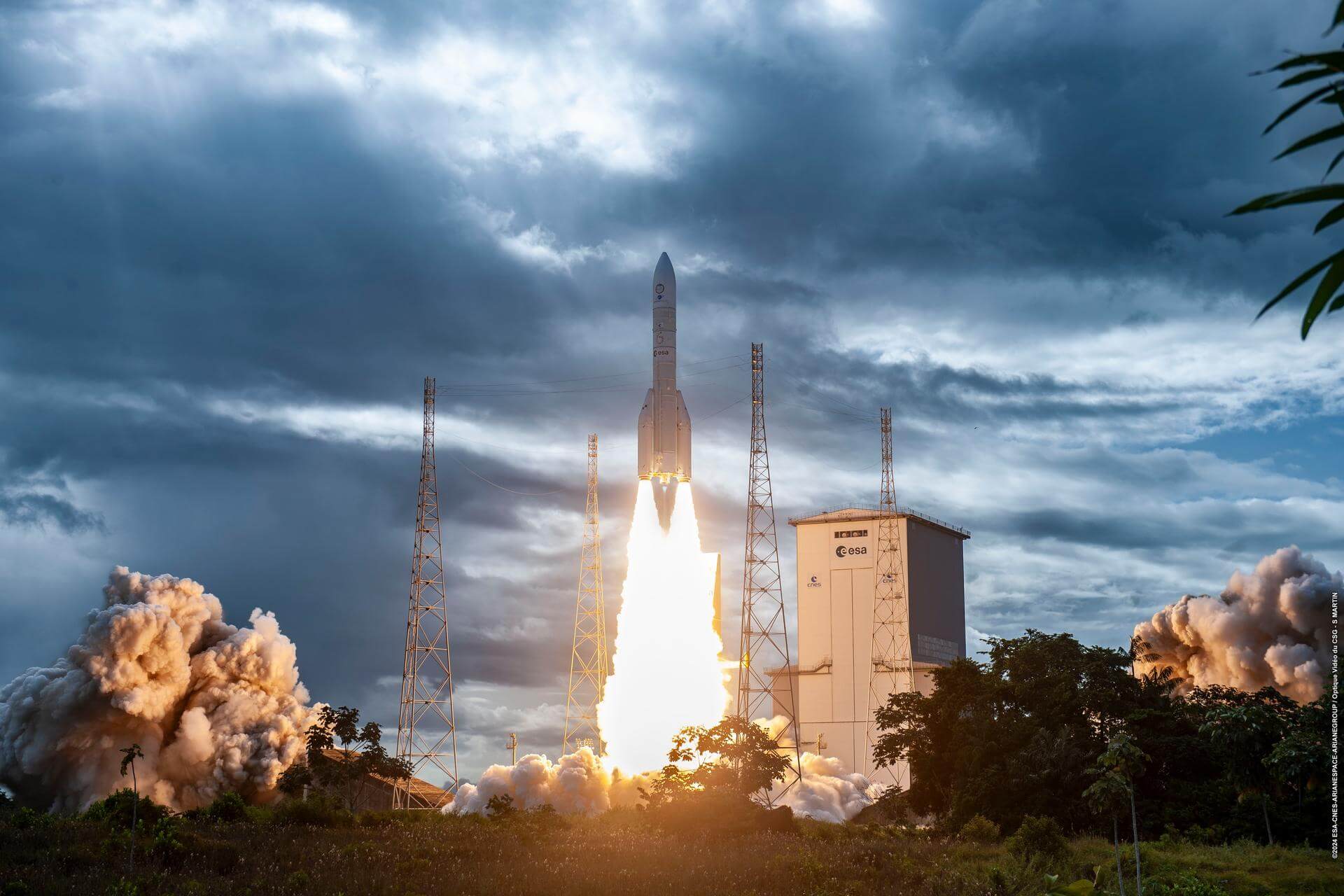
Today's Space Brief covers key developments including U.S. Space Force tech accelerator, SpaceX veterans' startup funding, ULA's expected dominance in national security missions, and new satellite activity.

Exploring the future of space with concerns on space debris, rapid growth in orbital data centers, and new developments at launch sites.

Today's space brief highlights the U.S. Space Force's new satellite naming scheme, the Air Force Secretary's warnings on China's space advances, BAE Systems' DARPA award, strategies for future space defense, the importance of GEO satellite refueling, and Blue Origin's plans for Space Force certification.

Kratos awarded $447 million Space Force contract for Resilient Missile Warning Tracking ground ops center in Medium Earth Orbit, shifting missile detection away from vulnerable GEO satellites.
Today’s highlights include new defense initiatives in the U.S., potential strategic shifts in Europe, and the establishment of council to counter security threats.