STARLINK-3260 (50205)

COSPAR: 2021-125BB | Alt Name: Starlink 3260

Image
STARLINK-3260 Satellite Image
Additional Sources
Launch Details

Launch Date

December 18, 2021

Launch Site

AFWTR

Launch Pad

SLC4E

Launch Vehicle

Falcon 9

Orbital Elements

NORAD ID

50205

International Designator

2021-125BB

Epoch

Sun, 19 Jul 2026 19:40:05 GMT

Apogee

Calculating...

Perigee

Calculating...

Inclination

53.16°

Right Ascension

335.68°

Eccentricity

Calculating...

Argument of Perigee

87.37°

Period

95.44 min

Mean Motion

15.09 rev/day

Latitude

Calculating...

Longitude

Calculating...

Altitude

Calculating...

Velocity

Calculating...

Polar Plot
3D Visualization
Basic Satellite Info

Name

STARLINK-3260

Alternative Name

Starlink 3260

Type

Payload

Status

Operational

Owner

SPXS

Country

United States

Constellation

N/A

Related Satellites

Major Events

N/A

Latest TLEs
1 50205U 21125BB  26200.81950661 -.00000057  00000+0  14518-4 0  9994
2 50205  53.1605 335.6801 0001303  87.3716 272.7425 15.08834401257107

Source: Celestrak

Summary
The STARLINK-3260 satellite, also known as Starlink 3260, is a communication satellite operated by SPXS (SpaceX). It was launched on December 18, 2021, from the AFWTR SLC4E launch pad using a Falcon 9 launch vehicle. The spacecraft has dimensions of 0.2 meters in length and 2.8 meters in diameter with a span of 9 meters. Its dry mass is recorded at 270 kilograms, while its launch mass was 290 kilograms. It carries a Ku/Ka-band payload along with an optical inter-satellite link for communication purposes. The satellite is powered by solar arrays and batteries and uses krypton ion thrusters as its motor system. Its shape is described as box-like with a pan configuration.

Starlink is a satellite constellation developed by SpaceX with the aim of providing global broadband internet coverage. Thousands of small satellites are deployed in low Earth orbit (LEO), enabling high-speed internet access even in remote areas. However, the rapid increase in satellites raises concerns about space debris and the potential for collisions, which can lead to further debris creation and endanger other spacecraft. Additionally, the sheer number of Starlink satellites can affect astronomical observations by increasing light pollution. Proper deorbiting plans and international coordination are essential to mitigate these challenges and ensure long-term sustainability in space.
Physical Characteristics

Length

0.2

Diameter

2.8

Span

9

Dry Mass

270

Launch Mass

290

Shape

Box + pan

Radar Cross Section

Unknown

Visual Magnitude

Unknown

Color

Unknown

Material Composition

Unknown

Technical Details

Payload

Starlink Group 4-4-50

Purpose

Communication

Mission

Communication

Manufacturer

SPXS

Life Expectancy

Unknown

Bus

Starlink

Configuration

Unknown

Motor

Krypton ion thrusters

Equipment

Ku/Ka-band payload, optical inter-satellite link

Power System

Solar arrays, batteries

ADCS

Unknown

Transmitter Frequency

Unknown

Map
This tool will help you track the satellite's position and predict its upcoming passes over your location. Simply input the coordinates or click the geolocation button to get started.
Next Pass
Azimuth Elevation Time (Local)
Start Azimuth
Max Elevation
Stop Azimuth
Time Until
Pass Duration

Satellite Articles

View All Posts »

Learn more about satellites and other related topics.

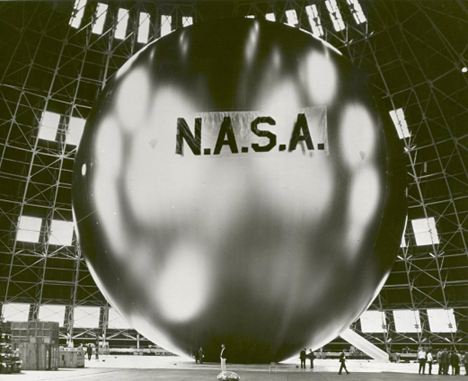
The Day a Giant Space Balloon United the Cold War

The Day a Giant Space Balloon United the Cold War

When a 135-foot inflatable mirror bounced a radio signal from England to Russia, it became the first joint US-Soviet space venture - and changed how we think about satellite communication.

The Day a Rocket Changed Space Policy Forever

The Day a Rocket Changed Space Policy Forever

Thirty years ago, a Chinese rocket veered off course two seconds after liftoff, destroyed a village, and triggered a political scandal that reshaped how the United States controls space technology to this day
Space Brief 13 Mar 2025

Space Brief 13 Mar 2025

Today's space brief highlights intriguing military satellite developments, new space launch strategies to counteract observation threats, and potential European defense industry advancements.
FAA Advances Approval for 44 Starship Launches From Pad 39A | KeepTrack X Report

FAA Advances Approval for 44 Starship Launches From Pad 39A | KeepTrack X Report

FAA advances environmental review for up to 44 Starship launches from Kennedy Space Center pad 39A. SpaceX wraps January with dual-coast Starlink launches. Crew-12 timeline tied to Artemis 2 schedule.
Musk Denies Starlink Price Cuts Are Response to Amazon Kuiper | KeepTrack X Report

Musk Denies Starlink Price Cuts Are Response to Amazon Kuiper | KeepTrack X Report

Elon Musk denies Starlink price reductions are driven by Amazon Kuiper competition. SpaceX launches 29 Starlink satellites in 18th constellation mission of 2026. Five more coming this week.

Van Allen Probe A Reenters March 10 After 14 Years | KeepTrack Space Brief

Van Allen Probe A Reenters March 10 After 14 Years | KeepTrack Space Brief

NASA's Van Allen Probe A (1,300 lbs) reenters today after 14 years studying Earth's radiation belts. Most debris will burn up; ocean impact statistically likely.

Missile Strikes SES Teleport in Israel; Anduril Buys ExoAnalytic | KeepTrack Space Brief

Missile Strikes SES Teleport in Israel; Anduril Buys ExoAnalytic | KeepTrack Space Brief

Missile strike damages SES teleport facility in Israel amid military operations. Anduril acquires ExoAnalytic's 130-person space tracking team, integrating satellite/missile surveillance into defense portfolio.

Intel Partners on Musk's Terafab AI Chip Fab | KeepTrack X Report

Intel Partners on Musk's Terafab AI Chip Fab | KeepTrack X Report

Intel joins Terafab, Elon Musk's Austin AI chip complex, to supply SpaceX and Tesla as Falcon 9 prepares a Cygnus ISS run.