



X Report 24 Dec 2024
SpaceX advances with Bandwagon-2 mission, gains approval for Starship Flight 7, and continues Starlink expansion.



NORAD ID
50201
International Designator
2021-125AX
Epoch
Wed, 03 Jun 2026 05:08:20 GMT
Apogee
Calculating...
Perigee
Calculating...
Inclination
53.17°
Right Ascension
64.67°
Eccentricity
Calculating...
Argument of Perigee
257.77°
Period
87.56 min
Mean Motion
16.45 rev/day
Latitude
Calculating...
Longitude
Calculating...
Altitude
Calculating...
Velocity
Calculating...
Name
STARLINK-3255
Alternative Name
Starlink 3255
Type
Status
Owner
SPXS
Country
United States
Constellation
N/A
Related Satellites
Major Events
N/A
1 50201U 21125AX 26154.21412794 .09384798 12454-4 30067-3 0 9994
2 50201 53.1708 64.6717 0006095 257.7681 102.2687 16.44504582251756
Source: Celestrak
Length
0.2
Diameter
2.8
Span
9
Dry Mass
270
Launch Mass
290
Shape
Box + pan
Radar Cross Section
Unknown
Visual Magnitude
Unknown
Color
Unknown
Material Composition
Unknown
Payload
Starlink Group 4-4-46
Purpose
Communication
Mission
Communication
Manufacturer
SPXS
Life Expectancy
Unknown
Bus
Starlink
Configuration
Unknown
Motor
Krypton ion thrusters
Equipment
Ku/Ka-band payload, optical inter-satellite link
Power System
Solar arrays, batteries
ADCS
Unknown
Transmitter Frequency
Unknown
Learn more about satellites and other related topics.
SpaceX advances with Bandwagon-2 mission, gains approval for Starship Flight 7, and continues Starlink expansion.

Today's highlights include China's launch of classified TJS-14 satellite, Boeing's defense program losses, and the fourth batch launch of Thousand Sails satellites.

South Korea's sophisticated network of robotic telescopes provides critical space situational awareness while strengthening the nation's position in space security amid regional tensions

Today's key space events include a milestone Falcon booster landing, advances in US military satellite operations, and a new missile defense initiative.

How a controversial telescope network has become a significant player in tracking the increasingly crowded orbital environment, raising important questions about transparency, dual-use technologies, and the future of space situational awareness.
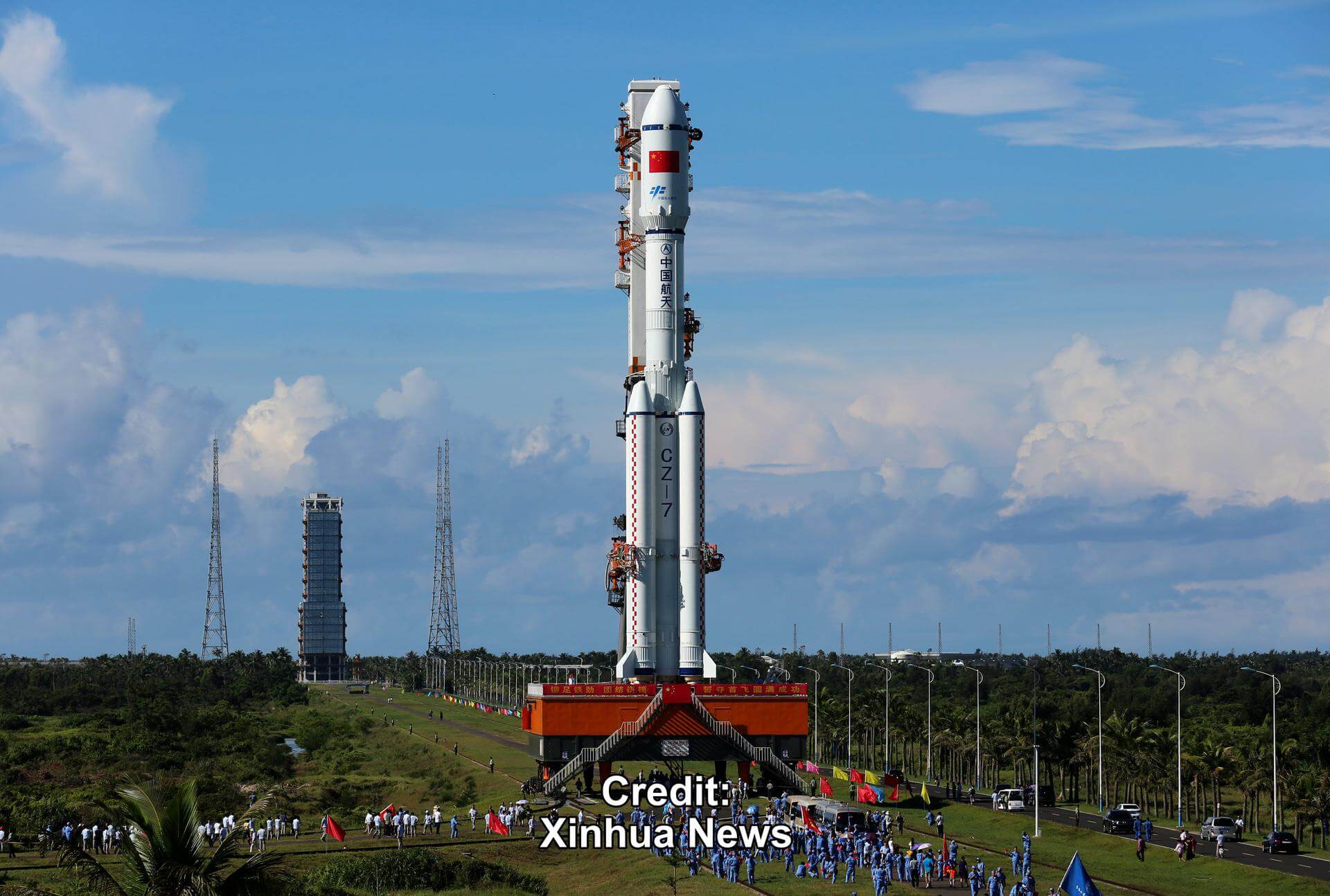
Today's key topics include the halting of the U.S. Air Force's rocket landing pad plans, the Space Force's shift to a flexible satellite strategy, delays in Australia's Eris 1 rocket launch, and the controversial cut of satellite sea-ice data to climate scientists.
Today's Space Brief covers a crucial weather data decision by the U.S. Defense Department, an innovative power supply for aerospace systems, advancements in satellite link technology, and Norway's maritime surveillance. AI/ML tools for airspace management and concerns about defense testing capabilities are also highlighted.

SpaceX successfully rotates Crew-9 and Crew-10 on the ISS and launches new Starlink satellites with direct-to-cell capability.