STARLINK-3266 (50195)

COSPAR: 2021-125AR | Alt Name: Starlink 3266

Image
STARLINK-3266 Satellite Image
Additional Sources
Launch Details

Launch Date

December 18, 2021

Launch Site

AFWTR

Launch Pad

SLC4E

Launch Vehicle

Falcon 9

Orbital Elements

NORAD ID

50195

International Designator

2021-125AR

Epoch

Sun, 19 Jul 2026 20:00:01 GMT

Apogee

Calculating...

Perigee

Calculating...

Inclination

53.16°

Right Ascension

4.96°

Eccentricity

Calculating...

Argument of Perigee

91.08°

Period

94.37 min

Mean Motion

15.26 rev/day

Latitude

Calculating...

Longitude

Calculating...

Altitude

Calculating...

Velocity

Calculating...

Polar Plot
3D Visualization
Basic Satellite Info

Name

STARLINK-3266

Alternative Name

Starlink 3266

Type

Payload

Status

Operational

Owner

SPXS

Country

United States

Constellation

N/A

Related Satellites

Major Events

N/A

Latest TLEs
1 50195U 21125AR  26200.83335647  .00069041  00000+0  26417-2 0  9991
2 50195  53.1609   4.9577 0001885  91.0822 126.4782 15.25960227  5837

Source: Celestrak

Summary
The Starlink-3266 satellite, also known as Starlink 3266, is part of SpaceX's (SPXS) Starlink constellation and was launched on December 18, 2021, from AFWTR Launch Site SLC4E using a Falcon 9 launch vehicle. It has dimensions of 0.2 meters in length, 2.8 meters in diameter, and spans 9 meters when fully deployed. The satellite has a dry mass of 270 kg and a launch mass of 290 kg. Its equipment includes a Ku/Ka-band payload and optical inter-satellite link for communication purposes. Starlink-3266 is powered by solar arrays and batteries, equipped with Krypton ion thrusters as its motor system, and has the shape of a box with a pan configuration. The satellite's mission is to provide communication services as part of the Starlink Group 4-4-40 constellation.

Starlink is a satellite constellation developed by SpaceX with the aim of providing global broadband internet coverage. Thousands of small satellites are deployed in low Earth orbit (LEO), enabling high-speed internet access even in remote areas. However, the rapid increase in satellites raises concerns about space debris and the potential for collisions, which can lead to further debris creation and endanger other spacecraft. Additionally, the sheer number of Starlink satellites can affect astronomical observations by increasing light pollution. Proper deorbiting plans and international coordination are essential to mitigate these challenges and ensure long-term sustainability in space.
Physical Characteristics

Length

0.2

Diameter

2.8

Span

9

Dry Mass

270

Launch Mass

290

Shape

Box + pan

Radar Cross Section

Unknown

Visual Magnitude

Unknown

Color

Unknown

Material Composition

Unknown

Technical Details

Payload

Starlink Group 4-4-40

Purpose

Communication

Mission

Communication

Manufacturer

SPXS

Life Expectancy

Unknown

Bus

Starlink

Configuration

Unknown

Motor

Krypton ion thrusters

Equipment

Ku/Ka-band payload, optical inter-satellite link

Power System

Solar arrays, batteries

ADCS

Unknown

Transmitter Frequency

Unknown

Map
This tool will help you track the satellite's position and predict its upcoming passes over your location. Simply input the coordinates or click the geolocation button to get started.
Next Pass
Azimuth Elevation Time (Local)
Start Azimuth
Max Elevation
Stop Azimuth
Time Until
Pass Duration

Satellite Articles

View All Posts »

Learn more about satellites and other related topics.

SpaceX IPO Raises $75B at $135/Share on Nasdaq Debut | KeepTrack X Report

SpaceX IPO Raises $75B at $135/Share on Nasdaq Debut | KeepTrack X Report

SpaceX's historic $75B IPO priced at $135/share launches SPCX on Nasdaq at a $1.77 trillion valuation — the largest IPO in history.

Iran Strikes UAE and Saudi Targets, Space Force Opens Tracking to Commercial Firms | KeepTrack Space Brief

Iran Strikes UAE and Saudi Targets, Space Force Opens Tracking to Commercial Firms | KeepTrack Space Brief

Iran launches drones and missiles at UAE and Saudi targets. Space Force opens secretive tracking data to commercial firms. Falcon 9 breakup linked to lithium pollution in upper atmosphere.

Space Brief 23 Aug 2024

Space Brief 23 Aug 2024

Sentinel-2C sealed in Vega rocket fairing, ULA sale tidbit, Polaris Dawn mission updates, Norway's Andøya Spaceport ready for action, Harris commits to space leadership, NASA's latest smallsat launch partners, new members join NASA composite initiative, Mynaric's manufacturing hiccups, Rocket Factory Augsburg's turbopump snag, and Amazon boosts satellite deployment infrastructure.
Falcon Heavy Returns After 18-Month Hiatus, Lofts ViaSat-3 F3 | KeepTrack X Report

Falcon Heavy Returns After 18-Month Hiatus, Lofts ViaSat-3 F3 | KeepTrack X Report

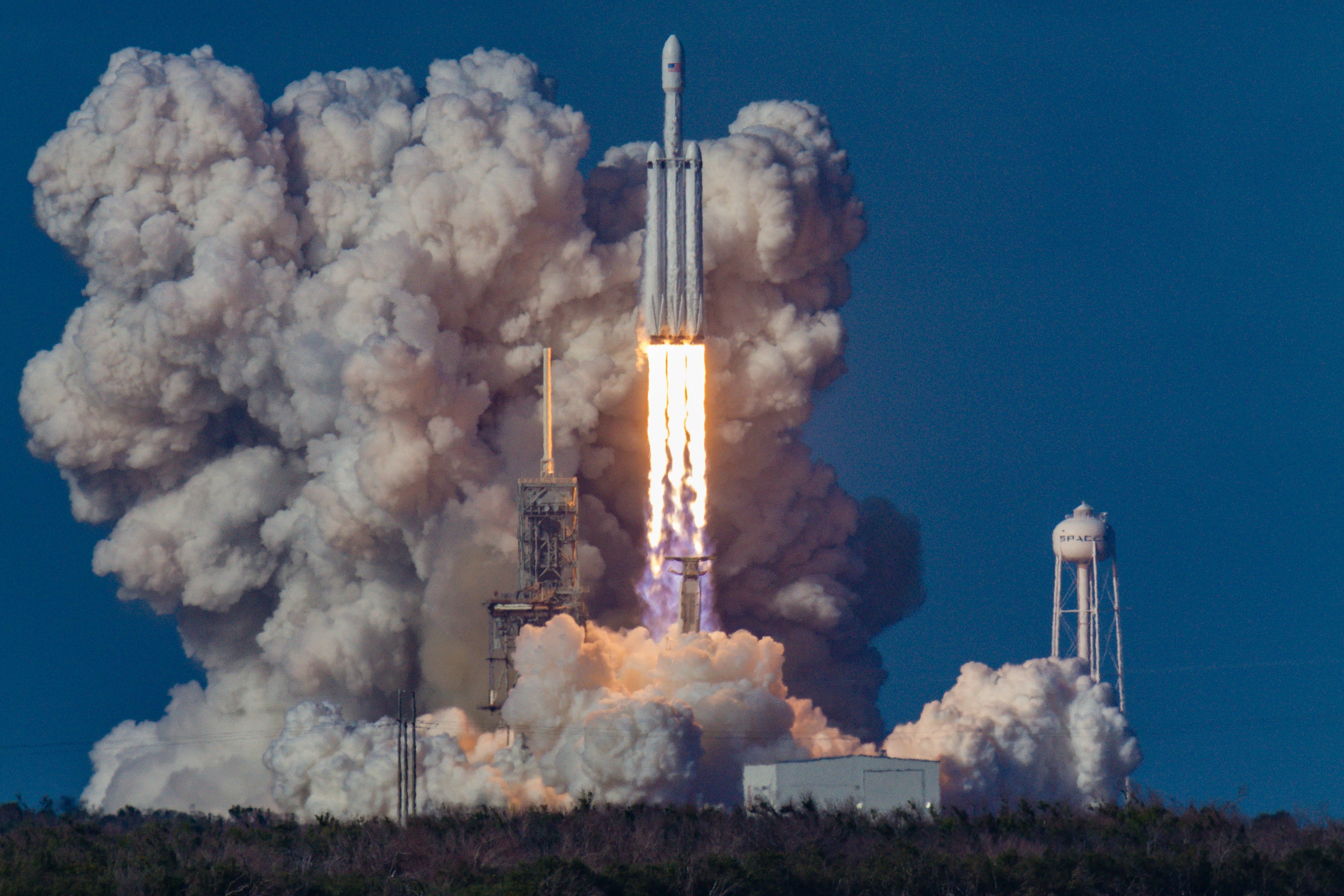
Falcon Heavy completed its 12th flight ever on April 29, ending an 18-month stand-down by lofting the 6-ton ViaSat-3 F3 comsat to GTO.

STARLINK-4621 Faces Critical Conjunction as Eight Satellites Reenter | KeepTrack X Report

STARLINK-4621 Faces Critical Conjunction as Eight Satellites Reenter | KeepTrack X Report

A HIGH-risk conjunction between STARLINK-4621 and the defunct SL-18 rocket body leads the July 11 safety picture, with eight Starlink satellites set to reenter through July 14.

X Report 18 Dec 2025

X Report 18 Dec 2025

SpaceX carried out a double-header Starlink launch from both coasts while milestones from Max Space and Lux Aeterna signal growth in the commercial space sector.
Space Brief 27 Oct 2025

Space Brief 27 Oct 2025

Today's space highlights include the US Space Force's advanced tracking contract, a milestone in SpaceX's Starlink program, and a new initiative to remove space debris.

Starlink Constellation Size Nears 10,000, X Report 16 Mar 2026

Starlink Constellation Size Nears 10,000, X Report 16 Mar 2026

Starlink constellation size in March 2026: 9,996 satellites in orbit and 9,986 working from 11,504 launched, as SpaceX deorbits legacy V1.0 hardware.