Vanguard 1 (00005)

COSPAR: 1958-002B | Alt Name: Vanguard I

Image
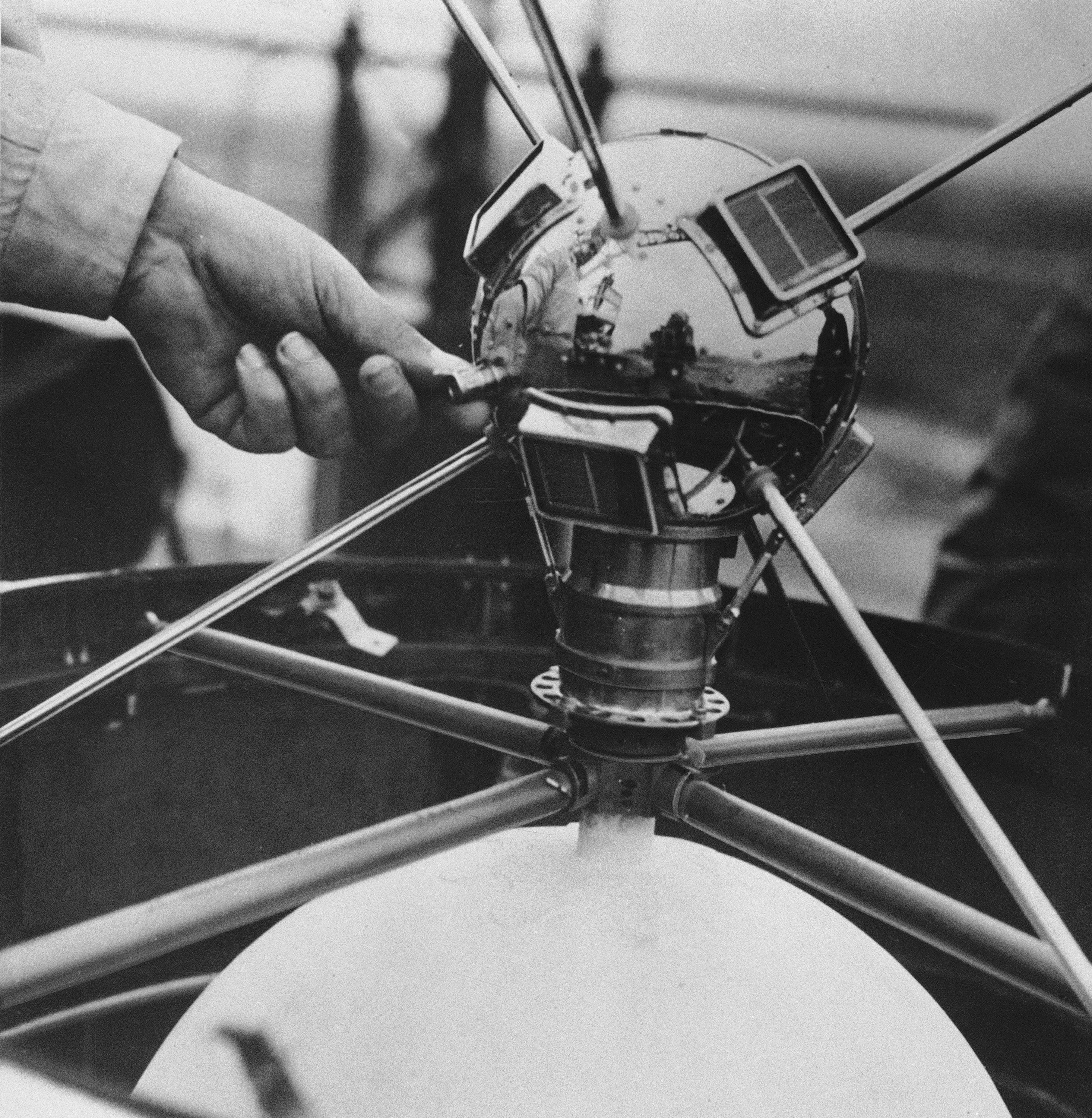
Vanguard 1 Satellite Image
Launch Details

Launch Date

March 17, 1958

Launch Pad

LC-18A

Launch Vehicle

Vanguard TV-4

Orbital Elements

NORAD ID

00005

International Designator

1958-002B

Epoch

Sat, 20 Jun 2026 09:55:39 GMT

Apogee

Calculating...

Perigee

Calculating...

Inclination

34.25°

Right Ascension

304.37°

Eccentricity

Calculating...

Argument of Perigee

153.06°

Period

132.60 min

Mean Motion

10.86 rev/day

Latitude

Calculating...

Longitude

Calculating...

Altitude

Calculating...

Velocity

Calculating...

Polar Plot
3D Visualization
Basic Satellite Info

Name

Vanguard 1

Alternative Name

Vanguard I

Type

Payload

Status

Unknown

Country

United States

Constellation

N/A

Related Satellites

Major Events

First solar-powered satellite; ceased transmission in 1964; remains the oldest human-made object still in orbit.

Latest TLEs
1     5U 58002B   26171.41365157  .00000284  00000-0  36907-3 0  9991
2     5  34.2451 304.3721 1835599 153.0558 217.8553 10.86001497443630

Source: Celestrak

Summary
Vanguard 1 was a satellite launched on March 17, 1958, as part of the Vanguard TV-4 launch vehicle test series. It weighed approximately 1.47 kg and had a spherical shape with a diameter of 0.165 meters. The satellite was equipped with two radio transmitters: one powered by mercury batteries for about 20 days, and another powered by six solar cells that functioned for over six years. The primary mission objectives of Vanguard 1 included testing the launch capabilities of the three-stage launch vehicle and studying the effects of space on a satellite's systems. It also aimed to gather geodetic measurements through orbit analysis. The satellite was designed to test the reliability of its systems in the harsh environment of space. Vanguard 1 remains the oldest human-made object still in orbit, with the last signals received in May 1964. Its solar-powered transmitter made it a significant technological achievement at the time, marking the first instance of a solar-powered satellite.
Physical Characteristics

Length

0.165

Diameter

0.165

Span

0.6

Dry Mass

1.47

Launch Mass

1.47

Shape

Spherical

Radar Cross Section

0.122

Visual Magnitude

10.2

Color

Silver

Material Composition

Aluminum

Technical Details

Payload

Vanguard Test Satellite H

Purpose

Science

Mission

Designed to test the launch capabilities of a three-stage launch vehicle and study the effects of the space environment on a satellite and its systems in Earth orbit. It also aimed to obtain geodetic measurements through orbit analysis.

Manufacturer

Naval Research Laboratory

Life Expectancy

The battery-powered transmitter operated for about 20 days, while the solar-powered transmitter functioned for over six years, with the last signals received in May 1964.

Bus

Vanguard

Configuration

Vanguard 1

Motor

None

Equipment

Equipped with two radio transmitters: a 10 mW, 108 MHz telemetry transmitter powered by mercury batteries, and a 5 mW, 108.03 MHz Minitrack beacon transmitter powered by six solar cells.

Power System

Powered by mercury batteries and solar cells.

ADCS

Spin-stabilized

Transmitter Frequency

108 MHz, 108.03 MHz

Map
This tool will help you track the satellite's position and predict its upcoming passes over your location. Simply input the coordinates or click the geolocation button to get started.
Next Pass
Azimuth Elevation Time (Local)
Start Azimuth
Max Elevation
Stop Azimuth
Time Until
Pass Duration

Satellite Articles

View All Posts »

Learn more about satellites and other related topics.

Space Brief 6 Oct 2025

Space Brief 6 Oct 2025

Today's highlights include Firefly's acquisition of SciTec, DARPA's vision for a moon economy, and ESA's new deep space antenna in Australia. Stay updated on the latest in space intelligence and defense technology transformations, plus noteworthy rogue planet phenomena.

X Report 24 May 2025

X Report 24 May 2025

SpaceX experiences a setback with Starship Flight 8 while continuing its Starlink deployment efforts with a successful launch from California.

New Glenn Damaged in Hotfire Anomaly at LC-36 | KeepTrack Space Brief

New Glenn Damaged in Hotfire Anomaly at LC-36 | KeepTrack Space Brief

Blue Origin's New Glenn suffered a damaging anomaly during hotfire testing at Launch Complex 36, grounding the heavy-lift rocket indefinitely with no return-to-flight timeline announced.

X Report 5 May 2025

X Report 5 May 2025

SpaceX celebrated Star Wars Day with a successful launch of Starlink satellites, furthering its mission to enhance global internet access. Lego also revealed a new collectible set tied to the franchise.

X Report 4 Sep 2025

X Report 4 Sep 2025

SpaceX conducted multiple successful launches this week, adding to its Starlink constellation and marking significant milestones in its ongoing missions.

The Day a Giant Space Balloon United the Cold War

The Day a Giant Space Balloon United the Cold War

When a 135-foot inflatable mirror bounced a radio signal from England to Russia, it became the first joint US-Soviet space venture - and changed how we think about satellite communication.

X Report 3 Jul 2025

X Report 3 Jul 2025

In a landmark achievement, SpaceX celebrated its 500th Falcon 9 launch by deploying 27 Starlink satellites while simultaneously advancing its reuse strategy with record-breaking milestones.

Musk Outlines Starship Tower Catch Plan, February Ends With 83 Sats | KeepTrack X Report

Musk Outlines Starship Tower Catch Plan, February Ends With 83 Sats | KeepTrack X Report

Elon Musk confirms Starship V3 tower catch attempt plans with SN1 headed for ground tests. SpaceX wraps February with 83 Starlink satellites across three launches. 9,826 sats on orbit.