NOAA 17 DEB (48739)

COSPAR: 2002-032BY | Alt Name: deb NOAA 17
DECAYED

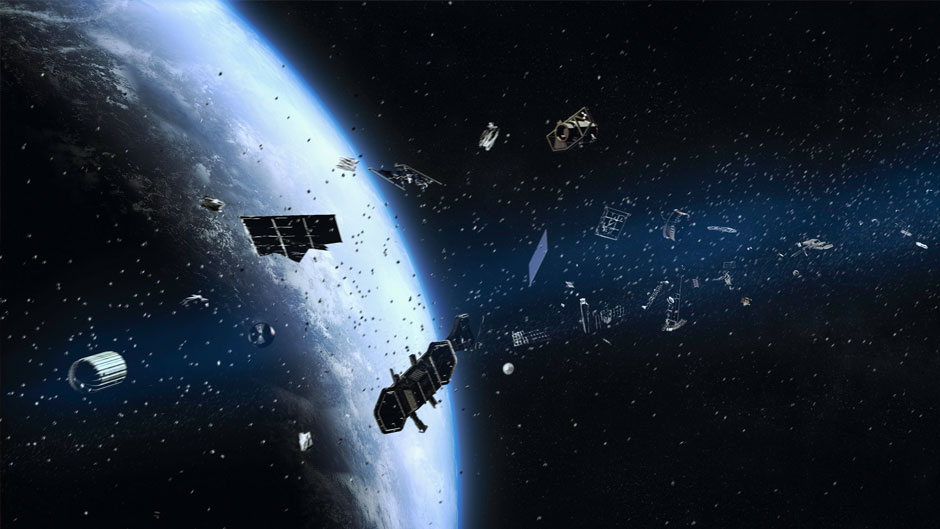
Image
NOAA 17 DEB Satellite Image
Additional Sources
Launch Details

Launch Date

June 24, 2002

Launch Site

AFWTR

Launch Pad

SLC4W

Launch Vehicle

Titan II SLV

Orbital Elements

NORAD ID

48739

International Designator

2002-032BY

Decay Date

3/29/2025

Basic Satellite Info

Name

NOAA 17 DEB

Alternative Name

deb NOAA 17

Type

Debris

Status

Space Junk

Owner

NOAA

Country

United States

Constellation

N/A

Related Satellites

Major Events

N/A

Summary
Space debris, also known as space junk, encompasses all non-functional objects orbiting Earth such as defunct satellites, spent rocket stages, and fragments from collisions or disintegrations. Over time, this debris can accumulate and create an increasingly hazardous environment in orbit. Even tiny fragments, traveling at extremely high velocities, can inflict significant damage on operational satellites and spacecraft. If left unmanaged, the density of debris raises the risk of catastrophic collisions and further fragmentation, compounding the problem and threatening the safety and sustainability of space activities.
Physical Characteristics

Length

0

Diameter

0

Span

0

Dry Mass

0

Launch Mass

0

Shape

N/A

Radar Cross Section

Unknown

Visual Magnitude

Unknown

Color

Unknown

Material Composition

Unknown

Technical Details

Payload

Unknown

Purpose

Unknown

Mission

Unknown

Manufacturer

Unknown

Life Expectancy

Unknown

Bus

Unknown

Configuration

Unknown

Motor

Unknown

Equipment

Unknown

Power System

Unknown

ADCS

Unknown

Transmitter Frequency

Unknown

Satellite Articles

View All Posts »

Learn more about satellites and other related topics.

Senate Passes $839B Defense Bill, L3Harris Doubles Down on Space Business | KeepTrack Space Brief

Senate Passes $839B Defense Bill, L3Harris Doubles Down on Space Business | KeepTrack Space Brief

Senate clears $839B defense spending bill ensuring Pentagon space domain funding. L3Harris reaffirms space sector commitment amid Golden Dome expansion. York Space raises $629M in public offering.

X Report 24 Jan 2025

X Report 24 Jan 2025

SpaceX hits a new milestone with 400 rocket landings, beta testing begins for Direct-to-Cell Starlink satellites, and more Starlink launches from California.

Space Brief 20 Mar 2025

Space Brief 20 Mar 2025

Today's brief highlights critical discussions in military space readiness, potential satellite 'dogfighting' scenarios, international defense collaborations, and a notable communications satellite launch.

York Space Goes Public at $629M, Cold War JUMPSEAT Spy Satellites Declassified | KeepTrack Space Brief

York Space Goes Public at $629M, Cold War JUMPSEAT Spy Satellites Declassified | KeepTrack Space Brief

York Space raises $629M in IPO to expand satellite manufacturing. NRO declassifies Cold War-era JUMPSEAT spy satellites. Lockheed to boost THAAD interceptor production from 96 to 400 per year.

SpaceX and xAI Tapped for Pentagon's $100M Drone Contest | KeepTrack X Report

SpaceX and xAI Tapped for Pentagon's $100M Drone Contest | KeepTrack X Report

Pentagon selects SpaceX and xAI for $100M autonomous drone competition. Two Falcon 9 rockets launch Starlink sats from California and Florida. 11,215 total Starlink satellites launched.

Space Brief 13 Mar 2025

Space Brief 13 Mar 2025

Today's space brief highlights intriguing military satellite developments, new space launch strategies to counteract observation threats, and potential European defense industry advancements.

Space Brief 20 Jul 2025

Space Brief 20 Jul 2025

Today's highlights include a SpaceX launch of Starlink satellites, a pivotal delivery to the Space Force, and significant Senate funding for NASA missions.

Artemis II Crew Sets Human Distance Record at Moon | KeepTrack Space Brief

Artemis II Crew Sets Human Distance Record at Moon | KeepTrack Space Brief

Artemis II crew surpassed Apollo 13's distance record during April 6 lunar flyby. Orion carried 4 astronauts—including Canadian Jeremy Hansen—farther from Earth than any humans.