


Space Brief 23 May 2025
Today's briefing highlights a significant increase in the Pentagon's AI budget, upgrades at the Tiangong space station, cyber threats to satellite operations, and the Moon and Venus conjunction.



Launch Date
March 18, 2020
Launch Site
Launch Pad
LC39A
Launch Vehicle
NORAD ID
45382
International Designator
2020-019Y
Decay Date
12/7/2023
Name
STARLINK-1264
Alternative Name
Starlink 1264
Type
Status
Owner
SPXS
Country
United States
Constellation
N/A
Related Satellites
Major Events
N/A
Length
0.2
Diameter
2.8
Span
9
Dry Mass
248
Launch Mass
260
Shape
Box + pan
Radar Cross Section
Unknown
Visual Magnitude
Unknown
Color
Unknown
Material Composition
Unknown
Payload
Starlink V1.0-L5-11
Purpose
Communication
Mission
Communication
Manufacturer
SPXS
Life Expectancy
Unknown
Bus
Starlink
Configuration
Unknown
Motor
Krypton ion thrusters
Equipment
Ku/Ka-band payload (all), optical inter-satellite links (a few prototypes)
Power System
Solar arrays, batteries
ADCS
Unknown
Transmitter Frequency
Unknown
Learn more about satellites and other related topics.
Today's briefing highlights a significant increase in the Pentagon's AI budget, upgrades at the Tiangong space station, cyber threats to satellite operations, and the Moon and Venus conjunction.
Today's briefing highlights recent launches and failures, including an Indian radar satellite setback, successful Rocket Lab missions, and China's debut of upgraded rocket technology.
Today's highlights include China's latest satellite launches, Blue Origin's expansion plans, and Purdue University's groundbreaking suborbital mission with Virgin Galactic.
SpaceX's 600th Falcon 9 booster landing coincides with a $175M NASA Mars contract win and the final GPS III satellite launch this week.
NASA's Artemis 3 lunar landing mission schedule continues slipping over 2 months after revised plans announced, with no crew or surface activity details released publicly yet.

SpaceX's rapid advancements continued this weekend with two consecutive Starlink missions and preparations for the upcoming Crew-11 launch, showcasing its efficiency and commitment to expanding satellite broadband coverage.
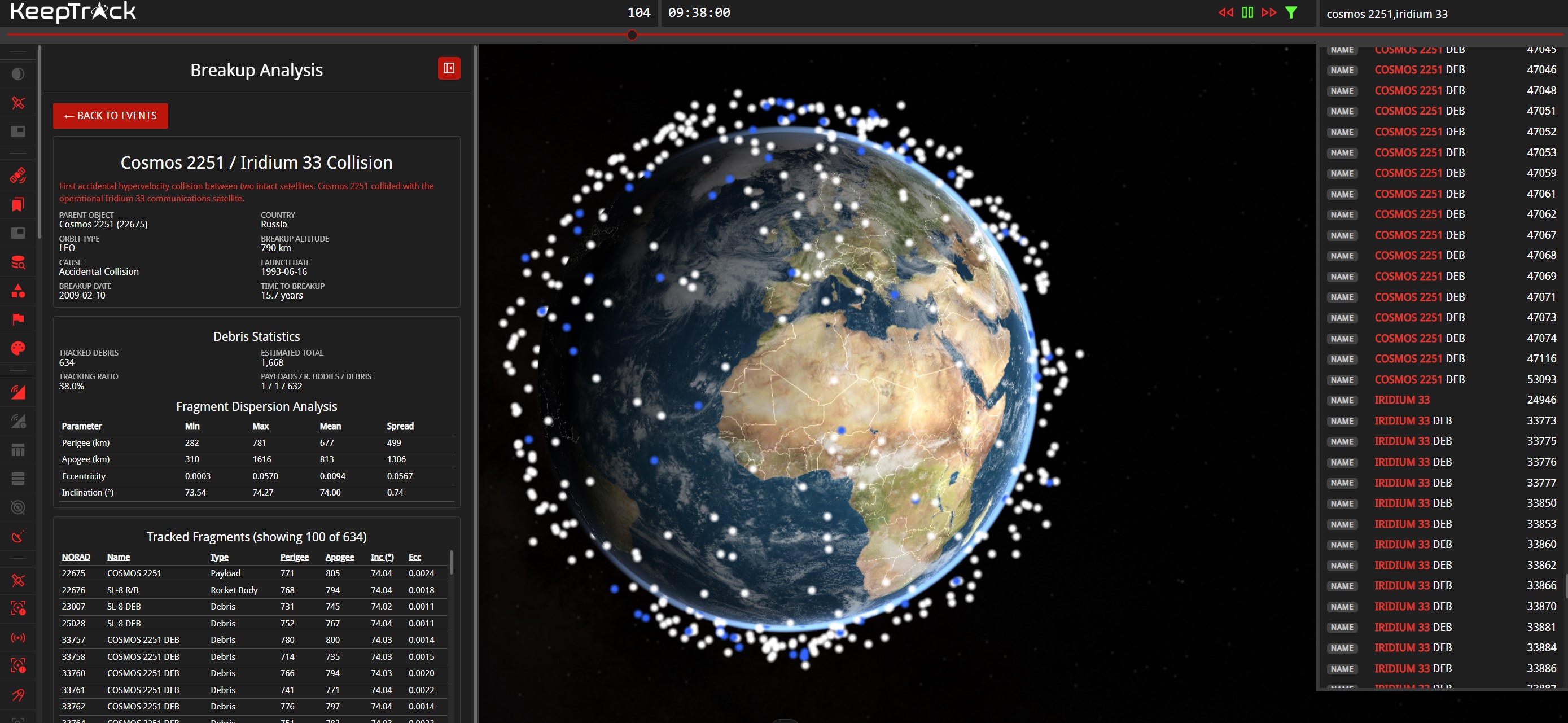
On February 10, 2009, an active Iridium communications satellite and a derelict Soviet military spacecraft slammed into each other 789 kilometers above Siberia. The collision produced more than 2,300 pieces of trackable debris that are still up there. Seventeen years later, the Iridium-Cosmos collision remains the event that made space debris a policy problem the world could no longer ignore.

Rocket Lab secures $190M Pentagon deal for 20 hypersonic test flights over 4 years using Electron. Five missions annually trackable via Space-Track.