


SpaceX Starfall Reentry Capsule Makes Debut Flight | KeepTrack X Report
SpaceX's secretive Starfall reentry demo launched June 23 as Starmind AI constellation targets 1M orbital compute nodes.


Launch Date
December 5, 2018
Launch Site
Launch Pad
LC40
Launch Vehicle
NORAD ID
43827
International Designator
2018-101A
Decay Date
1/14/2019
Name
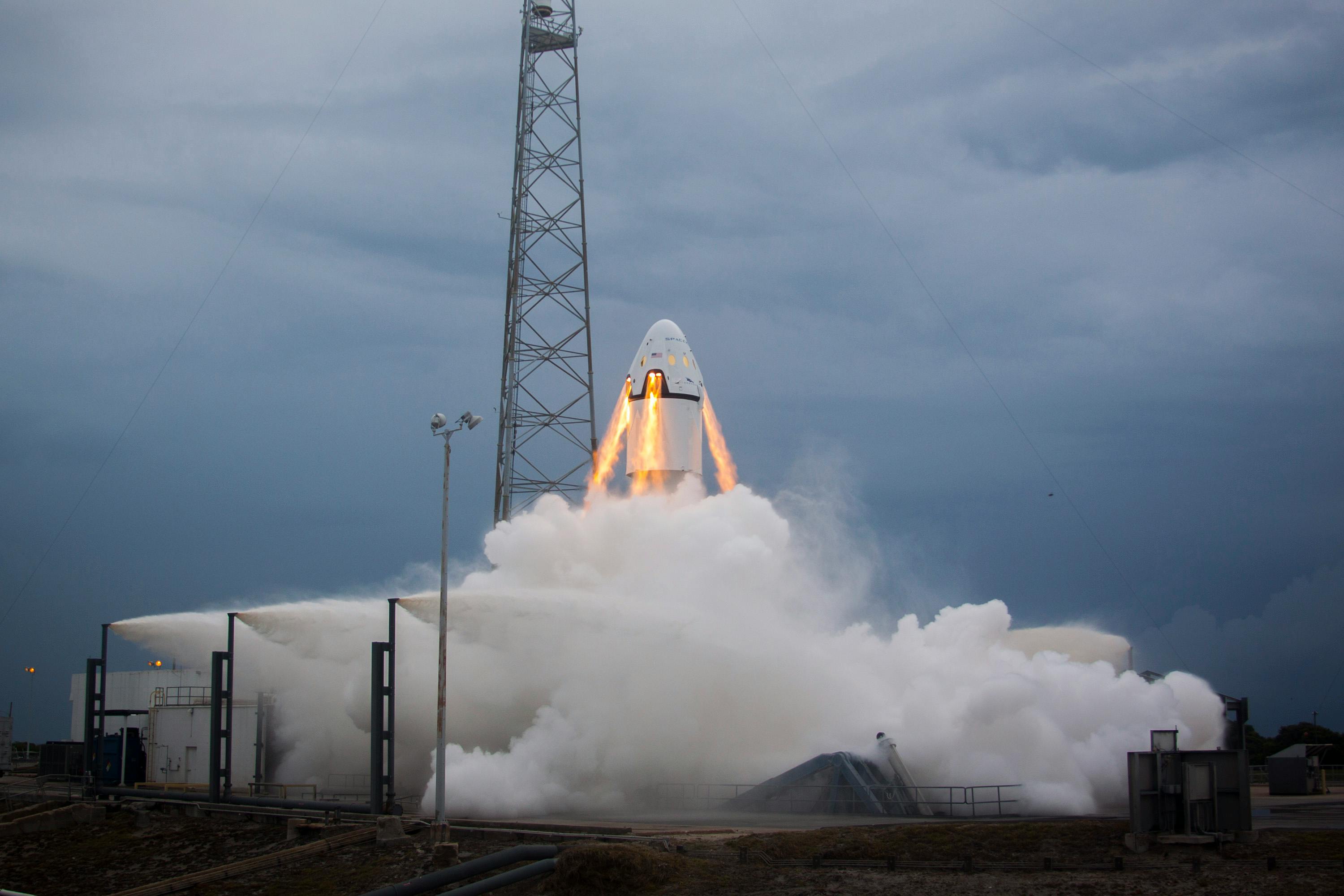
DRAGON CRS-16
Alternative Name
Dragon CRS-16
Type
Status
Owner
SPX
Country
United States
Constellation
N/A
Related Satellites
Major Events
N/A
Length
5.3
Diameter
3.7
Span
16.5
Dry Mass
4700
Launch Mass
5427
Shape
Frust + Cyl + 2 pan
Radar Cross Section
Unknown
Visual Magnitude
Unknown
Color
Unknown
Material Composition
Unknown
Payload
Dragon C112
Purpose
Supply and return
Mission
Supply and return
Manufacturer
SPX
Life Expectancy
Unknown
Bus
Dragon CM
Configuration
Unknown
Motor
18 Draco thrusters
Equipment
Unknown
Power System
2 deployable solar arrays, batteries
ADCS
Unknown
Transmitter Frequency
Unknown
Learn more about satellites and other related topics.
SpaceX's secretive Starfall reentry demo launched June 23 as Starmind AI constellation targets 1M orbital compute nodes.

On 16 June 1963, a 26-year-old former textile worker named Valentina Tereshkova launched aboard Vostok 6 and spent nearly three days alone in orbit. She flew 48 times around the Earth, longer than every American astronaut combined, and spotted a dangerous flaw in her descent program that ground controllers had missed.

SpaceX gears up for a busy week with new Starship testing and enhanced Starlink capabilities on the horizon.

Artemis 2 Orion carries first humans toward the Moon in 53 years. Spacecraft in good health after trans-lunar injection; lunar flyby observation plan due April 6.
Exciting advancements from SpaceX's Fram2 mission and the pivotal role of biotech in space exploration.
SpaceX launches multiple satellites, prepares for Starship Flight 6, and exciting collaborations with AST SpaceMobile.

Discover today's key space events: SpaceX's Starlink launch, rocket debris risks, and advancements in nuclear rocket technology.

Today's highlights include the cancellation of Starship landing plans, Planet Labs' defense expansion, and cutting-edge radiation-hardened tech for space and defense.