FLOCK 3R-5 (43726)

COSPAR: 2018-096H | Alt Name: Flock 3r-5
DECAYED

Image
FLOCK 3R-5 Satellite Image
Additional Sources
Launch Details

Launch Date

November 29, 2018

Launch Site

SRILR

Launch Pad

FLP

Launch Vehicle

PSLV

Orbital Elements

NORAD ID

43726

International Designator

2018-096H

Decay Date

12/2/2022

Basic Satellite Info

Name

FLOCK 3R-5

Alternative Name

Flock 3r-5

Type

Payload

Status

Decayed

Owner

PLAN

Country

United States

Constellation

N/A

Related Satellites

Major Events

N/A

Summary
FLOCK 3R-5 is a CubeSat (3U) technology satellite manufactured by PLAN and owned by PLAN, launched on November 29, 2018, from the Satish Dhawan Space Centre (SRILR), using the PSLV launch vehicle. The spacecraft measures 0.3 meters in length and diameter with a span of 0.3 meters, has a dry mass of 4.7 kg, and carries an imaging payload designated as PS0, PS1 or PS2. Equipped with solar cells and batteries for power, it is designed to operate primarily in low Earth orbits with a mission duration estimated at about one year in the International Space Station (ISS) orbit and 2-3 years in Sun-Synchronous Orbit (SSO). The satellite's shape consists of a box structure with two panel extensions.
Physical Characteristics

Length

0.3

Diameter

0.1

Span

0.3

Dry Mass

4.7

Launch Mass

4.7

Shape

Box+2 pan

Radar Cross Section

Unknown

Visual Magnitude

Unknown

Color

Unknown

Material Composition

Unknown

Technical Details

Payload

Dove 105f

Purpose

Technology

Mission

Technology

Manufacturer

PLAN

Life Expectancy

~ 1 year (ISS orbit); 2-3 years (SSO)

Bus

Cubesat 3U

Configuration

CubeSat (3U)

Motor

None (most); FEEP (#Flock-3p')

Equipment

PS0, PS1 or PS2 imaging payload

Power System

Solar cells, batteries

ADCS

Unknown

Transmitter Frequency

Unknown

Satellite Articles

View All Posts »

Learn more about satellites and other related topics.

X Report 16 Dec 2025

X Report 16 Dec 2025

SpaceX successfully launched its 100th Falcon 9 flight, deploying 29 Starlink satellites, while NASA plans to test SpaceX’s Starshield. Additionally, SpaceX engages in social media commentary regarding American Airlines' interest in Amazon's Starlink rival.

Van Allen Probe A Reenters After 14 Years; NASA Designates Starliner Type A Mishap | KeepTrack Space Brief

Van Allen Probe A Reenters After 14 Years; NASA Designates Starliner Type A Mishap | KeepTrack Space Brief

NASA's 590 kg Van Allen Probe A reentered March 10 after 14 years studying Earth's radiation belts. Meanwhile, Boeing Starliner classified as Type A mishap after leaving astronauts stranded on ISS.

Falcon Heavy Returns | A Six-Ton Bet on Geostationary Broadband

Falcon Heavy Returns | A Six-Ton Bet on Geostationary Broadband

Falcon Heavy flew for the first time in eighteen months on April 29, 2026, expending its center core to push Viasat's final ViaSat-3 satellite toward geostationary orbit. The mission is a flagship rocket doing what only it can still do, for an operator betting six tons of high-throughput hardware on a market Starlink is rapidly redefining.

X Report 26 Jun 2025

X Report 26 Jun 2025

SpaceX successfully launched the Ax-4 private astronaut mission to the ISS while continuing its satellite deployment with 27 new Starlink satellites, amidst ongoing recovery efforts from the loss of Ship 36.

Vulcan Centaur Launches GSSAP Surveillance Satellites for Space Force | KeepTrack Space Brief

Vulcan Centaur Launches GSSAP Surveillance Satellites for Space Force | KeepTrack Space Brief

ULA Vulcan Centaur launches USSF-87 with two GSSAP surveillance satellites to near-GEO orbit. NRO expands commercial imaging. Integrate raises $17M for classified platform.

X Report 4 Jan 2025

X Report 4 Jan 2025

SpaceX kicks off 2025 with successful launches and a record-breaking outlook, aiming to maintain its market leadership amidst emerging competition.

Space Brief 24 Jan 2025

Space Brief 24 Jan 2025

Today's highlights include China's launch of classified TJS-14 satellite, Boeing's defense program losses, and the fourth batch launch of Thousand Sails satellites.

Hayabusa | The Crippled Falcon That Carried an Asteroid Home

Hayabusa | The Crippled Falcon That Carried an Asteroid Home

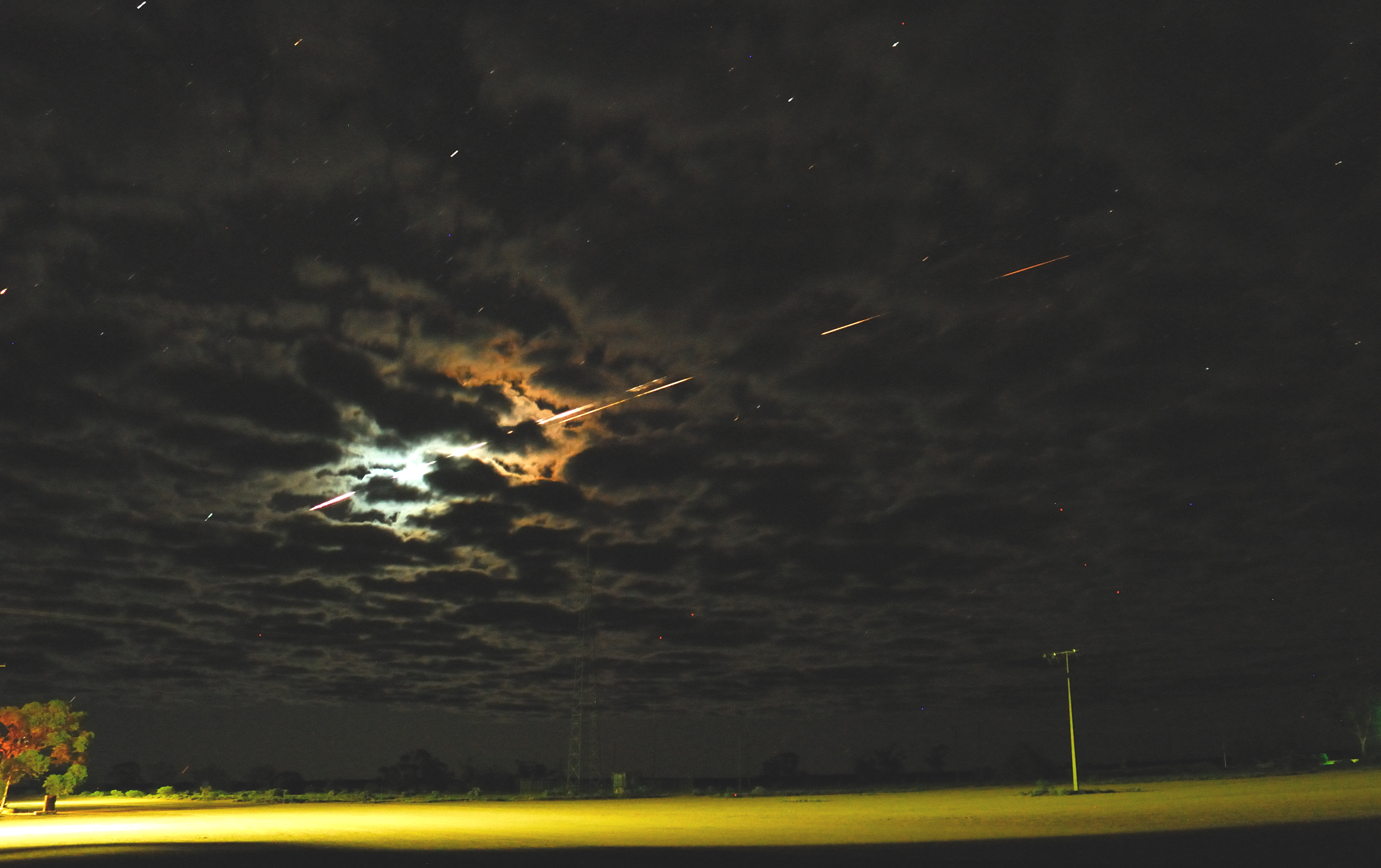
Sixteen years ago today, a fireball tore across the Australian outback. Most of it was a dying Japanese spacecraft burning up after a seven-year ordeal. The bright dot racing ahead of the wreckage was a capsule holding the first grains of an asteroid ever returned to Earth.