PARKER SOLAR PROBE (43592)

COSPAR: 2018-065A | Alt Name: Parker Solar Probe
DECAYED

Image
PARKER SOLAR PROBE Satellite Image
Additional Sources
Launch Details

Launch Date

August 12, 2018

Launch Pad

SLC37B

Launch Vehicle

Delta 4H/Star 48BV

Orbital Elements

NORAD ID

43592

International Designator

2018-065A

Decay Date

Unknown

Basic Satellite Info

Name

PARKER SOLAR PROBE

Alternative Name

Parker Solar Probe

Type

Payload

Status

Operational

Owner

GSFC

Country

United States

Constellation

N/A

Related Satellites

Major Events

N/A

Summary
The PARKER SOLAR PROBE (OBJECT_ID: 2018-065A) is a solar observatory satellite operated by GSFC and manufactured by APL in the US. Launched on August 12, 2018, from SLC37B at AFETR using a Delta 4H/Star 48BV launch vehicle, it has a length of 3 meters, diameter of 2.3 meters, and span of 3 meters. The spacecraft has a dry mass of 605 kg and a launch mass of 685 kg. It is equipped with instruments including SWEAP, WISPR, FIELDS, ISIS-EPI, and HeliOSSP. The probe uses solar arrays for power generation, along with batteries to support its operations throughout its 7-year mission lifespan. Its shape is described as a flared cylinder with booms and two panels.
Physical Characteristics

Length

3

Diameter

2.3

Span

3

Dry Mass

605

Launch Mass

685

Shape

Flared cyl+boom+2 pan

Radar Cross Section

Unknown

Visual Magnitude

Unknown

Color

Unknown

Material Composition

Unknown

Technical Details

Payload

Parker Solar Probe

Purpose

Solar Observatory

Mission

Solar Observatory

Manufacturer

APL

Life Expectancy

7 years

Bus

PSP

Configuration

Unknown

Motor

?

Equipment

SWEAP, WISPR, FIELDS, ISIS-EPI, HeliOSSP

Power System

2 deployable solar arrays, batteries

ADCS

Unknown

Transmitter Frequency

Unknown

Satellite Articles

View All Posts »

Learn more about satellites and other related topics.

The Day We Banned the Word "Film"

The Day We Banned the Word "Film"

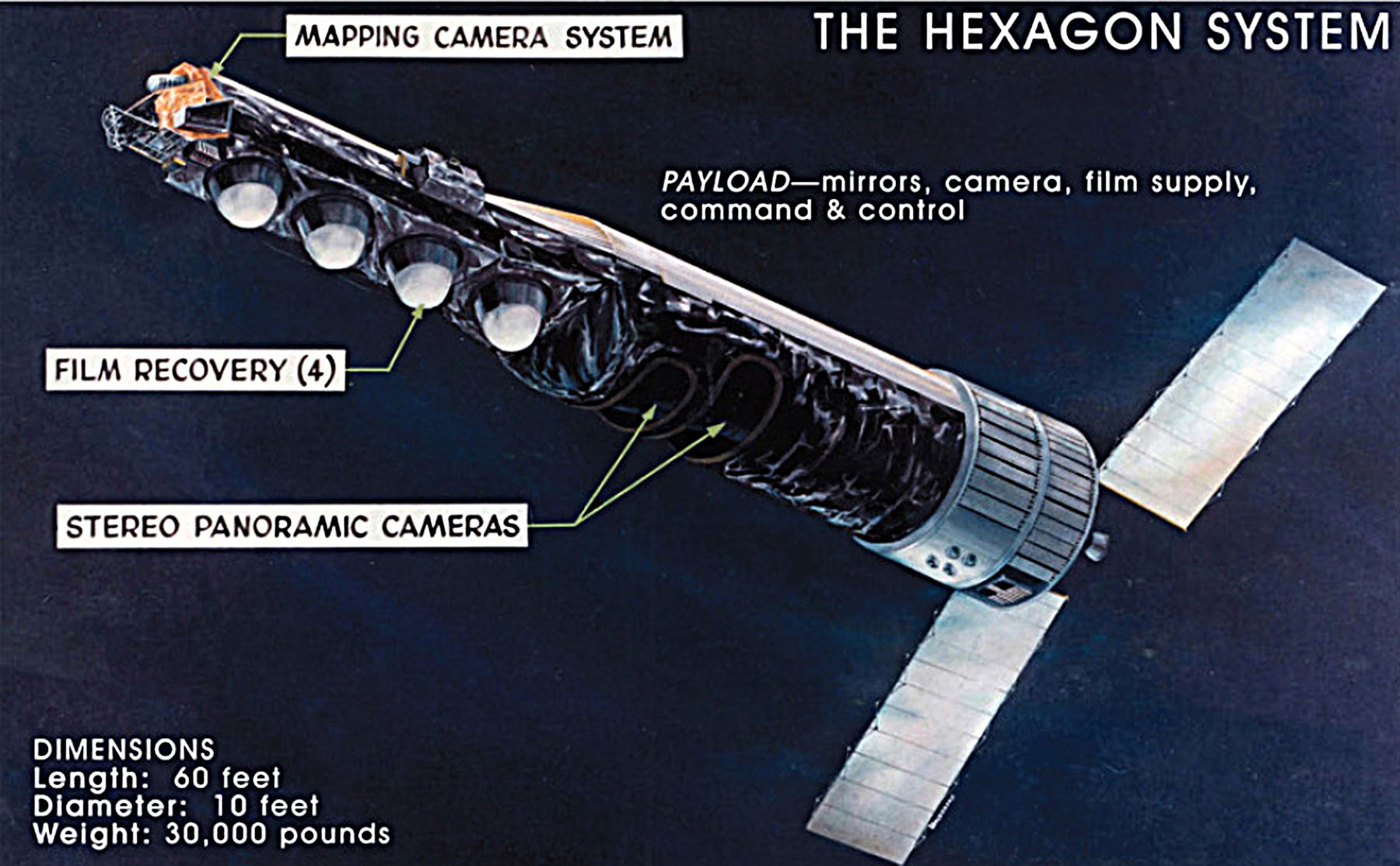
On January 20, 1972, the second KH-9 HEXAGON lifted off from Vandenberg - carrying the most sophisticated reconnaissance system ever built by engineers who weren't allowed to say 'film,' 'camera,' or even talk to each other about what they were doing.

Space Force Forecasts 25 Extra Heavy-Lift Missions Through 2029 | KeepTrack Space Brief

Space Force Forecasts 25 Extra Heavy-Lift Missions Through 2029 | KeepTrack Space Brief

Space Force projects 25 additional high-energy missions in 2027–2029 window, straining capacity at Vulcan and Falcon Heavy. Capacity constraints will drive military-NASA prioritization debates.

China's Rocket Factory Finds a Second Gear

China's Rocket Factory Finds a Second Gear

In 2024, China launched 68 orbital missions. In 2025, the number jumped to 97. In 2026, state media and Western analysts agree the target is 140 or more. Most of that growth is being driven by two state-backed mega-constellations, a half-dozen private launch companies hitting stride, and a deliberate national pivot toward commercial space. Beijing is no longer trying to catch SpaceX. It is trying to build an industrial base that outlasts one.

Seismic Networks Now Track Space Junk, Pentagon Faces Golden Dome Cost Challenges | KeepTrack Space Brief

Seismic Networks Now Track Space Junk, Pentagon Faces Golden Dome Cost Challenges | KeepTrack Space Brief

Johns Hopkins researchers use seismic networks to track space debris in near real-time. Pentagon faces Golden Dome production scale challenges. SpaceX launches 25 Starlink sats in seventh 2026 mission.

Space Brief 13 Nov 2024

Space Brief 13 Nov 2024

Today's focus spans critical developments in military space initiatives, strategic policy shifts, and modest steps in semiconductor advancements. Key developments include Rocket Lab's new U.S. Air Force contract, Sierra Space's progress in satellite programs, and potential policy changes under Trump's leadership.

X Report 24 Aug 2025

X Report 24 Aug 2025

SpaceX successfully launched its CRS-33 Dragon cargo mission to the ISS, while preparations for the upcoming Starship Flight 10 continue, highlighting significant advancements in both cargo operations and test flight reliability.

NASA Announces First-Ever ISS Medical Evacuation via SpaceX Crew Dragon | KeepTrack X Report

NASA Announces First-Ever ISS Medical Evacuation via SpaceX Crew Dragon | KeepTrack X Report

NASA plans first-ever medical evacuation from ISS using SpaceX Crew Dragon for Crew-11 astronaut. Starlink 6-96 mission scrubbed and rescheduled. Starbase Pad 1 tower and launch mount under review.

X Report 11 Aug 2025

X Report 11 Aug 2025

Severe weather conditions disrupt the launch of Amazon’s Project Kuiper satellites, highlighting ongoing challenges in satellite deployment amidst increasing competition in the space industry.